The practical message is more measured: replacing some less healthy snack foods with walnuts may help improve certain cholesterol measures as part of a heart-supportive eating pattern.
The role of alpha-linolenic acid
One of the most distinctive nutrients in walnuts is alpha-linolenic acid, or ALA.
ALA is a plant-based omega-3 fatty acid. It contributes to normal cell membrane structure and is involved in several biological processes. The body can convert a small proportion of ALA into the longer-chain omega-3 fatty acids EPA and DHA, although this conversion is limited and varies among individuals.
For people who do not regularly eat fish, walnuts can be one of several plant sources of ALA. Other sources include flaxseed, chia seeds and certain vegetable oils.
It would be inaccurate to claim that ALA from walnuts provides exactly the same nutritional effect as EPA and DHA from fish. They are related but not interchangeable in every respect. Nevertheless, ALA is an essential nutrient, and walnuts can help people obtain it through ordinary food.
Supporting healthy blood vessels
Healthy blood vessels need to remain flexible and respond appropriately to changes in blood flow. Their inner lining, known as the endothelium, plays an important role in regulating vascular function.
Researchers have investigated whether walnut consumption influences measures related to vascular health. Some studies have reported favourable changes, but findings across different trials are not completely consistent. The overall evidence is stronger for improvements in blood lipid profiles than for every proposed effect on blood vessel function.
PubMed+1
This is an important distinction. A food can have a promising nutrient profile without every suggested health effect being firmly established.
Why the rest of the diet still matters
Walnuts are most useful when they form part of an eating pattern that supports cardiovascular health.
A person who eats walnuts but regularly consumes large amounts of processed meat, sugary drinks, highly salted foods and refined snacks should not expect the nuts to cancel out those habits. Similarly, walnuts cannot compensate for a lack of physical activity or replace prescribed medication.
The American Heart Association's 2026 dietary guidance emphasizes an overall heart-healthy dietary pattern rather than relying on one food or nutrient. It highlights vegetables, fruit, whole grains, healthy protein sources, unsaturated fats and minimally processed foods as parts of a supportive approach.
American Heart Association
Walnuts fit naturally into that pattern. They can be sprinkled over oatmeal, added to salads, mixed into plain yoghurt or eaten as a small snack. Their value comes from what they replace and how they fit into the entire diet—not from a claim that a handful alone can protect the heart.
Chapter 3: Powerful Antioxidant Support
Another reason walnuts attract attention is their content of antioxidant compounds.
The body naturally produces reactive molecules during ordinary metabolic activity. These molecules are not always harmful; they also play roles in normal cell signalling and immune defence. Problems can arise when their production becomes excessive or the body's protective systems cannot maintain balance. This imbalance is often described as oxidative stress.
Oxidative stress has been studied in relation to ageing and a range of chronic conditions. It is one reason researchers are interested in foods containing antioxidants and other plant compounds.
Walnuts contain several such compounds, including polyphenols, tocopherols and other substances found in the nut's skin and edible kernel. These compounds may contribute to the overall nutritional value of walnuts, although their effects inside the human body are more complicated than simply “destroying free radicals.”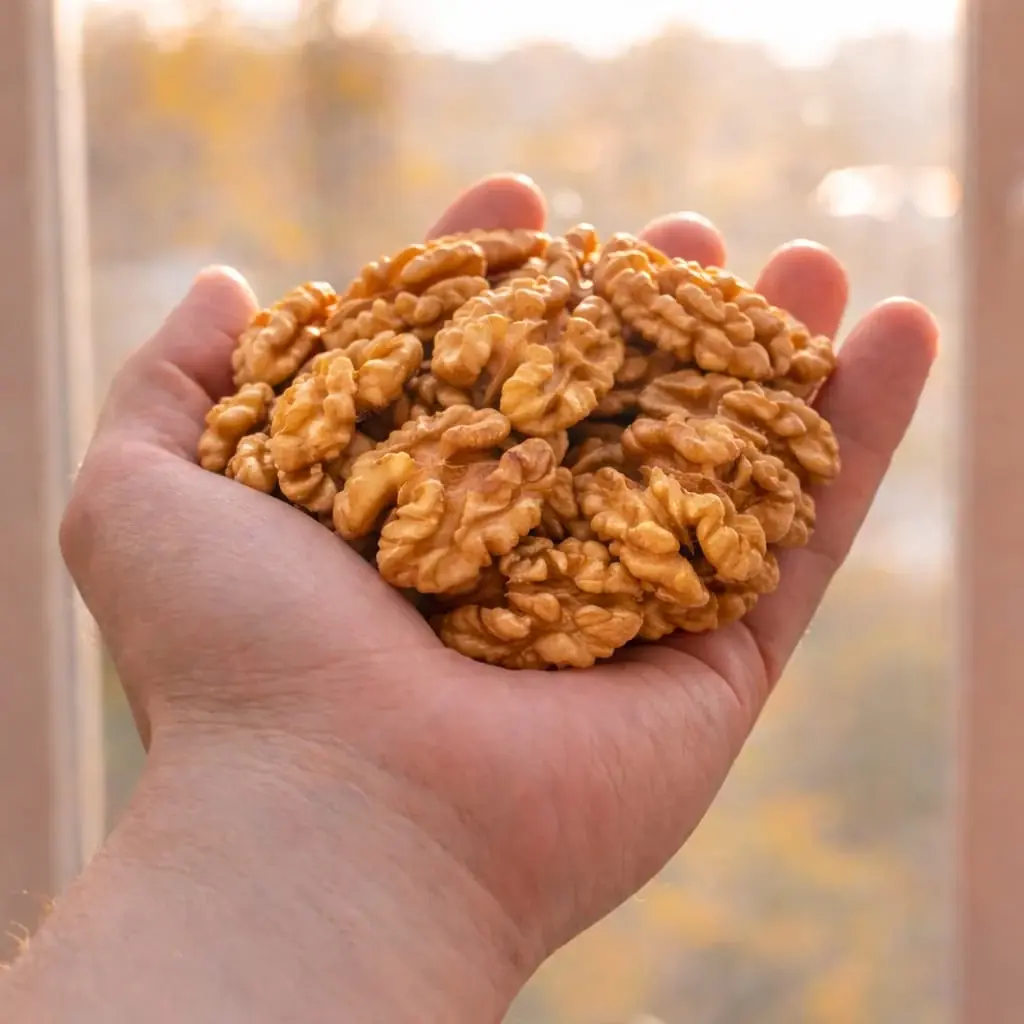
Polyphenols and the walnut's natural protective compounds
Polyphenols are a large family of plant chemicals found in foods such as berries, tea, cocoa, vegetables and nuts. Walnuts contain several types, including ellagitannins and related compounds.
When people eat walnuts, some of these substances are transformed by the digestive system and gut microorganisms into smaller compounds called urolithins. The amount produced can differ from person to person because gut microbiomes are not identical.
Researchers have investigated whether these compounds influence processes associated with inflammation, oxidative stress and cellular health. Laboratory studies provide interesting clues, but findings from laboratory experiments do not automatically prove that eating walnuts will produce the same effects in humans.
The best way to interpret this research is to see polyphenols as one part of the broader nutritional profile of walnuts. They contribute to the reason whole plant foods are often encouraged, but they should not be treated as a treatment for a specific disease.
Vitamin E and cell membranes
Walnuts also contain vitamin E, a group of fat-soluble compounds that includes tocopherols.
Vitamin E contributes to the protection of cell membranes from oxidative damage. Because cell membranes contain fats, they can be vulnerable to oxidation. Vitamin E is one of the nutrients involved in the body's antioxidant defence system.
Walnuts are not the richest source of vitamin E compared with every other food, and the amount in a serving is not a reason to rely on them as a sole source. Other foods, including seeds, vegetable oils and some nuts, can also contribute vitamin E.
A varied diet is more useful than trying to obtain every nutrient from one ingredient.
Melatonin: An interesting but easily misunderstood compound
The screenshot mentions melatonin among the notable compounds found in walnuts. Melatonin is best known as a hormone involved in regulating the body's sleep-wake rhythm. It is also present in small amounts in certain foods, including walnuts.
However, the presence of melatonin in a food does not mean that eating that food works like taking a melatonin supplement. The quantity obtained from a normal serving is not equivalent to a controlled supplement dose, and the effect of dietary melatonin on sleep can vary.
It would therefore be misleading to promise that eating walnuts before bed will automatically improve sleep or correct insomnia. Walnuts can be part of a balanced evening snack, but sleep quality depends on many factors, including light exposure, daily routine, stress, health conditions and sleep habits.
What does antioxidant research actually show?
A 2025 systematic review and meta-analysis examined randomized trials investigating walnut consumption and markers of oxidative stress. The review identified only four eligible studies. It found an increase in one antioxidant-related enzyme activity, catalase, but did not find significant effects across several other markers examined.
ScienceDirect
This is a useful reminder that nutrition research often produces a more nuanced picture than headlines suggest.
Walnuts contain antioxidant compounds, and laboratory research provides reasons to study them. But current evidence does not justify saying that walnuts prevent ageing, eliminate harmful molecules or protect people from all chronic diseases.