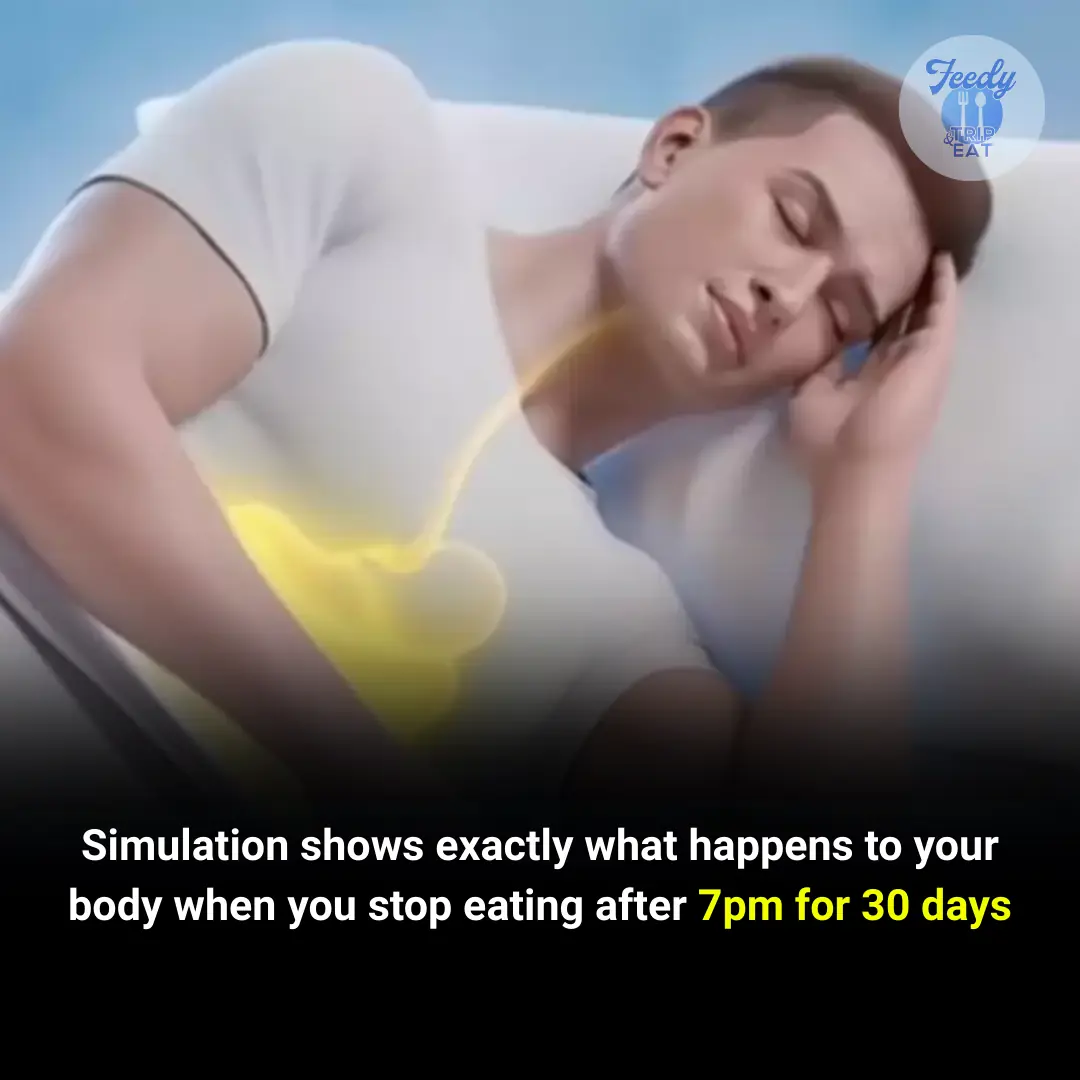
Leading a healthier lifestyle can often feel like an uphill battle, with the time constraints of modern life making the challenge of eating the right food and getting enough exercise into a fine balancing act.
But if you have made positive changes to your diet and are still struggling to shed the pounds, you might be eating at the wrong time and making it harder for your body to burn off excess fat.
Snacking or having a meal in the hours before you go to bed can send your body the wrong signal and cause it to store fat and even make you feel hungrier over the course of the next day.
Many people follow the 'don't eat after 7.00pm' rule in order to boost their body's fat-burning potential, something that might sound like an urban legend but is backed up by scientific research. The simulation below by ThikFilms shows exactly why.
If you can kick the initial evening cravings, your body will fall into a healthier insulin cycle, with levels of the hormone remaining lower overnight. This slows your digestion and puts your body into a fat-burning cycle, helping to boost healthy choices made during the day.
This not only helps you lose weight but also reduces bloating and helps you to feel satiated when you eat your regular meals, which also aids you in cutting back on snacking.
Following this cutoff gives you the benefit of intermittent fasting, sleeping through most of the 12-hour fasting window.
Research by Harvard Medical School has backed up this 'don't eat before 7.00pm' rule, with surprising findings on how late-night snacking is only making you hungrier for the next day.
Splitting two groups into early and late eaters, with strict diet controls, they found that the late group had 'profound effects' on levels of two hunger-regulating hormones, leptin and ghrelin.
Eating later at night lowers the amount of leptin being produced for the next 24 hours, making it harder to feel full after a meal and resist a snack. They also found this group burned calories more slowly while asleep and saw gene expressions indicating an increase in fat growth.
Harvard Medical School professor Frank Scheer, the study's senior author, said: "We found that eating four hours later makes a significant difference for our hunger levels, the way we burn calories after we eat, and the way we store fat.”
Eating later also means that your body will be digesting while you are trying to nod off, raising the prospect of heartburn and indigestion, while also spiking your blood sugar and making it harder to get some rest.
If you can stop eating in that three-hour window before you fall asleep, you might just find yourself waking up with a spring in your step and a smaller waistband.