Six Subtle Warnings: Signs Your Body May Send Weeks Before a Heart Attack
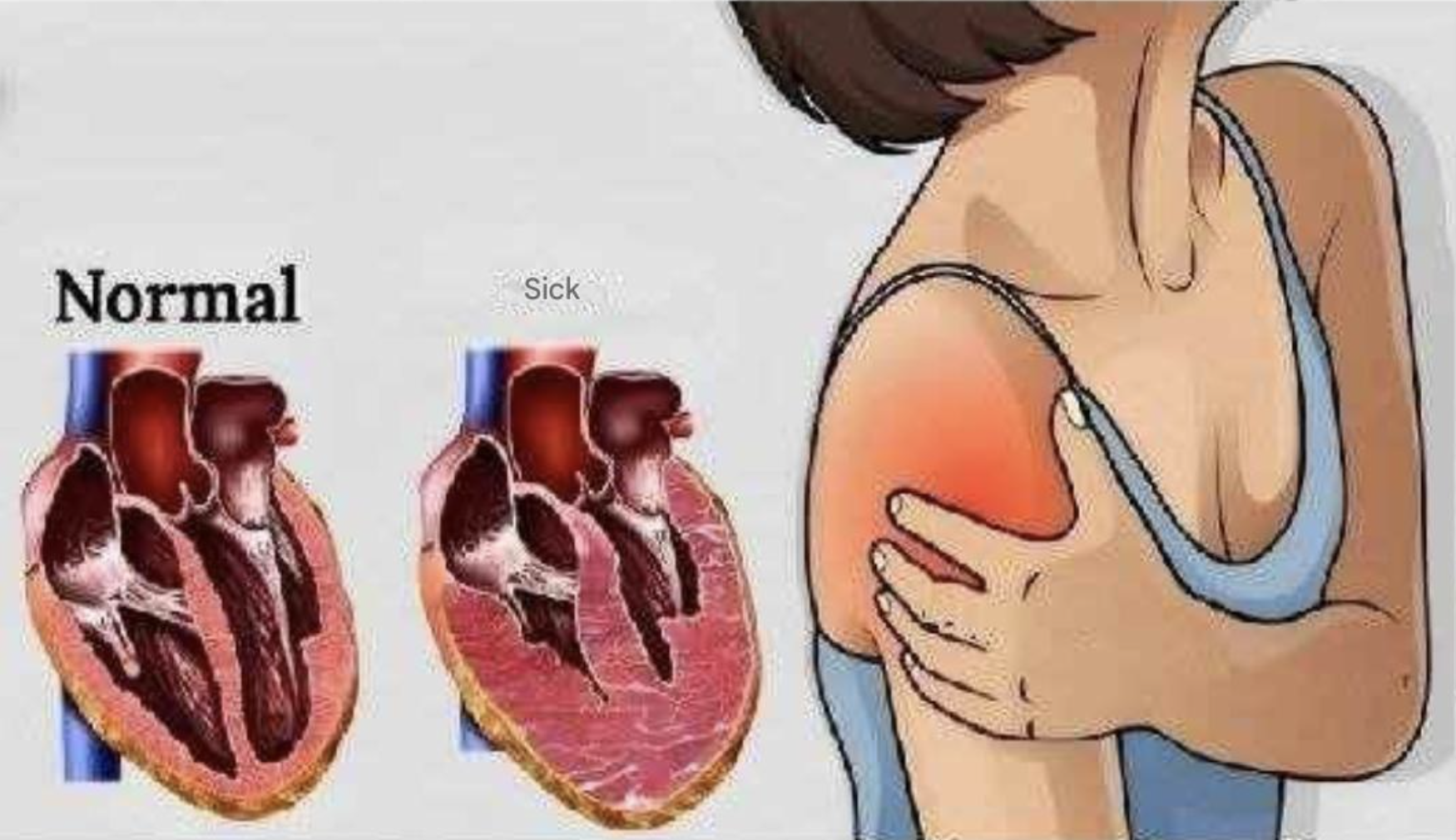
At first glance, the image is strikingly simple: a comparison between a “normal” heart and a “sick” one, paired with an illustration of a woman clutching her shoulder in discomfort. The headline urges viewers not to ignore “dangerous symptoms of a diseased heart.” While the visual style feels like something designed for social media, the message behind it is deeply serious—and medically relevant.
Heart attacks rarely come completely out of nowhere. In many cases, the body begins sending warning signals days or even weeks in advance. The problem is that these signals are often subtle, misunderstood, or brushed off as stress, aging, or minor illness. This image points toward an uncomfortable truth: the heart often asks for help long before it fails, but many people don’t recognize the signs.
Below are six warning signs your body may give you weeks before a heart attack—signals that deserve attention, not dismissal.
1. Unexplained Pain in the Arm, Shoulder, or Upper Back
One of the most overlooked signs is pain that doesn’t occur in the chest at all. Discomfort in the left arm, shoulder, neck, jaw, or upper back—like the posture shown in the image—can be an early indicator of reduced blood flow to the heart. This “referred pain” happens because the heart and these areas share nerve pathways.
Because it feels muscular rather than cardiac, many people delay seeing a doctor, losing precious time.
2. Persistent Fatigue That Feels Different
Feeling tired after a long day is normal. Feeling exhausted after minimal effort is not. Weeks before a heart attack, some people experience overwhelming fatigue that doesn’t improve with rest. Simple activities—walking up stairs, carrying groceries, or even showering—can feel unusually draining.
This happens when the heart struggles to pump enough oxygen-rich blood to meet the body’s needs.
3. Shortness of Breath Without Obvious Cause
Difficulty breathing during light activity or while lying flat can be an early red flag. When the heart can’t pump efficiently, fluid may begin to build up in the lungs, making breathing harder. Many people attribute this symptom to poor fitness, anxiety, or respiratory issues, missing its cardiac origin.
Shortness of breath that appears suddenly or worsens over time should never be ignored.
4. Sleep Disturbances and Nighttime Discomfort
Trouble sleeping, waking up gasping for air, or feeling chest tightness at night may precede a heart attack by weeks. Poor circulation and fluctuating oxygen levels can disrupt normal sleep patterns. Some people also report vivid anxiety or a sense of unease without knowing why.
These nighttime symptoms are often subtle but meaningful when they occur repeatedly.
5. Digestive Discomfort or Nausea
Heart-related pain doesn’t always feel like pain. It can show up as nausea, indigestion, bloating, or a heavy sensation in the upper abdomen. This is especially common in women, whose heart attack symptoms often differ from the “classic” chest pain stereotype.
When digestive discomfort appears alongside fatigue or breathlessness, it deserves closer attention.
6. Dizziness, Cold Sweats, or Lightheadedness
Reduced blood flow to the brain can cause dizziness or faintness weeks before a major cardiac event. Sudden cold sweats—especially without physical exertion or heat—are another warning sign that the body may be under cardiovascular stress.
These symptoms reflect the heart’s difficulty maintaining stable circulation.
Why These Signs Are Often Missed
The danger isn’t just the symptoms themselves—it’s how easy they are to rationalize away. Busy schedules, stress, and the belief that heart attacks are sudden and dramatic cause many people to ignore early warnings. Images like this one may feel alarmist, but they highlight an essential reality: heart disease often whispers before it screams.
The Takeaway
A heart attack is rarely a single moment; it’s often the final chapter of a story the body has been telling for weeks. Pain in the arm, unusual fatigue, breathing trouble, sleep changes, digestive discomfort, and dizziness are not random annoyances—they can be early calls for help.
Recognizing these signs early and seeking medical evaluation can save lives. In heart health, paying attention is not overreacting—it’s self-preservation.