
Whether a woman lives long or not can often be reflected in her bre.asts:
Three bre.ast warning signs many women overlook—but doctors consider serious red flags
In medicine, there is a harsh truth: many breast cancer deaths are not caused by how aggressive the disease is, but by how late it is discovered.
In oncology clinics, doctors often hear statements that leave the room silent:
“I thought the breast pain was just hormonal…”
“I felt a small lump, but it didn’t hurt, so I ignored it…”
That false sense of reassurance has pushed many women into life-or-death battles when the disease was already advanced.
Two years of breast discomfort—cancer discovered after it had spread
A 46-year-old office worker had experienced mild tightness in one breast for years, especially before her menstrual cycle. Assuming it was a hormonal issue, she self-medicated with hormone products based on advice from others.
Two years later, when her breast became slightly deformed and she lost weight rapidly, she finally sought medical care. Imaging revealed breast cancer that had already spread to the axillary lymph nodes. Her doctor told her frankly: “If you had come earlier, the prognosis would have been very different. Now we can only manage the situation.”
The breasts are organs directly influenced by hormones, immunity, and metabolism. When the body experiences long-term internal imbalance, the breasts are often the first to “speak up.”
What makes this dangerous is that most early warning signs are painless and subtle, making them easy to ignore.
Three breast signs doctors always consider “health red flags”
1. A hard lump in the breast
Most breast cancers are first detected when a woman feels an unusual lump. Dangerous lumps are often hard, irregular in shape, poorly defined, not easily movable, and painless.
Not every lump is cancerous. However, if a lump persists, grows over time, or appears only in one breast, it is reason enough to see a specialist immediately.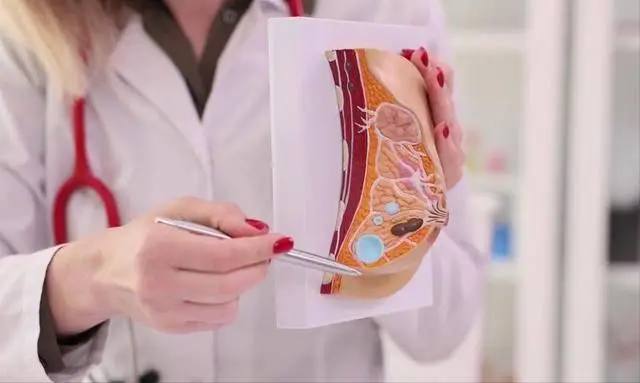
2. Abnormal nipple discharge
Any nipple discharge unrelated to pregnancy or breastfeeding—especially dark yellow, brown, or bloody fluid—is a significant warning sign.
Medically, this can be an early indication of damage to the milk ducts or even early-stage breast cancer, yet it is frequently overlooked because it causes no pain.
3. Abnormal changes in breast skin
Thickened skin, dimpling that resembles orange peel, persistent redness or swelling, or a nipple that becomes inverted are common signs of advanced breast disease.
When deeper tissues are invaded, the skin loses elasticity. This is no longer a cosmetic issue—it is a clear medical warning.
Ignoring breast warnings comes at a cost
When the breasts send signals and they are dismissed, the body eventually pays the price. The consequences go beyond cancer:
-
Long-term hormonal imbalance, accelerating aging, sleep disorders, and weakened immunity
-
Chronic breast conditions that may gradually turn malignant
-
Once the disease spreads to lymph nodes and surrounding tissues, survival rates drop sharply and treatment becomes far more demanding
Experts warn that overlooking breast abnormalities does not just increase cancer risk—it triggers a cascade of hidden health consequences. Because breasts are highly hormone-sensitive, persistent disease often disrupts the entire endocrine system, leading to early aging, insomnia, menstrual irregularities, reduced skin quality, and declining physical strength.
More dangerously, untreated breast conditions can evolve over time. Many cases begin as benign hyperplasia, but due to neglect and lack of monitoring, silently progress into malignant disease—only discovered at a late stage.
When cancer spreads to the lymph nodes or nearby areas, the body begins to suffer system-wide effects. Immunity weakens, recovery slows, fatigue becomes constant, and overall quality of life declines significantly.
How women can protect breast health and longevity
Protecting breast health is not complicated, but it requires consistency and awareness. Women should develop the habit of monthly breast self-examinations, ideally 5–7 days after menstruation, when breast tissue is softest and abnormalities are easier to detect.
Annual breast checkups should not be postponed. Younger women may rely on ultrasound, while women over about 35 should consider adding mammography, based on medical advice, to improve early detection.
Lifestyle also matters. A balanced diet rich in plant-based estrogen sources such as soy, green vegetables, and marine fish is recommended, while limiting sugar, unhealthy fats, and alcohol. Regular physical activity and adequate sleep help stabilize hormones, strengthen immunity, and reduce breast disease risk.
Many serious illnesses in women do not begin with intense pain. They start with small, silent changes in the breasts. Early awareness and timely screening protect not only appearance, but—more importantly—longevity and long-term quality of life, something no late treatment can ever fully restore.