The correct identification should come from the product description and reliable supplier information.
Chapter 11: What Consumers Should Do When a Product's Origin Is Unclear
A consumer does not need to become an expert in animal anatomy to shop responsibly.
The most useful approach is to buy from a source that can explain the product and its handling.
Choose established sellers
Established supermarkets, licensed butchers, and reputable food suppliers are generally preferable to unknown sellers who cannot explain where their products came from.
This does not mean that every large retailer is automatically safe or that every small seller is unreliable.
The important issue is whether the business follows the applicable food-safety requirements and can provide meaningful information about its products.
Ask for traceability information
Traceability helps connect a food product with its origin and the businesses involved in processing and distribution.
Depending on the product and local rules, information may include the processor, supplier, batch number, country of origin, or other identification details.
If a product is involved in a food-safety incident, traceability can help authorities determine which batches need to be removed from sale.
Do not buy products with unclear descriptions
If a package is labelled only as "meat" or "organ product" without enough information, ask the seller for clarification.
This is particularly important for shoppers who avoid certain animal species for personal, religious, cultural, or medical reasons.
A customer has the right to understand what is being sold.
Avoid suspiciously damaged products
Do not purchase packages with broken seals, leaking liquid, unusual swelling, or signs of poor storage.
Check the date and follow the stated temperature requirements.
If a product has been left outside a refrigerated display or appears to have thawed and refrozen, choose another package.
Report serious concerns
If a retailer appears to be selling food that is spoiled, mislabelled, or stored in unsafe conditions, consumers can contact the relevant local food-safety authority.
Where possible, keep the receipt, packaging, batch information, and photographs.
These details can help authorities investigate a specific product rather than relying on a general social media accusation.
Chapter 12: What the Photograph Really Tells Us About Modern Food Shopping
The photograph has attracted attention because it shows something that many shoppers do not regularly encounter in their everyday grocery purchases.
People are familiar with pork chops, chicken breasts, sausages, minced meat, and beef steaks. A large display of cleaned intestines is different. The unusual shapes and exposed interiors can make the product appear mysterious, especially when viewers see it without a proper description.
But unfamiliarity should not be confused with evidence of wrongdoing.
The supermarket display is only the final stage
By the time a product reaches a supermarket, several steps should already have taken place.
The animal has been slaughtered, edible parts have been separated, the product has been processed, and it has been transported and stored under the applicable requirements.
The retailer's responsibility includes displaying the product appropriately, maintaining suitable storage conditions, and providing accurate information to customers.
The supermarket display is therefore not the whole story. It is simply the point where the consumer encounters the product.
A shopper looking at a tray cannot see the slaughterhouse, processing equipment, transport temperature, or inspection documentation. That is why a reliable supply chain and clear product information are so important.
Why unfamiliar food can become a viral subject
Social media often rewards images that provoke an immediate reaction.
A photograph of a familiar steak may receive little attention. A close-up of unusual animal tissue can generate hundreds of questions.
Some viewers may ask what the product is. Others may assume it is fake meat, spoiled food, or an ingredient that supermarkets are hiding.
When a dramatic caption accompanies the image, the emotional response can become stronger than the available evidence.
This does not mean that food-safety concerns should be ignored. There are genuine cases involving poor storage, illegal distribution, contamination, and misleading labelling. Those cases deserve investigation.
However, a specific accusation should be supported by specific evidence.
The difference between a legitimate warning and a misleading one
A useful food-safety warning explains what the risk is and how consumers can reduce it.
For example, a warning about raw pork intestines can explain the possibility of bacterial contamination, the importance of refrigeration, and the need for thorough cooking.
A misleading warning may simply show an unfamiliar product and suggest that supermarkets are secretly selling something dangerous.
The first approach helps people make better decisions. The second may create fear without providing useful information.
Consumers should be cautious about any post that makes a broad accusation but does not identify a retailer, product, batch, inspection result, or reliable source.
What the original linked article reveals
There is another detail that deserves attention.
The linked article is divided into several chapters and discusses the appearance of intestines, their place in traditional cooking, processing, food safety, and shopping advice.
Much of that general subject matter is consistent with established food-safety and food-labelling guidance.
However, the page also includes a disclaimer stating that the story is a work of fiction created for entertainment purposes.
That means readers should not treat it as evidence of a real investigation into supermarket practices.
The educational information about offal can still be considered separately, but the dramatic warning should not be repeated as a verified discovery.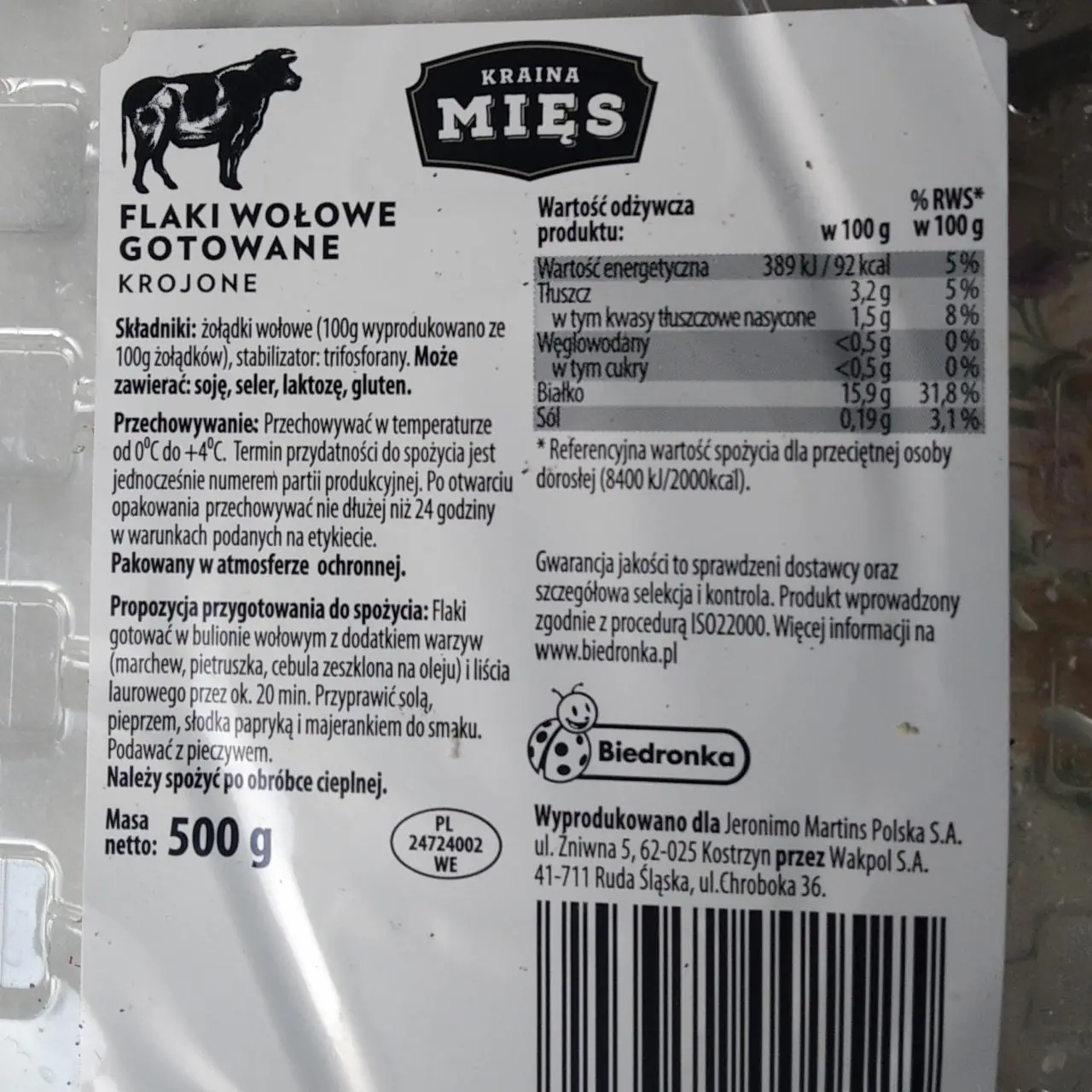
The lesson for every shopper
The most useful response to an unfamiliar meat product is not panic.
It is to identify the product, read its label, check its storage conditions, and ask the seller for information.
If the seller cannot explain what is being sold, there is no need to buy it.
If the product is clearly labelled, properly stored, and sourced through an appropriate supply chain, its unusual appearance does not automatically make it unsafe.
Chapter 13: The Final Answer — What Are Supermarkets Really Selling You?
So, what is the pale tubular product shown in the photograph?
The most likely explanation is cleaned animal intestines, possibly pork intestines or another form of edible offal. The shapes, folds, and cut surfaces are consistent with intestinal tissue.
But the exact species and anatomical sections cannot be confirmed from the photograph alone.
The image does not prove that supermarkets are secretly selling an unknown type of meat. It does not identify a retailer, show a misleading product label, or provide evidence of deliberate deception.
The linked article itself carries a fiction disclaimer, so its dramatic framing should not be mistaken for a documented investigation.
What the picture does provide is an opportunity to discuss a food category that many people know well and others rarely encounter.
Animal intestines are traditional ingredients in many cuisines. They can be prepared in soups, hot pots, grilled dishes, stir-fries, braised recipes, and sausages. They are recognized as edible offal when they come from appropriate sources and meet the relevant food-safety requirements.
At the same time, raw intestines require careful handling. Their connection with the digestive tract makes hygiene, refrigeration, cross-contamination prevention, and thorough cooking especially important.
For consumers, the most important rules are simple:
-
Identify the product. Check the animal species and the specific organ or intestinal section.
-
Read the label. Find out whether the product is raw, cooked, frozen, or processed.
-
Check the packaging. Avoid damaged, leaking, or poorly sealed packages.
-
Pay attention to storage. Follow refrigeration and freezing instructions.
-
Choose a reliable seller. Ask about the supplier and product origin when information is unclear.
-
Prepare it safely. Follow appropriate food-safety guidance and cook raw intestines thoroughly.
-
Do not believe every dramatic caption. A photograph alone cannot prove that a supermarket has deceived its customers.
The next time you see an unfamiliar tray of pale, tubular meat, remember that it may simply be a traditional food ingredient rather than a mysterious substitute.
Consumers deserve transparency, safe food, and honest labels. They also deserve accurate information.
The real warning is not that every supermarket is hiding something. It is that shoppers should understand what they are buying, know how to check its origin, and never confuse a viral photograph with proof.