Fresh cucumber contains very little sodium.
However, cucumber salads can become high in sodium when prepared with:
-
Large amounts of salt
-
Soy sauce
-
Fish sauce
-
Processed meats
-
Salted cheese
-
Commercial dressings
For people managing high blood pressure or heart disease, these additions may matter more than the cucumber itself.
Try using lemon juice, vinegar, herbs, garlic, or pepper to create flavor without relying heavily on salt.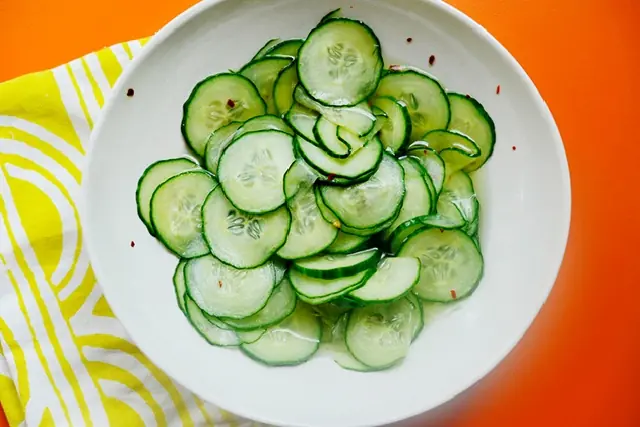
7. Your Blood Sugar May Be Easier to Manage When Cucumber Replaces Refined Snacks
Cucumbers contain relatively few carbohydrates and have a low glycemic impact when eaten in ordinary portions.
This makes them a convenient vegetable for people who want to include more low-calorie, non-starchy foods in their meals.
For someone managing type 2 diabetes, cucumber slices may be a useful alternative to highly processed snacks.
Why Is This Helpful?
Foods containing large amounts of refined carbohydrates or added sugars can contribute to significant increases in blood glucose.
Replacing some of these foods with non-starchy vegetables can help improve the overall nutritional quality of a meal.
Cucumber is particularly convenient because it can be eaten raw and combined with protein-rich foods.
For example, cucumber slices with hummus, boiled eggs, or plain yogurt can create a more balanced snack than eating cucumber alone.
However, cucumber is not a diabetes treatment.
People with diabetes should continue following their prescribed medication, nutrition, and monitoring plans.
8. Eating Cucumber With the Skin May Provide More Nutrients
Many people automatically peel cucumbers before preparing a salad.
There is nothing wrong with peeling them if you prefer the texture or have difficulty tolerating the skin.
However, the peel contributes dietary fiber and contains a significant proportion of certain nutrients, including vitamin K.
Removing it can reduce some of the vegetable's nutritional value.
Should You Always Eat the Skin?
Not necessarily.
The choice depends on your preference, digestive tolerance, and food safety practices.
If you enjoy eating cucumber with the peel, wash it thoroughly under clean running water before slicing.
Use a clean brush for firm produce if needed.
Avoid using soap or household cleaning chemicals on food.
If the skin is damaged, slimy, or shows signs of spoilage, discard the affected cucumber.
For people who experience discomfort from the peel, removing it may make cucumber easier to tolerate.
9. Four Situations in Which You Should Be More Careful
Although cucumber is safe for most people, certain individuals may need to pay closer attention.
People With Cucumber Allergies
Cucumber allergy is possible, although it is not among the most common food allergies.
Symptoms may include itching in the mouth, swelling of the lips, hives, or digestive discomfort.
Some people with pollen allergies may experience pollen-food allergy syndrome after eating raw cucumber.
This condition can cause itching or tingling in the mouth and throat because the immune system recognizes similar proteins in pollen and certain foods.
Anyone experiencing repeated allergic symptoms should seek medical evaluation.
Difficulty breathing, throat swelling, fainting, or other signs of a severe allergic reaction require emergency assistance.
People With Sensitive Digestive Systems
Some individuals may experience bloating or discomfort after eating raw cucumber.
This does not mean cucumber is harmful to everyone with IBS or another digestive condition.
Many people with IBS tolerate ordinary servings of cucumber well.
If symptoms occur, try reducing the portion and identifying whether other salad ingredients may be contributing.
People Following a Vitamin K-Managed Diet
Cucumber skin contains vitamin K.
People taking warfarin may need to maintain a relatively consistent intake of vitamin K-containing foods because sudden changes can affect anticoagulation management.
They should not automatically eliminate cucumber.
Instead, they should follow their healthcare professional's advice about maintaining a consistent diet.
People With Specific Kidney-Related Dietary Restrictions
Cucumbers are generally relatively low in potassium compared with many vegetables.
However, people with advanced kidney disease or abnormal potassium levels may need individualized dietary guidance.
The appropriate serving depends on their medical condition, laboratory results, and prescribed nutrition plan.
10. Can Eating Too Many Cucumbers Cause Problems?
For most healthy adults, eating ordinary portions of fresh cucumber is unlikely to cause problems.
However, consuming very large quantities may not always be comfortable.
Some people may experience:
-
Bloating
-
Belching
-
A feeling of fullness
-
Digestive discomfort
These effects are generally related to individual tolerance and portion size rather than cucumber being inherently dangerous.
There is also an important food safety issue that everyone should understand.
Never Eat an Extremely Bitter Cucumber
Cucumbers naturally contain compounds called cucurbitacins.
In certain circumstances, unusually high concentrations can develop and cause an intensely bitter taste.
Consuming produce with excessive cucurbitacins can cause gastrointestinal illness, including nausea, vomiting, abdominal pain, and diarrhea.
If a cucumber tastes unusually bitter, stop eating it and discard it.