If You Have These Lines on Your Nails After 40, It May Be Your Body’s Way of Telling You Something
Have you ever looked closely at your fingernails and noticed thin lines running from the base of the nail all the way to its tip? Perhaps they were barely visible when you were younger, but now they seem deeper, more noticeable, or present on several fingers at once.
For many people over 40, this small change can be surprisingly unsettling. The nails that once looked smooth and shiny may gradually develop ridges, uneven surfaces, or a slightly rough texture. Some people notice the change while trimming their nails. Others see it when applying nail polish or holding their hands under bright light.
The question is simple, but the answer is more interesting than many people expect: What do vertical lines on your nails really mean after 40?
Are they simply a normal part of getting older? Could dry nails, everyday habits, or nutritional problems be contributing to the change? And when should a person stop treating these lines as a harmless cosmetic issue and ask a doctor to take a closer look?
The truth is that vertical nail ridges are common, especially with age, and they usually do not indicate a serious illness on their own. However, the appearance of your nails can sometimes provide useful clues about your general health.
Understanding the difference between ordinary changes and warning signs is important. A ridge that has been present for years may mean something very different from a nail that suddenly changes color, becomes painful, or develops a dark line.
In this article, we will examine the most common reasons these lines appear, what changes after 40, how everyday habits may affect nail texture, and which symptoms deserve medical attention. The most important detail is not always the line itself—it is what happens around it.
What Are Vertical Nail Ridges?
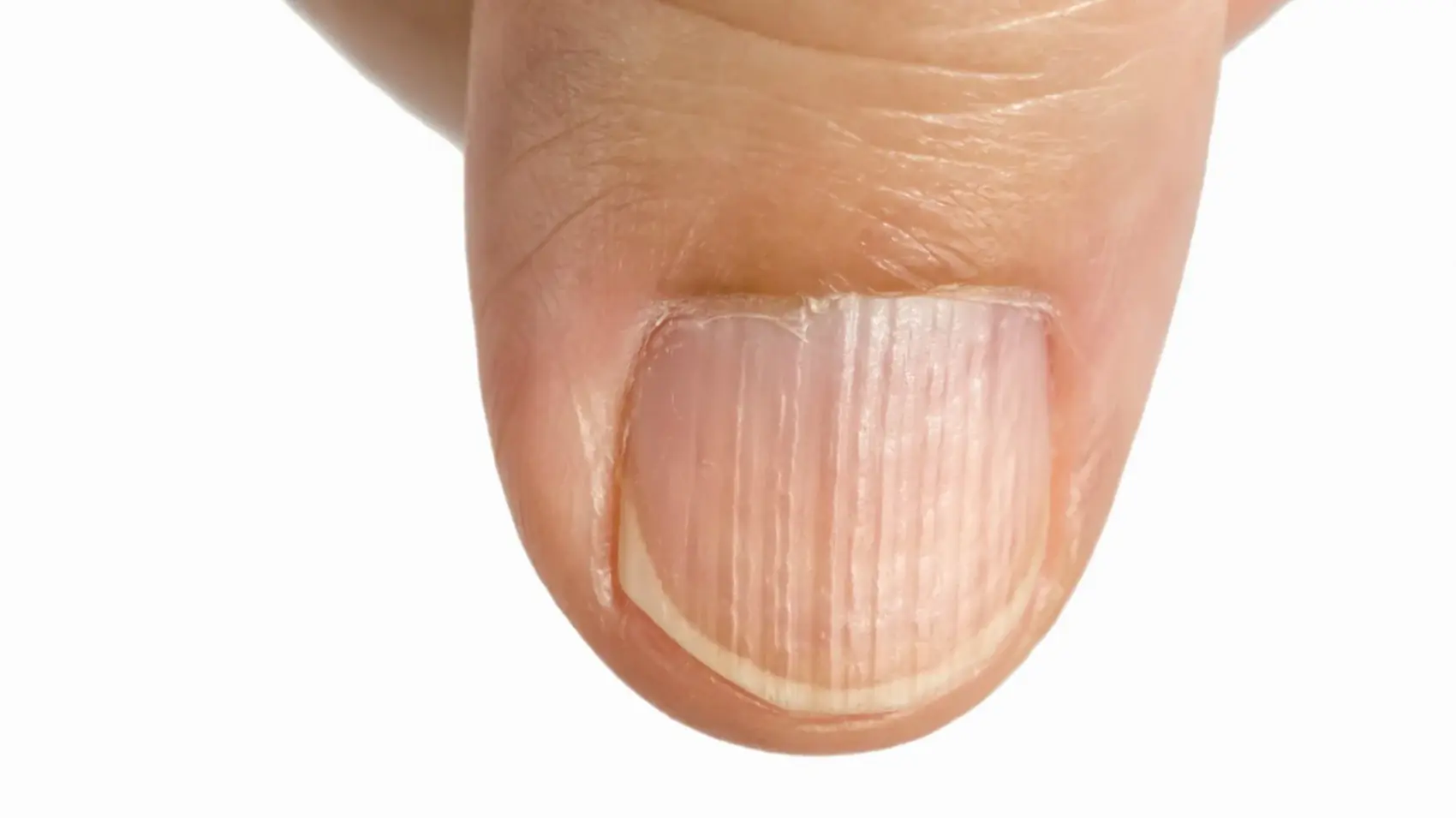
Vertical nail ridges are lines that run lengthwise along the nail, beginning near the cuticle and extending toward the free edge. Their medical name is longitudinal ridging.
They may look like tiny raised lines, shallow grooves, or a series of alternating light and dark bands. Depending on the lighting, the ridges can appear almost invisible or become very noticeable.
The image accompanying this article shows a fingernail with several fine vertical lines. These lines follow the natural direction of nail growth rather than crossing the nail from side to side.
This distinction matters because not all nail lines have the same meaning.
Vertical ridges are generally common and harmless. Horizontal grooves, on the other hand, can sometimes indicate that nail growth was temporarily interrupted by illness, injury, or another significant event.
A person may have vertical ridges on one nail, several nails, or nearly every fingernail. The lines may be subtle and uniform, or they may become deeper as the nail grows.
Some people have naturally ridged nails throughout their lives. Others notice the change gradually as they get older.
The most important point is that vertical ridges alone are not a reliable diagnosis of a disease or nutritional deficiency.
They are a physical feature that needs to be understood alongside other changes, including nail color, thickness, strength, growth, and the condition of the surrounding skin.
Why Do Nail Ridges Become More Noticeable After 40?
One of the most common explanations is the natural aging process.
Nails are made primarily of keratin, a tough protein also found in hair and the outer layer of skin. The visible nail plate is produced by a structure beneath the skin at the base of the nail called the nail matrix.
As we age, the way the nail matrix produces new cells can change. Nail growth may become slower, the surface may become less uniform, and the texture of the nail may gradually become more pronounced.
These changes can make existing vertical ridges easier to see.

Mayo Clinic+1
The process does not begin at exactly the same age for everyone.
Some people notice ridges in their thirties. Others may not see them until their fifties or sixties. Genetics, daily habits, environmental exposure, and individual nail structure all influence how the changes appear.
Age 40 is therefore not a medical threshold at which nail ridges suddenly become dangerous. It is simply an age when many people begin paying closer attention to gradual changes in their skin, hair, and nails.
The ridges themselves are often similar to the fine lines that develop on the skin over time. They reflect changes in the structure and growth of the nail rather than automatically indicating that something is wrong inside the body.
However, aging is not the only possible explanation. If the lines become unusually deep, appear suddenly, or occur alongside other symptoms, it is worth considering additional causes.
The First Possible Cause: Natural Changes in Nail Growth
The nail matrix works continuously, producing cells that eventually form the hard nail plate.
When the process is regular, the nail surface tends to look relatively smooth. When the growth pattern becomes slightly uneven, small variations can appear along the length of the nail.