Aggressive manicures
Excessive filing, scraping, or cutting around the cuticle can damage the nail and surrounding skin.
Artificial nails and repeated gel manicures may also contribute to nail weakness if the natural nail is damaged during application or removal.
Ignoring persistent dryness
Dry nails may become more brittle and prone to splitting.
Applying moisturizer after washing and before bedtime can help protect the nails and surrounding skin.
These habits do not explain every case of vertical ridging, but they are practical areas to review when nail texture changes.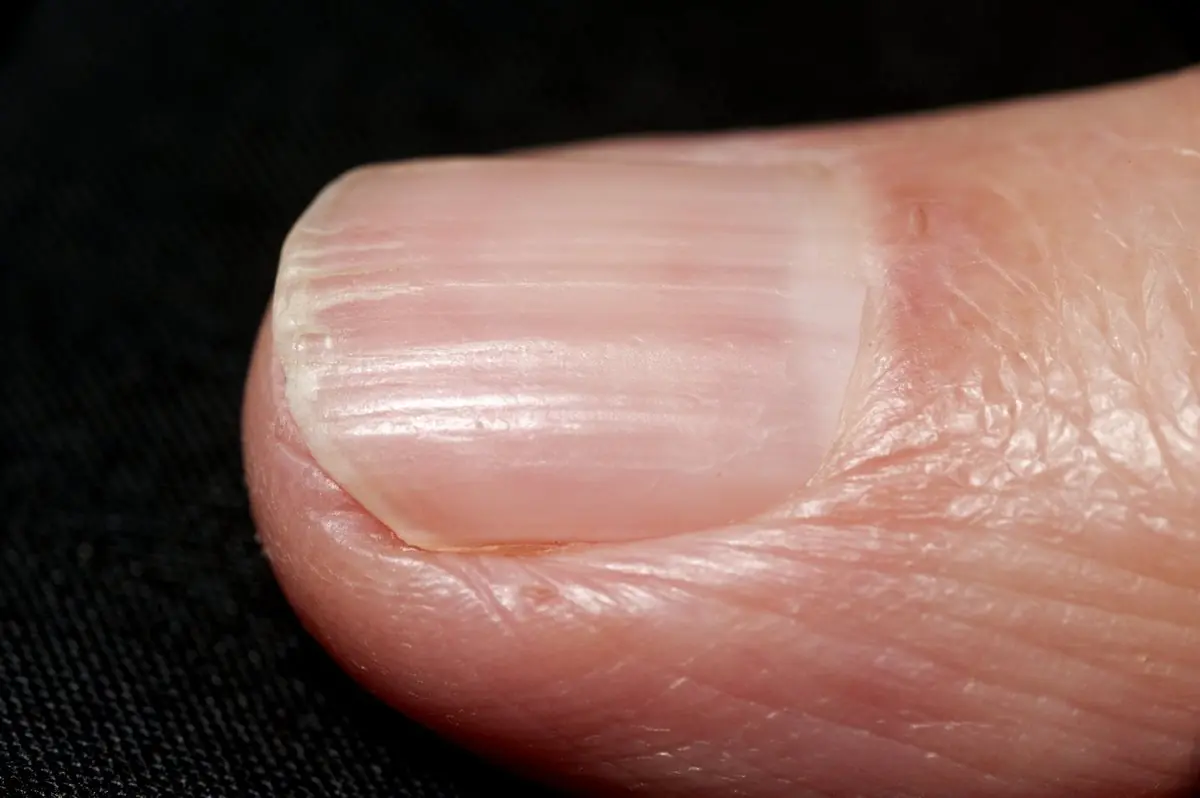
A Simple Nail-Health Routine for Adults Over 40
You do not need to spend a great deal of time examining your nails.
A short routine can help you notice changes without becoming overly concerned about every small variation.
In the morning: Look at your nails while washing your hands. Notice whether there is any unusual discoloration, swelling, or damage.
After washing: Apply a moisturizer to your hands and cuticles, especially if your skin feels dry.
During household work: Use gloves when handling cleaning products or spending a long time with your hands in water.
Once a week: Check whether your nails are growing normally and whether any new changes have appeared.
When trimming: Keep the nails at a comfortable length and avoid cutting or pushing back the cuticles aggressively.
When something changes: Take a photograph in natural light. A photograph can help you compare the appearance of the nail over time and show a healthcare professional if needed.
The purpose of this routine is not to search for disease. It is to understand what is normal for your own nails and recognize meaningful changes.
Why One Nail May Look Different From the Others
Sometimes, vertical ridges appear on only one nail.
This may happen because that nail has experienced more frequent injury or pressure than the others.
For example, a person may repeatedly use the same thumbnail to open packages, scrape labels, or press against hard surfaces.
A localized ridge may also result from an injury to the nail matrix.
If the ridge is stable and the nail otherwise looks healthy, it may not be serious.
However, a new, deep, or progressively changing abnormality in a single nail should not automatically be blamed on aging.
A dermatologist can examine the nail and determine whether the change appears to be related to trauma, a skin condition, infection, or another cause.
The same principle applies if a nail develops a new dark streak, begins separating from the nail bed, or becomes painful.
What Happens During a Medical Examination?
If you visit a doctor because of unusual nail ridges, the examination may be relatively straightforward.
The healthcare professional will usually look at the nails, surrounding skin, and cuticles.
They may ask when the ridges first appeared, whether they affect one nail or several, and whether you have experienced an injury or illness.
They may also ask about your daily activities, exposure to water or chemicals, nail products, medications, and other symptoms.
In many cases, the appearance of the nail and the history of the change provide useful information.
If a specific condition is suspected, further testing may be considered.
For example, blood tests may be appropriate if symptoms suggest a nutritional deficiency or thyroid problem. A nail sample may be examined if an infection is suspected.
Not everyone with vertical ridges needs testing.
The decision depends on the overall appearance of the nails and whether there are additional symptoms.

medlineplus.gov+1
The Most Important Message: Do Not Panic Over Ordinary Lines
Seeing vertical ridges on your nails after 40 can make you wonder whether your body is trying to warn you about something.
It is understandable to be curious, especially when online headlines suggest that a particular nail change is a clear sign of a hidden health problem.
But the medical evidence offers a more reassuring explanation.
Vertical ridges are common, and they often become more noticeable as people age. Changes in nail growth, dryness, and repeated minor irritation can all contribute to their appearance.
They do not automatically mean that you have a vitamin deficiency, thyroid disease, or another serious condition.
At the same time, it is sensible to pay attention to changes that are new, unusual, or accompanied by other symptoms.
A dark streak that is changing, deep horizontal grooves, persistent pain, swelling, or a nail that becomes distorted should be evaluated by a healthcare professional.
The best approach is to look at the whole picture rather than focusing on one small feature.
Healthy nails do not have to be perfectly smooth. They can have natural ridges and still be completely normal.
If your nails have gradually developed fine vertical lines but remain comfortable, pink, and firmly attached, there is usually no reason to panic.
Instead, protect them from excessive moisture, harsh chemicals, and repeated injury. Keep them moisturized, avoid aggressive manicures, and seek medical advice if a significant change develops.
The real message behind vertical nail ridges is not that every line signals danger. It is that understanding what is normal for your body helps you recognize when something genuinely deserves attention.