The important distinction is that nail changes can sometimes be part of a larger pattern, but they should not be used as a stand-alone diagnostic test.
If several symptoms develop together, it is reasonable to discuss them with a doctor rather than trying to interpret each one separately.
Why Nail Color Matters More Than Many People Realize
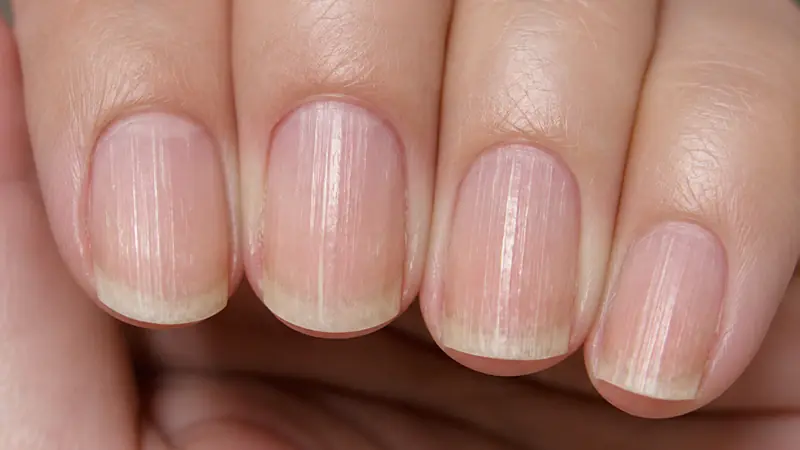
The image shows pale pink nails with visible vertical lines. That appearance is different from a nail that has developed a new dark streak, a yellow discoloration, or a major change in its overall color.
Color changes can sometimes provide more important information than ordinary surface ridges.
A new dark line running lengthwise through one nail should be examined by a dermatologist, particularly if it becomes wider, changes color, or extends onto the surrounding skin.
A dark streak does not automatically mean cancer. There are several possible causes. However, melanoma can sometimes develop beneath a nail, and it is important not to dismiss a new or changing pigmented streak.
Other color changes may occur because of infection, injury, medication, or underlying medical conditions.
A yellow nail may have several explanations, including a fungal infection. A pale nail may sometimes be associated with anemia or other health concerns.
The appearance of the nail needs to be assessed in context.
If a nail changes color unexpectedly, especially if the change affects only one nail or progresses over time, it is worth arranging a medical evaluation.
Vertical Lines Versus Horizontal Grooves: The Difference You Should Know
One of the most useful things you can do when examining your nails is to identify the direction of the lines.
Vertical ridges run from the cuticle toward the fingertip. They often develop gradually and are commonly associated with normal aging.
Horizontal grooves run across the nail, from one side to the other. These are sometimes called Beau's lines.
Horizontal grooves may develop when nail growth is temporarily interrupted. This can happen after a significant illness, fever, injury, or another event that affects the nail matrix.
The groove may become visible weeks after the event because the nail needs time to grow far enough for the change to reach the surface.
A person who notices a horizontal groove may remember having been seriously ill or injured several weeks earlier.
In some cases, the cause is not obvious. If deep horizontal grooves appear on several nails, particularly without a clear explanation, a healthcare professional should examine them.

Mayo Clinic+2
The distinction is important because a headline about vertical ridges should not be used to explain every type of nail line.
The direction, depth, timing, and accompanying symptoms all matter.
When Vertical Ridges May Be Connected to a Skin Condition
Nails are closely connected to the surrounding skin, and some skin conditions can affect the nail matrix or nail plate.
For example, eczema can cause inflammation and dryness around the fingers. People with eczema may also experience changes in nail texture.
Psoriasis can affect the nails in several ways. It may cause small pits, thickening, discoloration, separation of the nail from the nail bed, or changes in the nail surface.
These changes may look different from the fine, regular vertical ridges commonly associated with aging.
If a person has persistent skin irritation around the nails, painful swelling, or unusual changes in several nails, a dermatologist can help determine whether a skin condition is involved.
It is also important to avoid damaging the cuticle.
The cuticle forms a protective barrier around the base of the nail. Cutting it too aggressively or repeatedly pushing it back can irritate the surrounding tissue and increase the risk of inflammation or infection.
Healthy nail care is not about removing every visible line. It is about protecting the structures responsible for producing healthy nails.
What Does a Healthy Nail Look Like After 40?
A healthy nail does not necessarily have to be perfectly smooth.
It may have subtle vertical ridges, slight variations in shine, or small differences in shape from one finger to another.
The nail should generally remain firmly attached to the nail bed, grow at a reasonably consistent pace, and avoid persistent pain or swelling.
The surrounding skin should not be chronically red, inflamed, or infected.
It is also normal for nails to become more brittle with age. Fingernails may grow more slowly, become less shiny, or develop changes in thickness.
These changes do not automatically indicate poor health.
A person can have visible ridges and otherwise healthy nails.
The key is to pay attention to changes from your own normal appearance.
If your nails have always had fine vertical lines, that is different from suddenly developing deep grooves on several fingers.
If the ridges have been stable for years and there are no other symptoms, they are generally less concerning than a rapid or unexplained change.
Five Nail Changes That Should Not Be Ignored
Although ordinary vertical ridges are usually harmless, certain changes deserve more attention.
1. A new or changing dark streak
A dark brown or black line that appears beneath one nail should be evaluated, especially if it is new or changing.