
A White Tongue Can Have Many Causes - Here's What to Look For
White Tongue: Possible Causes and What You Should Know
Health 07/07/2026 15:08
If you've spent time on social media recently, you've probably seen videos encouraging people to press the tips of their index fingers—or their fingernails - together to perform a quick "lung cancer test." These videos often claim that if you cannot see a small diamond-shaped gap between the nails, you may have lung cancer.
While this simple finger check is based on a real medical observation, it is not a reliable screening test for lung cancer and should never be used to diagnose or rule out the disease.
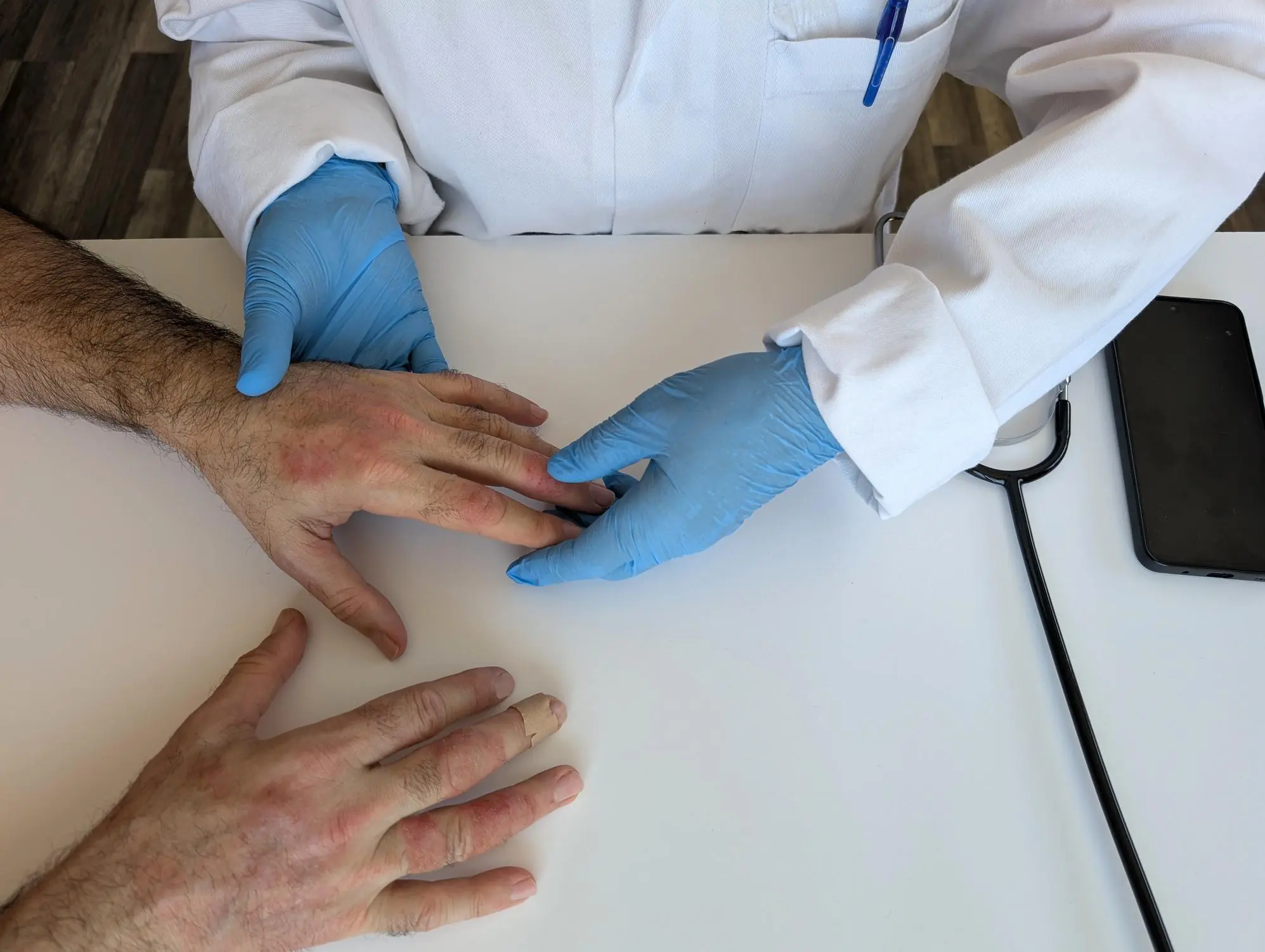
The test actually relates to a physical sign known as digital clubbing, which can sometimes be associated with lung diseases, but it also has many other possible causes. Understanding what this test can and cannot tell you is important.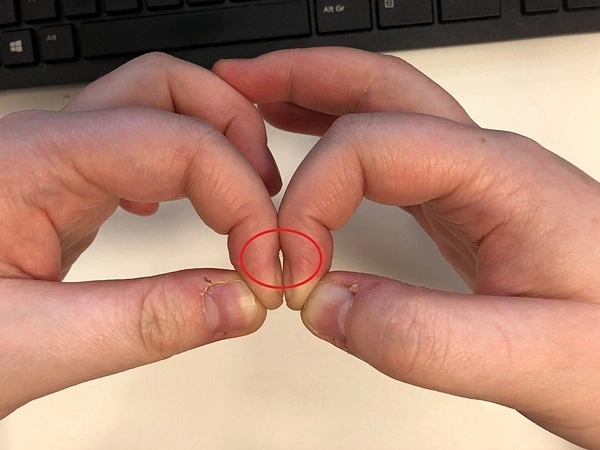
The finger test shown online is commonly called the Schamroth window test.
To perform it:
Place the nails of your two index fingers directly against each other.
Hold them at eye level.
Look for a small diamond- or window-shaped gap between the nail beds.
In many healthy people, a small gap is visible.
If the gap is absent, it may suggest finger clubbing, but the test alone cannot diagnose any disease.
Finger clubbing (also called digital clubbing) is a gradual change in the shape of the fingertips and fingernails.
People with clubbing may notice:
Fingertips becoming enlarged or rounded
Nails curving downward more than usual
Nails appearing shinier
Softening of the nail bed
Loss of the normal angle between the nail and the surrounding skin
These changes usually develop slowly over months or even years.
Researchers still do not fully understand the exact cause.
It is believed that certain diseases may increase blood flow and tissue growth in the fingertips, leading to these characteristic changes.
Importantly, finger clubbing itself is a sign—not a disease.
Sometimes—but not always.
Finger clubbing has been associated with some types of lung cancer, particularly certain non-small cell lung cancers.
However:
Many people with lung cancer never develop finger clubbing.
Many people with finger clubbing do not have lung cancer.
Therefore, the presence or absence of clubbing cannot confirm or exclude lung cancer.
Clubbing has also been linked to several non-cancerous lung diseases, including:
Pulmonary fibrosis
Bronchiectasis
Lung abscess
Cystic fibrosis
Chronic lung infections
These conditions can reduce oxygen delivery or cause chronic inflammation, although the exact mechanism behind clubbing remains under investigation.
Several conditions outside the lungs may also cause clubbing.
Examples include:
Certain congenital heart defects and other heart conditions may be associated with clubbing.
Some chronic liver disorders have been linked to changes in the fingertips.
Conditions such as:
Crohn's disease
Ulcerative colitis
may occasionally be associated with clubbing.
Some people are born with inherited forms of clubbing without any serious underlying illness.
The Schamroth window test is useful as a clinical observation, but it has important limitations.
For example:
Not everyone performs it correctly.
Finger shape naturally varies from person to person.
Mild clubbing can be difficult to recognize.
Some healthy individuals naturally have little or no visible gap.
Most importantly, the test has never been validated as a screening tool for lung cancer in the general population.
Doctors do not diagnose lung disease based on this test alone.
If you're concerned about lung health, symptoms deserve far more attention than the appearance of your fingers.
Seek medical evaluation if you experience:
A cough lasting longer than three weeks
Coughing up blood
Persistent shortness of breath
Chest pain
Hoarseness that doesn't improve
Unexplained weight loss
Persistent fatigue
Recurrent chest infections
These symptoms do not necessarily indicate lung cancer, but they should be evaluated by a healthcare professional.
If lung disease is suspected, your healthcare provider may recommend:
A physical examination
Chest X-ray
Chest CT scan
Pulmonary function tests
Blood tests
Bronchoscopy in selected cases
The appropriate tests depend on your symptoms, medical history, age, and risk factors.
Routine screening is not recommended for everyone.
Many countries recommend annual low-dose CT (LDCT) screening only for people at high risk, such as certain adults with a significant smoking history and within specific age ranges.
If you think you may qualify, discuss screening with your healthcare provider.
In some cases, treating the underlying condition may improve clubbing.
However, if clubbing has been present for a long time, the changes may not completely reverse.
The focus is always on identifying and treating the underlying cause rather than the finger appearance itself.
Although not every lung disease can be prevented, healthy lifestyle choices make a significant difference.
Smoking remains the leading preventable cause of lung cancer and chronic lung disease.
Quitting smoking benefits lung health at any age.
Regular exercise supports healthy lung and heart function.
When possible:
Avoid tobacco smoke.
Minimize exposure to chemical fumes.
Ensure good indoor ventilation.
Choose plenty of:
Fruits
Vegetables
Whole grains
Lean proteins
Good nutrition supports overall health and immune function.
False.
Many conditions—and sometimes no disease at all—can affect the appearance of the fingers.
False.
Many people with lung disease have completely normal-looking fingers.
False.
The Schamroth window test is not a substitute for medical evaluation, imaging studies, or lung cancer screening.
Arrange a medical evaluation if you notice:
New or worsening finger clubbing
Persistent cough
Difficulty breathing
Chest pain
Coughing up blood
Unexplained weight loss
Recurrent respiratory infections
These symptoms deserve professional assessment regardless of the result of any finger test.
Seek emergency medical care immediately if you develop severe difficulty breathing, coughing up large amounts of blood, or sudden chest pain.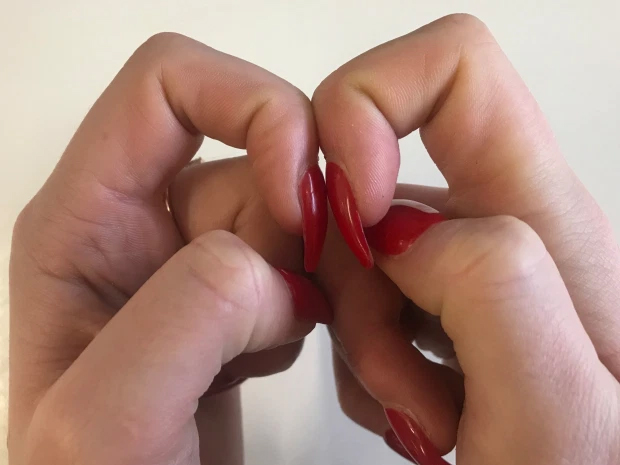
The viral finger test has attracted attention because it is simple and easy to perform, but it is often misunderstood. The absence of the small diamond-shaped gap between your fingernails may suggest finger clubbing, a physical sign that can be associated with certain lung diseases, heart conditions, liver disorders, and other medical problems. However, it is not a diagnostic test for lung cancer.
If you notice changes in the appearance of your fingertips or nails, think of them as a reason to seek medical advice—not as proof of a serious illness. Paying attention to persistent respiratory symptoms, following recommended health screenings if you are at high risk, and maintaining healthy lifestyle habits remain far more effective ways to protect your lung health than relying on a simple finger test.
When it comes to lung disease, early professional evaluation is far more valuable than self-diagnosis based on viral trends.
White Tongue: Possible Causes and What You Should Know

Eat Walnuts More Often? Here's What Experts Say May Happen 😮

Is It Safe to Eat Ginger Every Day? Here's What Experts Say 👀
Nighttime Leg and Foot Symptoms That May Signal Poor Circulation

10 Early Symptoms That Could Signal Dementia

Cancer is one of the leading causes of death worldwide, but the good news is that certain foods contain powerful compounds that may help prevent and even fight cancer.
Cancer is one of the leading causes of death worldwide, but the good news is that certain foods contain powerful compounds that may help prevent and even fight cancer.

Here’s a detailed distinction between pharyngitis and nasopharyngeal cancer based on clinical features, investigations, and risk factors

20 Warning Signs of Cancer That Doctors Say You Shouldn't Ignore

While many people focus on sleep duration, doctors say that sleeping position may also influence comfort, breathing, digestion, and circulation.
Doctors Say Some Bruises Deserve More Attention Than Others
Doctors Say Red Dots on Your Skin May Reveal More Than You Think

Broccoli: The Everyday Vegetable With Impressive Health Benefits 👀
These tiny red spots aren't always harmless

Try this healthier combination instead.
Discover 3 Sprouted Foods That Can Be a Healthy Addition to Your Diet
White Tongue: Possible Causes and What You Should Know
Eat Walnuts More Often? Here's What Experts Say May Happen 😮
Is It Safe to Eat Ginger Every Day? Here's What Experts Say 👀
Nighttime Leg and Foot Symptoms That May Signal Poor Circulation
10 Early Symptoms That Could Signal Dementia
Cancer is one of the leading causes of death worldwide, but the good news is that certain foods contain powerful compounds that may help prevent and even fight cancer.
Cancer is one of the leading causes of death worldwide, but the good news is that certain foods contain powerful compounds that may help prevent and even fight cancer.
Here’s a detailed distinction between pharyngitis and nasopharyngeal cancer based on clinical features, investigations, and risk factors
20 Warning Signs of Cancer That Doctors Say You Shouldn't Ignore
While many people focus on sleep duration, doctors say that sleeping position may also influence comfort, breathing, digestion, and circulation.
A simple coin—or a warning?
Doctors Say Some Bruises Deserve More Attention Than Others
Doctors Say Red Dots on Your Skin May Reveal More Than You Think
Broccoli: The Everyday Vegetable With Impressive Health Benefits 👀
These tiny red spots aren't always harmless
Try this healthier combination instead.