Missing Son Found in the Woods — But His Father’s Role Raises Troubling Questions
A child disappears, and an entire community is left waiting for news. Days pass. Search teams move through wooded paths, volunteers check the surrounding area, and family members hold on to the hope that the missing boy will be found safe. Then comes the news everyone has been praying for: the child has been located alive.
But the relief is accompanied by a troubling question. According to the account provided, investigators say the boy’s father played an unexpected role in the incident. What happened before the child disappeared? Why has the father’s involvement become a focus of attention? And what do authorities still need to establish?
The supplied report offers only a limited outline. It says the boy was missing for several days, was found unharmed in a wooded area, and that investigators are making further inquiries into his father’s role. It does not provide the child’s name, age, location, exact timeline, the father’s alleged actions, or a detailed police statement.
Those missing details matter. Without them, it would be irresponsible to claim that the father abducted the child, deliberately concealed him, or committed a crime. The central question is therefore not simply who was responsible, but what investigators can establish from the evidence—and how the child can be protected while the facts are clarified.
This article follows the information in the supplied report, explains why a parent’s role may become important in a missing-child investigation, and examines the search, safeguarding, and investigative questions that naturally follow such a case. It does not invent names, locations, motives, or accusations that have not been confirmed.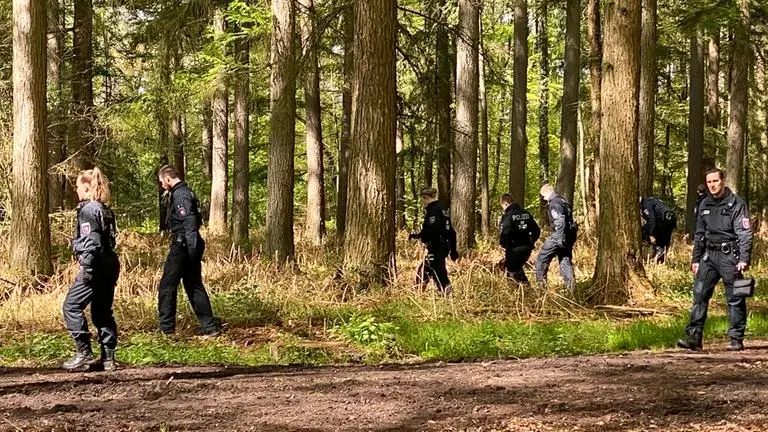
Chapter 1: The Search Ends, but the Questions Begin
The supplied account says the boy had been missing for several days before he was found in a wooded area. It describes a search involving local law enforcement officers and volunteers, and says the child was located unharmed. That is the most reassuring part of the report: after days of uncertainty, the immediate search ended with the child alive.
Yet the headline points to another part of the story. It suggests that the father was involved in an unexpected way. The short text does not explain exactly what that involvement was. It says investigators are making further inquiries to understand what happened and why the situation unfolded as it did.
That distinction is essential. A parent may become central to a missing-child investigation for many reasons. A parent may have been the last person to see the child, may have reported the disappearance, may have provided information about the child's habits, or may have helped search teams locate an area that had not yet been checked. In a more serious situation, investigators may also need to examine whether a parent's actions contributed to the disappearance or delayed the search.
Those possibilities are not interchangeable. The fact that investigators are asking questions does not establish that a person has committed an offence. Nor does a headline, by itself, reveal what evidence authorities have gathered.
The first task after a child is found is to establish the child's immediate safety. Medical professionals may need to assess whether the child is dehydrated, exhausted, injured, frightened, or otherwise affected by the experience. Even when a child appears physically unharmed, several days of uncertainty and possible exposure to the elements can be distressing.
The next task is to establish a reliable account of events. Investigators may need to determine when the child was last seen, who was present, which locations were searched, what information was provided, and how the child eventually came to be found.
The public may want a simple explanation. Families and neighbors may want to know whether the father helped, whether he knew more than he initially said, or whether there was a misunderstanding. But responsible investigators cannot settle those questions through rumor or appearances. They need evidence that can be checked.
The importance of the first confirmed timeline
A missing-child investigation often begins with a timeline. Investigators try to establish the last confirmed sighting and the sequence of events that followed.
A timeline may include:
-
The last time the child was seen by a reliable witness.
-
The place where the child was last known to be safe.
-
The time the disappearance was reported.
-
The people who were present before the child went missing.
-
The first places searched by family members or authorities.
-
The arrival of police, emergency services, and volunteers.
-
Any confirmed communication or sighting during the search.
-
The time and circumstances in which the child was located.
Each detail can help investigators understand the sequence of events. A difference of a few minutes may matter when reconstructing a child's movements, but an apparent inconsistency does not automatically prove deliberate deception. People under stress can misremember times, confuse the order of events, or describe the same incident differently.
That is why investigators compare accounts with independent information wherever possible.
Why the father's role needs careful examination
The headline's reference to the father is the element that makes the story especially sensitive. A parent is often one of the people with the most knowledge about a child's daily routine, favorite places, fears, friendships, and habits.
That knowledge can be valuable during a search. It can help rescuers understand where a child might go, what sounds or objects might attract the child's attention, and which areas should be checked first.
At the same time, if investigators identify unanswered questions about the circumstances of a disappearance, they may need to examine information supplied by every adult who was involved. This is a normal part of establishing what happened. It does not, by itself, establish guilt.
The supplied report does not say whether the father found the child, directed rescuers to the location, was questioned, was accused of wrongdoing, or was simply part of the wider inquiry. Those details should not be invented to make the headline more dramatic.
The responsible conclusion is narrower: the father's role has reportedly attracted investigators' attention, and authorities are seeking a clearer understanding of the events.
Relief does not end the need for answers
When a missing child is found alive, a community may feel that the worst has passed. People who searched may return home exhausted. Volunteers may contact one another to share the news. Relatives may finally be able to focus on the child's recovery rather than the uncertainty of the search.
But a successful search does not automatically answer why the child disappeared.
There may be a simple explanation. There may be a misunderstanding. There may be a safeguarding concern that requires further attention. The available report does not provide enough detail to determine which explanation applies.
This is why the story has two separate dimensions: the relief of finding the child and the continuing investigation into the circumstances.
Both deserve attention. Neither should be used to erase the other.
Chapter 2: What Happens When a Child Goes Missing?
A child disappearing from a familiar environment creates an urgent situation because children may not understand the dangers around them or know how to return safely.
A wooded area can make the situation especially difficult. Trees, uneven ground, thick vegetation, waterways, abandoned structures, and changes in light can make it harder to locate someone. Even a relatively small woodland can contain places that are difficult to see from a path or road.
The supplied account says local law enforcement and volunteers took part in the search. Although it does not describe the exact operation, searches of this kind generally require coordination, clear information, and careful attention to the child's known circumstances.
The first report and the initial response
When a child is reported missing, authorities need to gather basic information quickly.