A team may discover a possible clue, encounter difficult terrain, or need assistance. Search coordinators need to know where teams are and whether they have completed their assigned areas.
Reliable communication also helps prevent volunteers from becoming separated or entering unsafe locations.
Search dogs and other resources
In some missing-person cases, authorities may use specially trained search dogs, aerial resources, thermal equipment, or other tools.
Their availability depends on the location and circumstances.
It would be inaccurate to claim that helicopters, drones, or dogs were used in this particular case because the supplied report does not say so.
The important point is that search resources are selected according to the information available and the needs of the operation.
Why volunteers should follow instructions
A community response can be powerful, but too many people searching independently may make the operation harder to manage.
Volunteers may unintentionally disturb potential evidence, overlook safety hazards, or create confusion about which areas have already been checked.
Organized volunteer support allows people to contribute while reducing these risks.
The significance of a successful discovery
When a child is found, search teams need to communicate the confirmed information to the appropriate authorities.
The child may require immediate assessment, and the search coordinator may need to ensure that all teams are informed so the operation can be safely concluded.
The supplied report describes a successful outcome and praises the swift response of the people who helped.
That community effort deserves recognition, while the remaining investigative questions must be addressed separately.
Chapter 6: What Investigators May Need to Establish Next
Finding the child brings an immediate emergency to an end, but it does not necessarily close the investigation.
Authorities may still need to determine how the child reached the wooded area, how long he was there, what happened before the disappearance, and whether any adult's actions contributed to the situation.
The supplied account says further inquiries are underway. It does not provide the results of those inquiries, so the questions below should be understood as matters that investigators may examine in a case of this kind—not as claims about what happened here.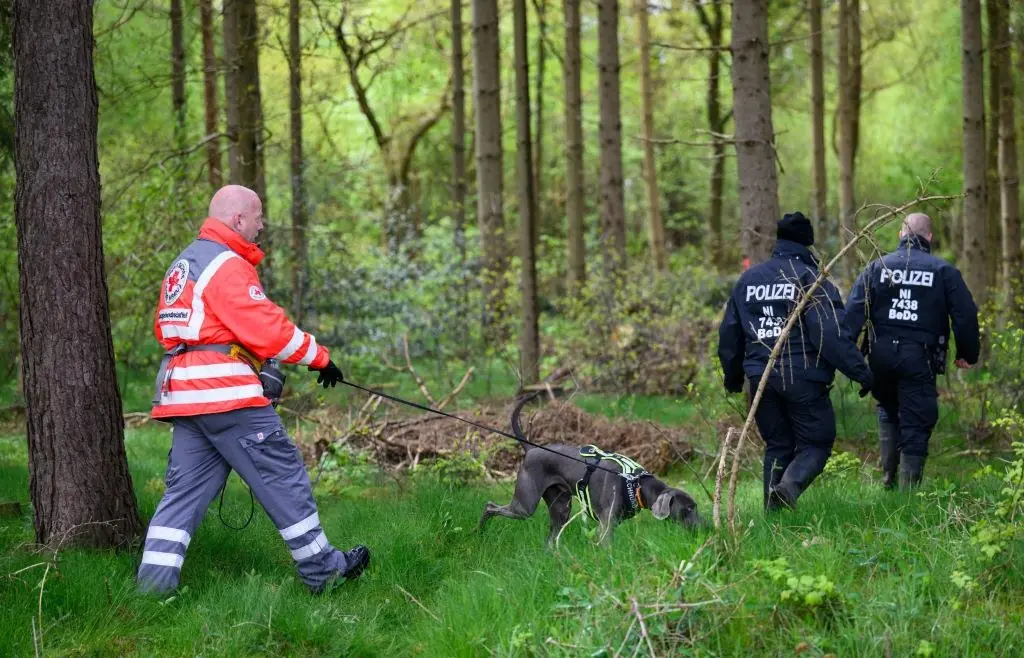
Reconstructing the child's movements
One important task is to establish the child's movements before and during the period he was missing.
Investigators may compare the last confirmed sighting with available witness accounts, records, and other evidence. They may examine whether the child could have reached the wooded area independently or whether someone else may have taken him there.
The answer depends on facts that are not included in the supplied report.
The child's age and abilities would be relevant. A very young child may have a limited understanding of distance and direction. An older child may be able to navigate familiar paths but still become lost in unfamiliar terrain.
Investigators should avoid assuming that the child's presence in the woods automatically proves how he got there.
Establishing when the child was last seen
The period between the last confirmed sighting and the discovery can be especially important.
Investigators may need to establish:
-
Who last saw the child.
-
Whether the sighting was confirmed or based on an estimate.
-
What the child was doing at that time.
-
Whether anyone noticed the child leaving the area.
-
When family members first became concerned.
-
When authorities were contacted.
-
Whether any information emerged during the search that changed the timeline.
A clear timeline can help investigators understand the sequence of events and identify areas that need further examination.
Understanding the father's account
Because the headline highlights the father's role, investigators may need to understand exactly what he knew and when he knew it.
This could involve clarifying his account of the child's last known movements, the actions he took after the disappearance, and any information he provided to search teams.
If he contributed information that helped locate the child, investigators may need to establish how he obtained that information and whether it is consistent with other evidence.
That does not mean his involvement was improper.
A parent can have important information for entirely legitimate reasons. The fact that authorities want to understand a person's actions does not automatically mean that person is responsible for the incident.
Reviewing available records
Depending on the circumstances and applicable law, investigators may review relevant records that help establish timing and movement.
These could include security footage, messages, phone records, photographs, or other material.
Not every case involves all of these sources. Some locations may have no cameras, and not every person will have relevant digital information.
The purpose is to test the timeline against independent evidence where it is available.
Speaking with witnesses
Witnesses may include neighbors, relatives, people who were nearby, or individuals who participated in the search.
Investigators may ask whether anyone saw the child, noticed unusual activity, heard a relevant conversation, or observed a vehicle or person in the area.
Witness accounts must be assessed carefully. A person may be mistaken about the time, location, or identity of someone they saw.
A report should not turn an unverified observation into a confirmed fact.
Determining whether there was a safeguarding concern
The investigation may also need to establish whether the child was exposed to a preventable risk.
This question is broader than whether a crime occurred.
Authorities may consider whether supervision arrangements were appropriate, whether the child had access to a dangerous location, and whether any adult failed to take reasonable steps to protect him.
The relevant standards depend on local law and the facts.
The supplied report says authorities emphasized communication, supervision, and timely action when a child's safety is at risk. Those themes are relevant even without knowing the final investigative findings.
Why a final conclusion may take time
The public may expect an immediate explanation after a child is found. However, investigators may need time to compare statements, review available records, and establish a reliable sequence of events.
A rushed conclusion can be unfair to the people involved and may damage the investigation.
If authorities eventually release a detailed statement, it should clarify what is confirmed, what remains under examination, and whether any formal action has been taken.
Until then, the father's role should be described cautiously.
Chapter 7: The Community's Reaction and the Responsibility of Online Reporting
A missing-child case rarely affects only one household.
When news spreads through a neighborhood, people may feel a strong desire to help. Parents may imagine what it would be like if their own child disappeared. Teachers may worry about the safety of students. Neighbors may begin checking nearby streets and wooded areas.
The discovery of the child can bring collective relief, but the mention of the father's role may also create confusion and suspicion.
This is where responsible communication becomes especially important.
Relief and uncertainty can exist together
People who took part in the search may feel grateful that the child was found alive.
At the same time, they may want to understand why the child went missing and what the father did.
These reactions are not contradictory.
A successful search is a positive outcome. A continuing investigation is a separate process intended to clarify the circumstances.
The community can recognize the work of volunteers and emergency personnel without assuming that every unanswered question has already been resolved.
Why rumors spread so quickly
Stories involving children naturally attract strong emotions.
A short headline can suggest a dramatic revelation even when the accompanying text contains very little detail. Readers may begin filling in the gaps with assumptions, particularly when a family member is mentioned.
Social media can accelerate this process.
A claim may be copied from one page to another, rewritten with stronger language, or shared without the original context. As the story spreads, an unconfirmed detail may begin to appear established simply because it has been repeated many times.