Fresh water caltrops are agricultural produce, and their quality can deteriorate if they are left in unsuitable conditions.
If you receive a bag of fresh fruits, first check whether they are wet, damaged, or showing signs of decay.
Do not seal damp, dirty produce in an airtight container and leave it at room temperature for an extended period.
If the fruits are intended for consumption, follow the storage instructions provided by the seller.
Generally, fresh produce should be kept cool and handled hygienically.
After cooking, the edible kernels should be refrigerated promptly in a clean, covered container.
Avoid leaving cooked food at room temperature for prolonged periods.
Refrigerated leftovers should be reheated appropriately before serving.
If the kernels develop an unusual odor, slimy surface, mold, or an unexpected change in appearance, discard them.
It is also important not to mix freshly harvested fruits with ready-to-eat foods before cleaning and preparation.
This helps reduce the possibility of transferring dirt or microorganisms from the exterior to other ingredients.
Can You Grow Water Caltrops at Home?
Their unusual appearance may tempt some people to grow water caltrops in a garden pond.
Botanically, they are fascinating plants.
Their floating leaves create a distinctive pattern on the water, while their fruits have an appearance unlike that of most familiar garden plants.
However, growing them is not necessarily suitable for every location.
Water caltrops can spread aggressively under favorable conditions.
In some countries and regions, certain Trapa species are classified as invasive aquatic weeds.
They can form dense mats across water surfaces, reducing access to waterways and competing with native aquatic vegetation.
The United States Geological Survey and other environmental agencies document their ecological effects, including the ability to spread through seeds and floating plant material.
In New South Wales, Australia, water caltrop is classified as prohibited matter.
Authorities warn that its dense growth can interfere with waterways, reduce habitat quality, and create problems for recreational activities.
This means that someone should not simply purchase seeds and release them into a pond.
Before growing an aquatic plant, check local environmental and biosecurity regulations.
Even if a plant is edible, it may be unsuitable for cultivation in a particular region.
A food's culinary value and its environmental impact are two separate considerations.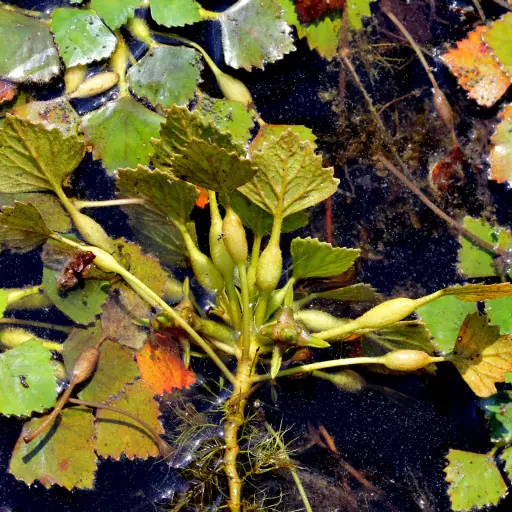
Why Water Caltrops Are Sometimes Confused With Other Strange Fruits
There are many unusual edible fruits and seeds found in freshwater environments.
Some have hard shells.
Others have projections, irregular surfaces, or unusual colors.
As a result, photographs shared online can create confusion.
A person may see a dark, horned fruit and assume that it must be a water caltrop.
Another person may see a bright green object and believe it is a different variety.
But appearance alone is not always enough.
The fruit should be identified using several characteristics together:
-
The botanical source.
-
The natural growing environment.
-
The number and structure of its projections.
-
The shape and texture of the shell.
-
The appearance of the edible seed.
-
The origin of the specimen.
A reliable identification should also distinguish between Trapa species and other plants that share the common name water chestnut.
This is particularly important when searching for information online.
A recipe describing canned Chinese water chestnuts may have little relevance to someone holding a freshly harvested horned water caltrop.
Likewise, a photograph of an aquatic ornamental plant does not prove that its seeds are edible.
For unfamiliar food, correct identification should always come before preparation.
What Should You Do If Your Neighbor Gives You a Bag of These Fruits?
Imagine receiving a plastic bag filled with dark, strangely shaped fruits.
Your neighbor tells you that they are edible but does not explain how to prepare them.
The first instinct might be to wash them, open one, and taste the interior.
That is not the best approach.
Instead, ask a few simple questions.
Where were they collected?
Fruits from a known food-growing area are different from those gathered from an unidentified pond or waterway.
What is their local name?
A local name can help narrow down the possible species, although it should not replace proper identification.
Have they been sold as food before?
Commercial food products from established suppliers generally have more reliable sourcing and handling information than unidentified wild collections.
How does the local community prepare them?
Traditional cooking methods can provide useful information, especially when the person giving them to you has eaten the same variety for many years.
Are they intended for eating or decoration?
This question may sound obvious, but it is worth asking.
Some unusual seeds and fruits are collected for ornamental purposes rather than food.
After obtaining this information, compare the fruits with reliable botanical descriptions.
If their identity remains uncertain, do not eat them.
The same principle applies to mushrooms, wild berries, unfamiliar seeds, and other foraged foods.
Never assume that something is edible simply because it resembles a known food.
Why This Unusual Fruit Deserves More Attention
Water caltrops are an interesting example of how traditional foods can remain unfamiliar outside the regions where they are commonly eaten.
Their strange appearance attracts attention, but their value goes beyond curiosity.
They are part of the food history of communities that have used freshwater resources for generations.
They have been eaten as seasonal snacks, incorporated into everyday cooking, and processed into flour.
Their starch-rich kernels have also made them useful during periods when other food sources were limited.
Modern interest in traditional ingredients has encouraged people to rediscover foods that may not be widely available in supermarkets.
However, rediscovering an unfamiliar food should involve more than simply trying it because it looks interesting.
People should understand its origin, nutritional characteristics, preparation requirements, and potential risks.
Water caltrops demonstrate why traditional food knowledge matters.
Someone who grew up eating them may know exactly how to recognize a mature fruit, remove its shell, and prepare the kernel.
A newcomer may have none of that experience.
The safest approach is to combine traditional knowledge with modern food-safety practices.
This allows people to appreciate an unusual ingredient without overlooking the importance of proper preparation.