Princess Diana was just 36 years old when she died following a car crash in Paris on August 31, 1997. Her death came almost exactly one year after her divorce from Charles was finalized on August 28, 1996, closing a deeply scrutinized chapter of her life and beginning another that would ultimately be far too short.
Yet nearly three decades later, public fascination with Diana has hardly faded.
Photographs from her years as Princess of Wales continue to be examined, shared, and discussed. Some capture her warmth and connection with the public. Others offer glimpses into royal life, her relationship with Charles, and the highly choreographed world in which the couple lived.
Among those photographs is a seemingly ordinary image taken at Balmoral in 1981, the year Charles and Diana married.
At first glance, there doesn't appear to be anything unusual about it.
Charles is wearing a green sweater, while Diana stands beside him in a tan jacket. He has one arm around her, and the Scottish landscape stretches behind them.
But look a little closer, and one detail immediately catches the eye.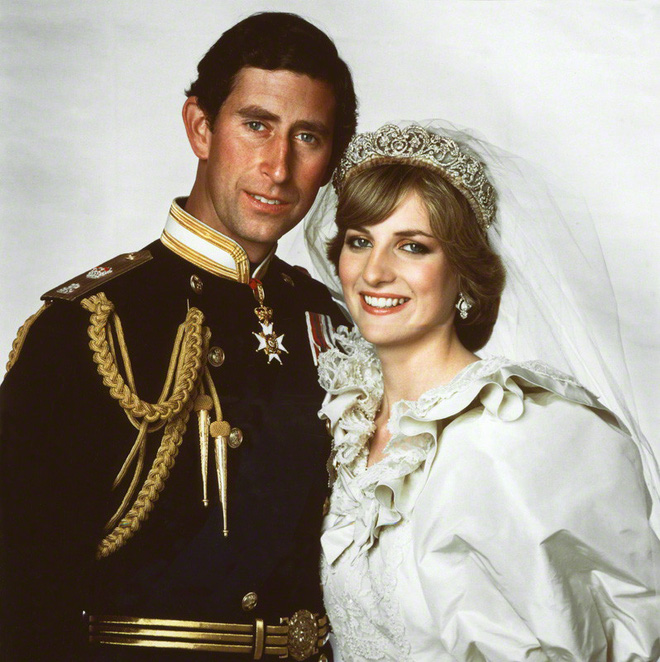
Charles appears dramatically taller than Diana.
His head seems to rise noticeably above hers, creating the impression of a substantial height difference between the newly married couple.
That might not seem particularly strange—until you compare the photograph with other images of Charles and Diana.
In some pictures, the couple appear almost the same height.
In others, Charles looks distinctly taller.
So what explains the difference?
Was it simply the camera angle?
Were their shoes responsible?
Was the couple deliberately positioned in certain ways for photographs?
Or was there something else happening behind the scenes?
The Photograph That Started the Conversation
The Balmoral photograph has attracted attention because it creates such a strong visual impression.
Diana appears significantly shorter than Charles, despite commonly reported figures placing both of them at approximately 178 centimeters (5 feet 10 inches).
That apparent contradiction has encouraged royal watchers to examine photographs from different periods of their marriage.
The more photographs people compare, the stranger the difference can appear.
In one image, Diana may seem only slightly shorter.
In another, Charles appears to tower over her.
Then another photograph seems to reverse the visual impression, bringing them almost level.
Of course, photographs don't provide a perfect measurement of someone's actual height.
Positioning, posture, footwear, perspective, camera angle, and whether one person is standing on a higher surface can dramatically change how height is perceived.
And in the case of Charles and Diana, there is an especially interesting detail that becomes apparent when photographs from the same setting are examined more carefully.
Was Diana Actually Shorter in the Balmoral Photograph?
The answer may be much simpler than the photograph initially suggests.
Diana was sitting on a bench.
That easily overlooked detail changes the entire composition.
Charles is standing while Diana is positioned lower, which naturally creates the dramatic impression that he is much taller.
Once you know that, the photograph suddenly looks very different.
The image is a useful reminder of just how easily photographs can create visual impressions that don't accurately represent physical reality.
A person doesn't have to be manipulated digitally to appear taller or shorter.
Sometimes, all it takes is a different position.
But Why Do Other Photographs Look Different Too?
The bench explains the famous Balmoral photograph, but it doesn't completely explain why the couple's apparent height difference varies so much across photographs.
That's where photography and social conventions become particularly interesting.
When two people stand together, their apparent height can be influenced by numerous factors.
Footwear
Shoes can make a meaningful difference.
High heels can add several centimeters to a person's apparent height, while flat shoes obviously provide much less elevation.
The same person can therefore look noticeably taller or shorter depending on what they're wearing.
Posture
Posture matters too.
Someone standing upright with their shoulders back will appear taller than the same person standing with slightly bent knees or leaning forward.
Diana's posture could also vary depending on whether she was walking, greeting someone, standing formally, or posing for an official portrait.
Positioning
Even a difference of a few steps can change how two people appear in a photograph.
If one person stands slightly closer to the camera, perspective can alter the perceived proportions.
If someone stands on a step, curb, slope, or raised surface, the difference can become even more noticeable.
Camera angle
Photographers don't always shoot from directly in front at eye level.
A camera positioned above or below the subjects can alter the visual relationship between them.
The resulting photograph is therefore a two-dimensional representation of a three-dimensional scene.
What we see isn't necessarily an exact record of physical proportions.
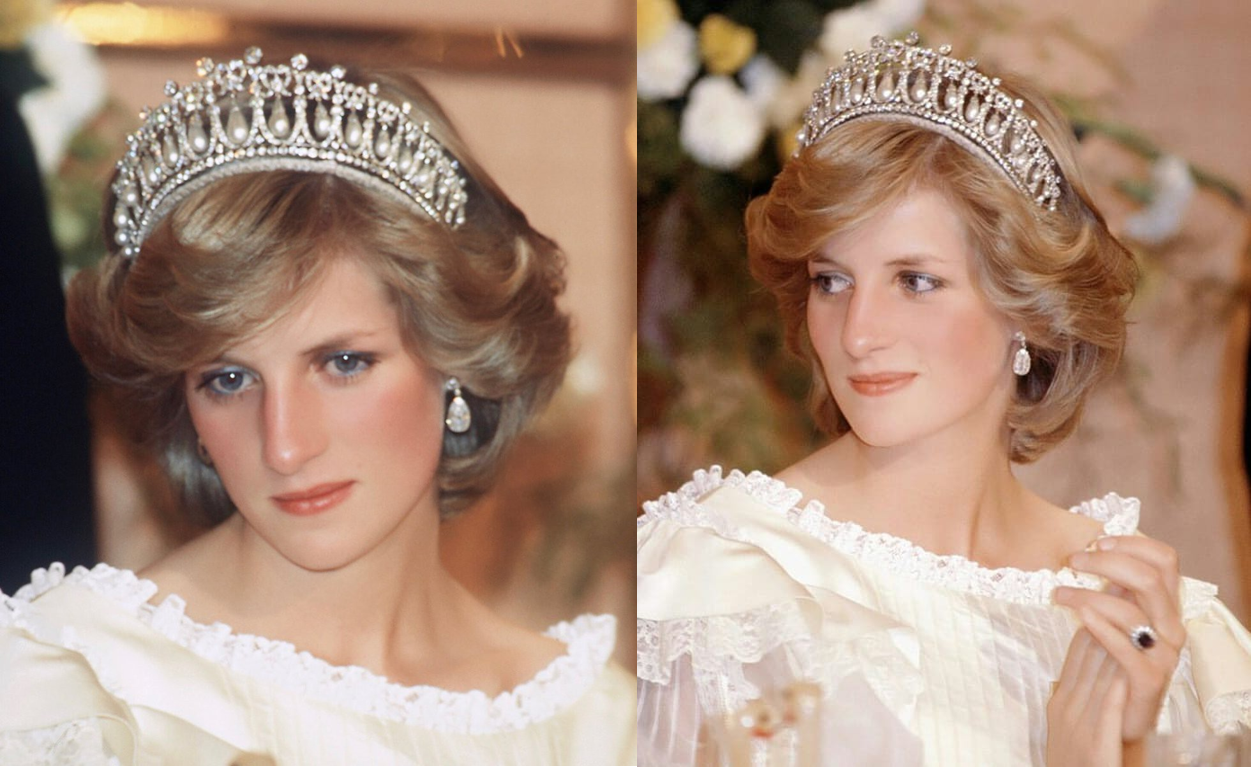
The Bigger Question: Were They Ever Deliberately Positioned Differently?
This is where the story becomes more complicated.
Sociologist Lisa Wade has examined photographs of Charles and Diana in the context of traditional cultural expectations surrounding male and female height.
In an essay titled “Prince Charles and the Manufacture of Men’s Superior Height,” Wade argued that the couple were often arranged in ways that could make Charles appear taller—or at least obscure the fact that their reported heights were relatively similar.
Her argument goes beyond Charles and Diana themselves.
Wade examined the broader cultural expectation that men should generally be taller than their female partners.
In many societies, height has historically been associated with masculinity, attractiveness, authority, and social expectations surrounding relationships.
From this perspective, the way couples are photographed can sometimes reinforce an existing cultural preference even when the people themselves don't consciously intend to make a statement.
Height and Traditional Ideas About Couples
For generations, popular culture has frequently presented an image of the ideal heterosexual couple in which the man is taller than the woman.
You can see this convention in films, advertising, fashion photography, romance novels, celebrity photography, and even wedding portraits.
A taller man and shorter woman can be presented as visually “balanced” according to traditional expectations.
But real people don't always fit those proportions.
Couples come in every possible combination of heights.
Some women are taller than their partners.
Some couples are almost exactly the same height.
Others have a large natural difference.
Photography can either reveal those differences or minimize them.
That's why Wade's analysis of Charles and Diana is interesting: it treats royal photographs not merely as snapshots, but as images created within a particular social and cultural environment.
The Importance of Royal Image-Making
The British royal family has historically paid close attention to public presentation.
Official portraits, public appearances, ceremonies, and major events are highly visible.
Photographers and media organizations are constantly capturing images of members of the royal family.
That doesn't necessarily mean every photograph is carefully manipulated or that every pose has a hidden message.
Many photographs are simply spontaneous moments.
But in formal settings, positioning is naturally part of photography.
People are placed where they need to stand.