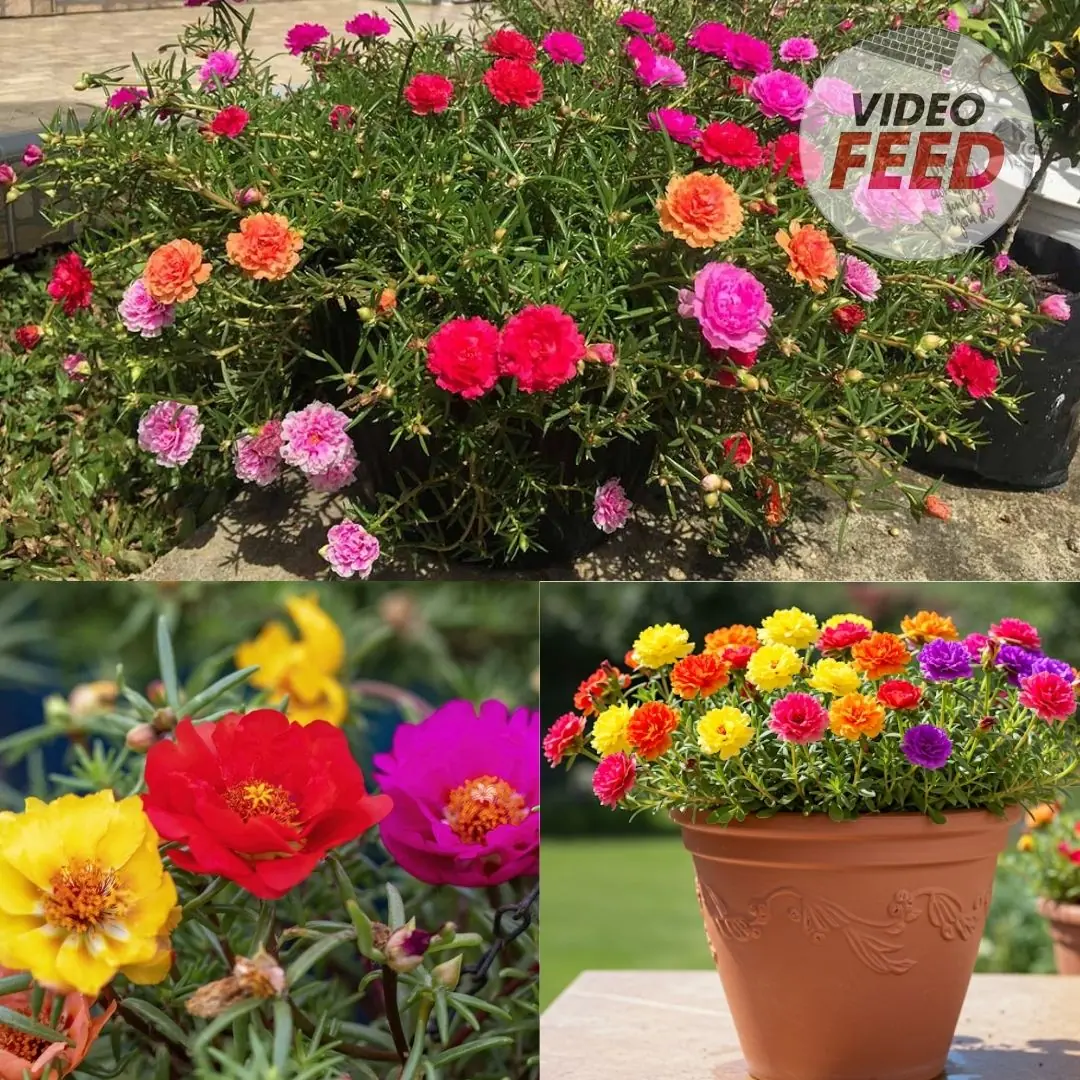
Portulaca in Pots: The Complete Guide to Growing Colorful & Drought-Tolerant Flowers Outdoors
Want to carpet your patio, balcony, or garden with a tapestry of vibrant, jewel-toned flowers that thrive in the heat? Portulaca, often called Moss Rose or Purslane, is an excellent and incredibly rewarding choice for outdoor container gardening. Celebrated for their dazzling, rose-like flowers in a wide array of colors, and their exceptional heat and drought tolerance, Portulacas are perfect for adding low-maintenance brilliance to sunny outdoor spaces. This comprehensive guide will provide you with everything you need to know to grow Portulaca successfully in outdoor pots, from selecting the best varieties and containers to mastering essential care techniques for a season filled with Portulaca pizzazz.
What are Portulaca (Moss Rose)?
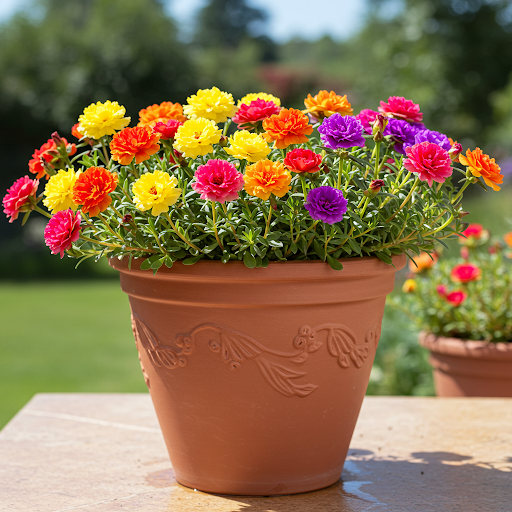
Portulaca, commonly known as Portulaca, Moss Rose, or Purslane, is a genus of succulent flowering plants in the family Portulacaceae, comprising about 40-100 species. Native to tropical and warm temperate regions around the world, Portulacas are popular annuals grown for their profusion of brightly colored, rose-like flowers and succulent foliage. Portulaca flowers are known for their vibrant, jewel-toned colors, including red, pink, orange, yellow, white, and bi-colors, and their delicate, crepe-paper-like petals. They have a classic rose shape, though smaller and flatter, and often have a slightly iridescent sheen. Portulacas are typically low-growing, spreading, or trailing plants, ranging in height from 4 to 8 inches tall, forming dense mats or cascades of color. They are known for their extreme heat and drought tolerance, long blooming season (summer to frost), dazzling colors, sun-loving nature, and low-maintenance care, making them an exceptional choice for hot, sunny gardens and containers, especially in dry conditions.
Are Portulaca (Moss Rose) Good for Outdoor Pots?
Yes, Portulaca (Moss Rose) are exceptionally well-suited for outdoor pots and container gardening. Their heat and drought tolerance, long blooming season, low-growing, spreading habits, and spectacular flower colors make them ideal for filling pots, window boxes, hanging baskets, and mixed container arrangements with dazzling brilliance. Portulacas thrive in sunny locations and bloom profusely throughout the warm season, providing a long-lasting and cheerful floral display in containers, even with minimal watering. Their incredibly low-maintenance nature and vibrant, sun-loving blooms make them a fantastic and rewarding choice for container gardens of all styles, especially for adding carefree color to patios, balconies, and decks in hot, dry climates.
Ideal Growing Conditions for Portulaca in Pots:
-
Types of Portulaca for Pots: Many Portulaca varieties are excellent for pots, but consider your desired look, pot size, and flower type when choosing:
- Trailing Portulaca: (Portulaca grandiflora trailing types, Portulaca oleracea trailing varieties) – Spreading and cascading habit, perfect for hanging baskets, tall planters, and spilling over pot edges. Known for their vigorous trailing growth and profusion of flowers along the stems. Excellent for creating waterfalls of color and softening container edges. Look for varieties specifically labeled “trailing” or “spreading.”
- Upright or Mounding Portulaca: (Portulaca grandiflora compact types, Portulaca umbraticola) – Bushier and more upright or mounding growth, typically reaching 4-8 inches tall and wider, ideal for small to medium pots, window boxes, and ground cover-like displays. Known for their neat, rounded habit and profusion of medium-sized to large flowers. Excellent for mass plantings and creating dense color carpets in containers and for filling in gaps in mixed arrangements. Look for series like ‘Happy Trails’, ‘Sundial’, ‘Rio’, and ‘Colorblast’.
- Double-Flowered Portulaca: (Many Portulaca grandiflora cultivars) – Produce fully double, rose-like flowers with many petals, resembling miniature roses. Offer a more lush and formal flower appearance compared to single-flowered types. Available in both trailing and mounding habits.
- Single-Flowered Portulaca: (Portulaca oleracea and some Portulaca grandiflora types) – Produce single, open-faced flowers with fewer petals, often with a more delicate and wildflower-like appearance. Some Portulaca oleracea varieties are edible purslane, though primarily grown for ornament in containers.
-
Light: Portulaca are intense sun lovers and thrive in full sun. They need at least 6-8 hours of direct sunlight per day, and ideally even more, to bloom profusely and display their most vibrant colors. Choose a sunny location for your Portulaca containers, such as a south-facing patio, balcony, or garden bed. In shady locations, Portulacas will produce few to no blooms, their flowers may not open fully, and they will become leggy and weak. Full sun is absolutely essential for abundant flowering and the characteristic brilliant colors of Portulacas. Flowers typically open fully only in bright sunlight, and may remain closed on cloudy days or in shade.
-
Soil: Portulaca need very well-draining soil that is lean and even sandy. Use a cactus and succulent potting mixstraight from the bag, or amend regular potting mix with a significant amount of perlite, vermiculite, or coarse sand (at least 50% amendment) to ensure exceptional drainage. Portulacas are highly susceptible to root rot in soggy soil and thrive in lean, fast-draining conditions. Avoid heavy, rich potting mixes, compacted soil, or garden soil in pots, as they will retain too much moisture. A slightly acidic to neutral pH (around 6.0-7.0) is ideal for Portulacas. Excellent drainage and lean soil are absolutely critical to prevent root rot and encourage abundant flowering.
-
Watering: Portulaca are extremely drought-tolerant and prefer dry conditions. Water very sparingly and allow the soil to dry out completely between waterings. Water deeply but infrequently. Overwatering is the most common mistake and is very detrimental to Portulacas, quickly leading to root rot and plant death. Water only when the soil is bone dry. In hot, sunny weather, established Portulacas in pots may need watering only once every 1-2 weeks, or even less frequently depending on pot size and drainage. During cooler or cloudy periods, watering should be even less frequent, or often not needed at all if rainfall is sufficient. Err dramatically on the side of underwatering rather than overwatering Portulacas. They are true succulents and store water in their leaves and stems. Ensure pots have excellent drainage to prevent any water from sitting at the bottom.
-
Temperature: Portulaca are warm and hot weather plants that thrive in high temperatures. They perform best in temperatures between 75°F to 95°F (24°C to 35°C) and even hotter. They are extremely sensitive to frost and freezing temperatures. Portulacas are strictly annuals in areas with any frost. They bloom most profusely and vibrantly in hot, sunny summers and are ideal for regions with hot, dry summers. Cool, wet weather is detrimental to Portulacas and can lead to disease and reduced flowering.
-
Fertilizer: Portulaca are very light feeders and do not require fertilization at all. In fact, fertilizing Portulacas is generally unnecessary and can even be harmful, promoting excessive leafy growth at the expense of blooms and potentially making them more susceptible to rot. Avoid fertilizing Portulacas. Lean soil conditions actually encourage more abundant and vibrant flowering in Portulacas. They thrive in poor, sandy soils and do not need rich, fertile conditions.
Choosing the Right Pots for Portulaca:
-
Suitable Pot Types: Portulacas are adaptable to various pot types, but terracotta pots are particularly ideal due to their exceptional drainage and breathability, mimicking their native dry, sandy habitats. Unglazed terracotta is best. Other suitable pot types include ceramic, plastic, resin, and hanging baskets, but drainage is paramount.
- Terracotta Pots: Porous, allow exceptional aeration and drainage, and aesthetically classic. Terracotta is the best choice for Portulacas as it helps prevent overwatering and promotes the very well-drained conditions that Portulacas thrive in. Unglazed terracotta is even better than glazed for breathability.
- Ceramic Pots: Can be used, but ensure excellent drainage. Glazed ceramic pots retain more moisture than terracotta, so be extra cautious about watering. Choose pots with large drainage holes and use a very well-draining, sandy potting mix.
- Plastic Pots: Lightweight, inexpensive, and readily available. Choose good quality plastic pots with ample drainage holes. Mix a very generous amount of perlite or coarse sand into the potting mix (at least 50-70%) to drastically improve drainage in plastic pots, as they tend to retain moisture. Lighter colored plastic pots may heat up less in direct sun.
- Resin Pots: Lightweight, durable, and often mimic the look of terracotta or ceramic. Choose resin pots with good drainage. They generally offer better drainage than plastic but may still retain more moisture than terracotta.
- Hanging Baskets: Ideal for trailing Portulaca varieties. Choose baskets that drain very freely and use a very well-draining liner like coco coir. Hanging baskets dry out more quickly, which is actually beneficial for Portulacas, but still be cautious not to overwater.
-
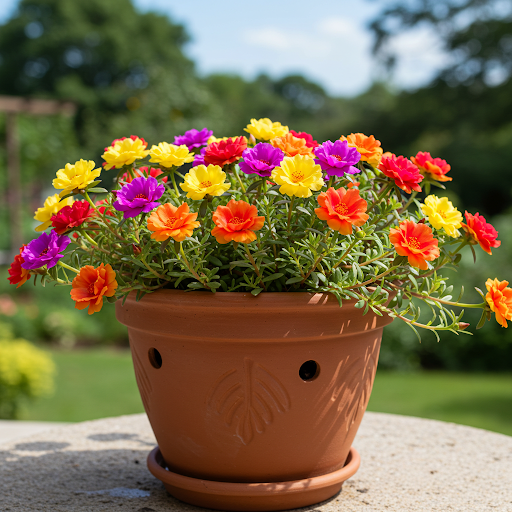
Drainage: Exceptional drainage is absolutely critical for Portulacas to prevent root rot. Ensure your chosen pot has large drainage holes at the bottom. Avoid pots without drainage holes entirely. Adding a thick layer of drainage material at the base of the pot is highly recommended, such as gravel, pebbles, pot shards, or lava rock, especially for heavier pots or if you are in a region with frequent rainfall. Elevating pots on pot feet or bricks will further improve drainage and air circulation around the base.
-
Pot Size: Portulacas are relatively small plants and do not need very large pots. Choose pot sizes appropriate for the type of Portulaca and the desired display. They actually tend to bloom more profusely when slightly root-bound.
- Trailing Portulaca: For trailing Portulacas, hanging baskets and pots should be at least 8-10 inches in diameter, and can be larger for more mature displays and to accommodate multiple plants. Wider and shallower pots are generally suitable to accommodate their spreading roots.
- Upright or Mounding Portulaca: For mounding Portulacas, pots that are 6-8 inches in diameter are suitable for individual plants. For fuller displays or mass plantings, use pots that are 8-12 inches or larger, or window boxes.
- Depth: Ensure pots are at least 6 inches deep for most Portulaca types. Deeper pots are generally not necessary as Portulacas have shallow root systems, but adequate depth is still important for drainage and stability.
-
Color and Style: Choose pot colors and styles that complement the intensely vibrant colors of Portulaca blooms and your outdoor décor. Terracotta pots enhance the natural, sun-baked, desert-like look that suits Portulacas well. Brightly colored pots can create an even bolder and more vibrant display, especially when paired with Portulacas in contrasting colors. Rustic or weathered pots can complement the drought-tolerant nature of Portulacas. White or very light-colored pots can help reflect heat in extremely hot, sunny locations. Consider the overall style of your patio or garden and choose pots that harmonize with the surroundings.
Essential Care Tips for Thriving Portulaca in Outdoor Pots:
- Watering: “Water Very Sparingly, Allow Soil to Dry Completely, Never Overwater”. Water very sparingly, only when the soil is bone dry. Water deeply but infrequently. Allow soil to dry out completely between waterings. Overwatering is the biggest killer of Portulacas. Avoid it at all costs. Water even less frequently during cool or cloudy periods.
- Sunlight: Provide Full, Intense Sun (8+ Hours Daily, Absolutely Essential). Place Portulaca pots in a location that receives full, intense sun all day long for best blooming, vibrant colors, and healthy growth.
- Fertilizing: Do Not Fertilize. Lean Soil is Best. Portulacas thrive in lean soil and do not need fertilizer. Avoid fertilizing.
- Deadheading (Self-Cleaning, Minimal Deadheading Needed): Portulacas are generally self-cleaning and spent flowers tend to drop off on their own. Deadheading is not typically necessary for continuous bloom, but you can lightly tidy up plants by removing any dead flower debris if desired.
- Pinching Back (Not Needed): Portulacas naturally maintain a low-growing, spreading habit and do not require pinching back.
- Overwintering (Not Possible, Treat as Annuals): Portulacas are true annuals and will not survive frost or freezing temperatures. They must be replanted each spring. Seedlings can be started indoors in late winter in warm climates, but they are very easy to grow directly from seed sown outdoors in warm weather.
- Pest and Disease Control: Portulacas are remarkably pest and disease-resistant when grown in proper conditions (full sun, very well-drained soil, minimal watering). Root rot is the only significant disease concern, and it is entirely preventable by avoiding overwatering and ensuring excellent drainage. Monitor for occasional aphids, but pests are rarely a serious problem. Prevention through proper growing conditions is key for healthy, thriving Portulacas.
Popular Portulaca Cultivars for Pots (by Type/Color/Flower Form):
- Trailing Portulaca: ‘Happy Trails Series’ (various colors, very vigorous trailing), ‘Duet Series’ (bi-color trailing), ‘ Samba Series’ (double trailing)
- Mounding/Upright Portulaca (Double Flowers): ‘Sundial Series’ (various colors, double), ‘Rio Series’ (large double flowers), ‘Colorblast Series’ (bi-color double flowers), ‘ Afternoon Delight Series’ (double, heat-tolerant)
- Mounding/Upright Portulaca (Single Flowers): Portulaca umbraticola (various colors, single, shade-tolerant relative), Portulaca oleracea ‘ садовый Purslane’ (edible, single yellow flowers), ‘ Fairytale Series’ (bi-color single flowers)
- Unique Colors & Forms: ‘ Mojave Series’ (heat-tolerant, unique colors), ‘ Pazzazz Series’ (ruffled petals), ‘ Yubi Series’ (large flowers, unique forms)
- Seed Mixes: ‘Moss Rose Mixed Colors’, ‘Portulaca Grandiflora Double Mix’, ‘Pastel Mix Portulaca’
In Summary:
Growing Portulaca (Moss Rose) in outdoor pots is a wonderfully rewarding way to add carpets or cascades of dazzling, sun-loving color and incredibly low-maintenance beauty to your patios, balconies, and gardens. Their exceptionally vibrant blooms, long flowering season, and extreme drought tolerance make them a perfect choice for container gardeners seeking carefree, cheerful, and heat-proof plants for sunny, dry locations. By providing full, intense sun, extremely well-draining potting mix in terracotta pots or pots with excellent drainage, watering very sparingly and allowing soil to dry completely between waterings, and avoiding fertilizer, you can easily cultivate thriving Portulaca plants in pots and enjoy their spectacular Moss Rose charm all summer and fall long, even with minimal effort.
For more detailed botanical information and to explore the diverse world of Portulaca species and cultivars, you can visit the Wikipedia page on Portulaca.
Important Note: Portulaca (Moss Rose) plants are generally considered non-toxic to humans and pets, making them a safe and attractive choice for households with children and animals. Some Portulaca oleracea varieties are even edible (purslane). The primary care benefits of Portulacas in pots are their dazzling flower colors, extreme heat and drought tolerance, exceptionally long blooming season, and incredibly low-maintenance nature. With these simple care practices, and especially by remembering to water very sparingly, you can enjoy a season filled with the vibrant beauty and carefree charm of Portulacas in your outdoor containers.**