A 78-year-old man presented with tongue discomfort and dyspnea in a supine position that had begun a few hours earlier. He had no personal or family history of tongue swelling, a history of any trigger, such as mechanical oral irritation, or a suspected food allergy. He took a combination of candesartan and amlodipine for 3 years.
The patient exhibited mild tachypnea upon examination but no hypoxemia, stridor, or wheezing; he couldn't speak or swallow. Notching was presented on the bilateral margins of the tongue (Figure 1A). Laboratory tests showed normal complement component levels and eosinophils. The dyspnea improved within 2 h after the visit, and the tongue swelling improved the next day (Figure 1B). Based on these findings, we suspected that candesartan was the cause of his symptoms and discontinued it. He hasn't had a recurrence of symptoms in 5 months.

Tongue size and condition vary widely among individuals.1 The swelling of the tongue is difficult to determine by its apparent size. The scalloping on the lateral margins of the tongue is caused by the pressure from the teeth due to tongue swelling.2 The scalloped tongue is a characteristic finding of tongue swelling and is useful in its diagnosis.
ACKNOWLEDGMENTS
We would like to thank Editage for assistance with editing the manuscript.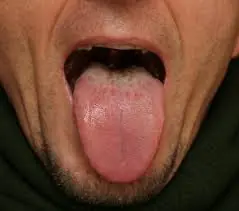
CONFLICT OF INTEREST STATEMENT
The authors have no conflicts of interest directly relevant to the content of this article.