Shingles is one of those conditions that can be confusing at first. It may begin with pain, tingling, itching, or unusual sensitivity in one area of the body before the familiar rash appears. Because these early symptoms can resemble muscle pain, an insect bite, a skin irritation, or another everyday problem, some people do not realize what is happening until the rash becomes more obvious.
Shingles is caused by the varicella-zoster virus, the same virus that causes chickenpox. After a person recovers from chickenpox, the virus does not necessarily disappear completely. Instead, it can remain inactive in nerve tissue for years and later reactivate, producing shingles.
The condition is common, particularly with increasing age, but it can also occur in younger adults, especially when the immune system is weakened.
Knowing the early warning signs can help you recognize the condition sooner and seek appropriate medical advice.
What Exactly Is Shingles?
Shingles, medically known as herpes zoster, occurs when the varicella-zoster virus becomes active again after previously remaining dormant in the body.
The reactivated virus travels along a nerve and usually causes symptoms in a specific area supplied by that nerve.
This explains one of the most characteristic features of shingles:
The rash often appears in a localized band or patch on one side of the body.
It can occur on the chest, back, abdomen, face, neck, or elsewhere.
Unlike many ordinary rashes, shingles frequently involves nerve-related pain or unusual skin sensations.
1. Pain, Burning, or Tingling Before the Rash
One of the earliest clues can occur before you see anything unusual on your skin.
A particular area may begin to feel:
-
Burning
-
Tingling
-
Itching
-
Prickling
-
Aching
-
Numbness
-
Unusual sensitivity to touch
Some people describe the sensation as similar to an electrical shock.
Others may feel as though their skin has been sunburned even though they have not been exposed to the sun.
This can be confusing because there may initially be no visible rash at all.
The discomfort often occurs in a relatively specific area rather than throughout the entire body.
If unexplained burning or nerve-like pain is followed by a rash in the same location, shingles becomes an important possibility to discuss with a healthcare professional.
2. A Rash Appears on One Side
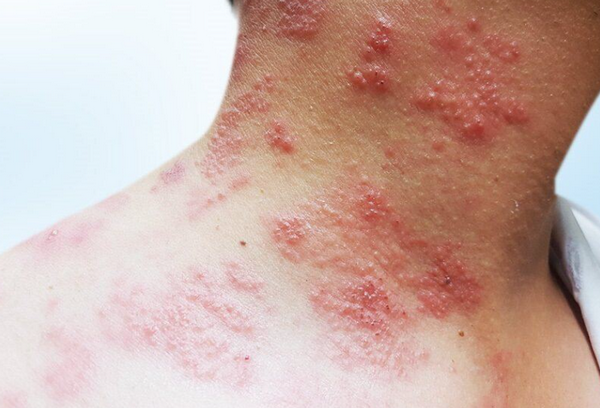
The classic shingles rash often develops on one side of the body or face.
It may follow the path of a nerve and can appear as a stripe, cluster, or band of affected skin.
This pattern is an important clue.
For example, a person might develop a painful rash extending across one side of the chest or around one side of the back.
The rash usually does not form a perfectly symmetrical pattern across both sides of the body.
However, appearance alone cannot establish a diagnosis.
Several other skin conditions can cause localized rashes, so medical evaluation may be necessary, especially when pain accompanies the skin changes.
3. Small Blisters Can Develop
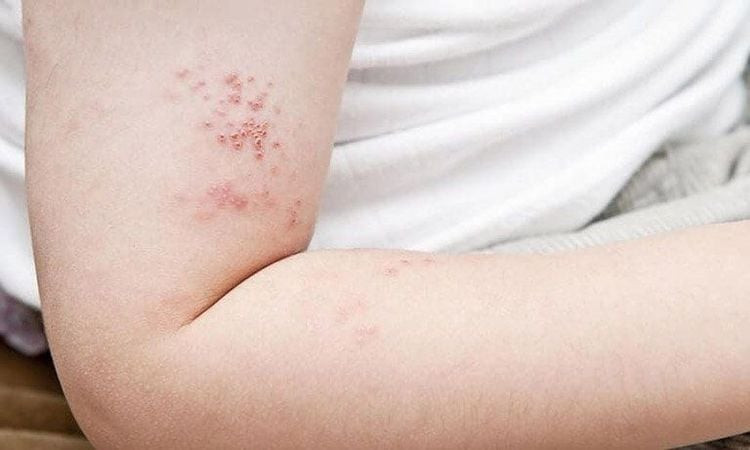
After the initial redness or irritation, shingles can produce small fluid-filled blisters.
These blisters may appear in groups rather than as isolated spots.
Over several days, they can become cloudy, rupture, and eventually form crusts as they heal.
This evolution can make shingles look different at different stages.
Early on, it might resemble a simple red rash.
Later, the grouped blisters may make the diagnosis more apparent.
Because the fluid from shingles blisters can contain the virus, people with active lesions should avoid direct contact between the affected area and people who have never had chickenpox or the chickenpox vaccine, particularly vulnerable individuals such as pregnant people, newborns, and people with weakened immune systems.
A person with shingles does not transmit “shingles” directly. Someone who has not previously had immunity to varicella-zoster virus can potentially develop chickenpox after exposure to fluid from active lesions.
4. The Skin May Become Extremely Sensitive
Another clue can be an exaggerated response to ordinary touch.
A shirt brushing against the skin may hurt.
A bedsheet may feel irritating.
Even light pressure can become uncomfortable.
This phenomenon is known as allodynia, in which normally non-painful stimulation produces pain.
It happens because shingles affects a sensory nerve.
This is one reason shingles can initially be mistaken for a muscle problem or another source of unexplained pain.
If one area suddenly becomes unusually painful or sensitive and a rash subsequently appears there, it is worth seeking medical advice.
5. Itching May Be More Noticeable Than Pain
Not everyone experiences severe pain.
For some people, itching or irritation is the dominant early symptom.
This can make shingles particularly easy to overlook.
A person may initially think they have:
-
An insect bite
-
An allergic reaction
-
Contact dermatitis
-
Dry skin
-
Heat rash
-
A minor infection
The important clue is often the combination of symptoms.
If itching or tingling occurs in a localized area and is followed by grouped blisters, particularly on one side of the body, shingles should be considered.
6. Flu-Like Symptoms Can Occur
Some people develop more general symptoms around the time the rash appears.
These can include:
-
Fatigue
-
Headache
-
Fever
-
Chills
-
Feeling generally unwell
These symptoms are not unique to shingles.
Many viral infections can cause them.
That is why they become more meaningful when they occur alongside the characteristic localized pain and rash.
Not everyone with shingles experiences these systemic symptoms.
7. The Rash May Affect the Face or Eye
Shingles involving the face requires particular attention.
If the rash appears around the eye, forehead, nose, or nearby areas, it may involve the ophthalmic branch of the trigeminal nerve.
This is known as herpes zoster ophthalmicus.
It can potentially affect structures of the eye and cause serious complications, including vision problems.
Warning signs can include:
-
Rash around the eye
-
Eye pain
-
Redness of the eye
-
Sensitivity to light
-
Blurred vision
-
Swelling around the eye
A suspected shingles rash involving the eye or vision should receive urgent medical assessment.
Do not wait several days hoping it will resolve on its own.
Early treatment can be important in reducing complications.
8. Ear Symptoms Can Also Be Important
Shingles can occasionally affect nerves around the ear.
This can cause a combination of symptoms such as:
-
Pain in or around the ear
-
A rash involving the ear
-
Hearing changes
-
Dizziness
-
Facial weakness
This form of shingles can be associated with Ramsay Hunt syndrome when specific facial and ear nerves are involved.
Sudden facial weakness, particularly when accompanied by an ear rash or significant ear pain, warrants prompt medical attention.
Why Does Shingles Happen Years After Chickenpox?
This is one of the most interesting things about shingles.
After someone recovers from chickenpox, the varicella-zoster virus can remain dormant inside nerve cells.
It may remain inactive for decades.
Later, the virus can reactivate and travel along a nerve toward the skin, producing the characteristic symptoms of shingles.
Scientists do not always know exactly why the virus reactivates in a particular person at a particular time.
However, the risk increases with age and with conditions or treatments that weaken the immune system.
Who Is More Likely to Develop Shingles?
Anyone who has previously had chickenpox can potentially develop shingles.
However, certain factors increase the likelihood.
Age
The risk rises substantially as people get older, particularly after age 50.
Weakened immune system
People with weakened immune systems may be more susceptible.
This can occur because of certain illnesses, cancer treatments, organ transplantation, HIV infection, or medications that suppress immune activity.
Certain medical treatments
Some medications that suppress the immune system can increase susceptibility.
This is one reason people receiving immune-suppressing treatment should discuss vaccination and infection risks with their healthcare team.
Is Shingles Contagious?
Shingles itself is not spread from one person to another in the same way as a respiratory infection.
However, the varicella-zoster virus can spread from someone with active shingles blisters to a person who lacks immunity, primarily through direct contact with blister fluid.
That person could develop chickenpox rather than shingles.
To reduce the risk of transmission:
-
Keep the rash covered when possible.
-
Avoid scratching or touching the blisters.
-
Wash your hands frequently.
-
Avoid direct contact with people who may be particularly vulnerable.
-
Do not share towels or clothing that have come into contact with the lesions.
Transmission risk decreases once the lesions have completely crusted over.
Why Early Treatment Matters
If you suspect shingles, contacting a healthcare professional promptly is worthwhile.
Antiviral medications such as acyclovir, valacyclovir, or famciclovir may be prescribed in appropriate cases.
They work best when started early, generally within 72 hours of rash onset, although treatment can still be considered later in some situations depending on the person's symptoms and risk factors.
Treatment can help shorten the illness and may reduce the risk of certain complications.
That is why recognizing the early pattern can be useful.
Waiting until the rash becomes extensive or extremely painful may mean missing the period when treatment is most effective.
The Complication People Often Fear Most
One of the most important complications of shingles is postherpetic neuralgia (PHN).
This occurs when nerve pain continues after the skin rash has healed.
The pain may last for weeks, months, or, in some people, much longer.
It can feel like:
-
Burning
-
Shooting pain
-
Electric shocks
-
Extreme sensitivity
-
Persistent aching
The risk of postherpetic neuralgia increases with age and is also associated with more severe acute pain and rash.
This is another reason shingles should not simply be dismissed as an ordinary skin rash.
Shingles Can Be Mild, Too
Not everyone experiences the dramatic symptoms sometimes shown in photographs.
Some people develop relatively mild rashes.
Others may experience significant nerve pain.
Rarely, people can experience nerve pain without an obvious rash, a condition sometimes referred to as zoster sine herpete.
This can make diagnosis more challenging.
For that reason, it is important not to assume that every case of shingles will look exactly the same.
What Should You Do If You Think You Have Shingles?
If you develop unexplained localized burning, tingling, or pain followed by a cluster of blisters—particularly on one side of the body—contact a healthcare professional.
Do not deliberately pop the blisters.
Keep the affected skin clean and avoid unnecessary touching.
Wear loose clothing if the area is sensitive.
Cold, damp compresses may provide some relief for discomfort.
Over-the-counter pain medication may also be appropriate for some people, but individual medical conditions and medications should be considered.
If you are uncertain whether a medication is safe for you, ask a doctor or pharmacist.
When Shingles Becomes an Urgent Problem
Seek prompt medical care if shingles is suspected and:
The rash is near the eye or on the face.
You develop vision changes or significant eye pain.
You experience facial weakness.
You develop severe headache, confusion, weakness, or other neurological symptoms.
You have a significantly weakened immune system.
The rash is widespread or rapidly worsening.
You develop signs of a secondary bacterial infection, such as increasing redness, warmth, swelling, pus, or worsening pain.
These situations can require more urgent assessment.
Can Shingles Be Prevented?
Yes.
Vaccination is an important way to reduce the risk of shingles and its complications.
The recombinant zoster vaccine (Shingrix) is recommended for certain adults, particularly older adults and people with specific immune-system risks, according to local vaccination guidelines.
Recommendations vary by country and individual circumstances.
Even if someone has had shingles before, vaccination may still be recommended because shingles can occur more than once.
Ask a healthcare professional whether you are eligible.
Don't Mistake Every Rash for Shingles
While recognizing shingles is useful, it is equally important not to diagnose yourself solely from an online photograph.
Other conditions can resemble shingles, including:
-
Contact dermatitis
-
Insect bites
-
Eczema
-
Herpes simplex
-
Bacterial skin infections
-
Fungal infections
-
Other inflammatory skin disorders
The location, appearance, progression, pain pattern, medical history, and sometimes laboratory testing all help establish the diagnosis.
The Bottom Line
Shingles can be easy to miss at the beginning because its first symptoms may have nothing obvious to do with a skin rash.
Burning, tingling, itching, unusual sensitivity, or localized pain may appear before the characteristic rash develops.
Then, in many cases, a cluster of fluid-filled blisters appears in a band or patch, often on one side of the body.
Recognizing this pattern matters because early medical evaluation can allow appropriate antiviral treatment to be started promptly and can help reduce the risk of complications.
Most importantly, don't ignore a painful or unusual rash—especially if it appears on the face, around the eye, or alongside neurological symptoms.
And remember: not every rash is shingles, and not every case of shingles looks the same.
If something on your skin suddenly feels unusually painful, sensitive, burning, or tingling—particularly when the symptoms are localized to one side of the body—it is worth paying attention.
Sometimes, the first warning sign isn't what you see on your skin. It's what you feel underneath it.