Avoid excessive warmth
Warm conditions can encourage sprouting.
If your kitchen becomes particularly warm, consider finding a cooler location that is still suitable for storing potatoes.
A refrigerator may not always be the ideal place for raw potatoes because very cold conditions can alter the way potato starches behave and may affect flavor and cooking characteristics. Storage recommendations can vary depending on intended use and local food guidance, but a cool, dark, ventilated location is generally preferable for ordinary household storage.
Use breathable containers
Plastic bags that trap moisture may create unfavorable conditions.
Instead, consider a paper bag, breathable storage bag, basket, or cardboard container. The goal is to allow air circulation while keeping the potatoes protected from light.
Keep potatoes dry
Do not store potatoes while they are wet.
Excess moisture can contribute to decay. If potatoes have been washed, allow them to dry thoroughly before storage.
Check them regularly
Once a week or every couple of weeks, inspect the potatoes.
Remove any that are rotten, moldy, or deteriorating. Check for sprouts, green patches, softness, and unusual odors.
Regular inspection can prevent one damaged potato from being forgotten until the entire bag becomes unusable.
Buy only what you need
Buying large quantities may seem economical, but if potatoes are stored for too long and eventually discarded, the savings disappear.
Consider purchasing smaller amounts more frequently, especially if your household does not consume potatoes regularly.
These simple habits can help reduce food waste and make your kitchen storage more efficient.
Chapter 7: The Mistakes People Make When Trying to Save Sprouted Potatoes
Trying to reduce food waste is a good habit, but it should never come at the expense of food safety.
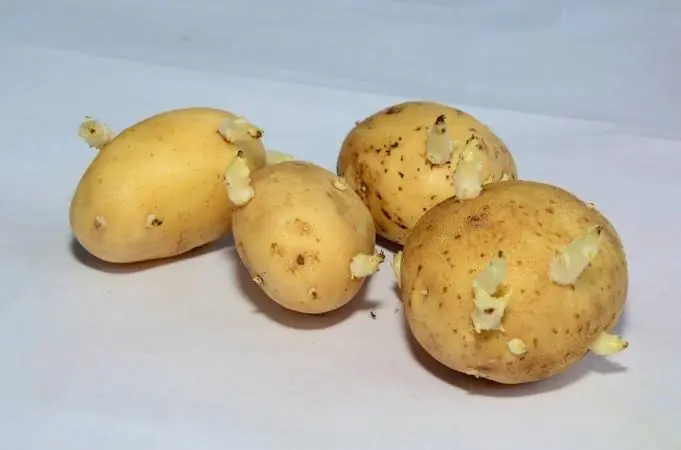
One of the most common mistakes is believing that removing the sprouts automatically makes the potato safe.
This is not necessarily true. Glycoalkaloids can be present in the potato tissue, and their levels may increase under certain conditions. Removing the visible sprouts alone does not guarantee that the remaining potato is safe.
Another mistake is cutting away only a small green patch from a heavily green potato.
Greening is a warning sign. If the potato has extensive green coloration, the safest choice is to discard it rather than attempt to remove every green area.
Some people also assume that cooking will solve every problem.
Unfortunately, ordinary cooking does not reliably destroy glycoalkaloids. A heavily sprouted, green, bitter, or deteriorating potato should not be made into a meal simply because it will be boiled, fried, or baked.
Another common mistake is tasting suspicious potatoes.
If a potato appears unusual, do not taste it to determine whether it is safe. If it tastes bitter after preparation, stop eating it.
People also sometimes use sprouted potatoes for every purpose simply because they do not want to waste food.
But waste reduction should be practical and safe. A potato that is unsuitable for eating may still be suitable for planting, depending on its condition. A rotten potato, however, should not be used for food or planting.
If a potato is heavily moldy or decomposing, discard it appropriately.
The most sensible approach is to separate the different possibilities:
-
A firm potato with only a few small sprouts and no green areas may sometimes be used cautiously after removing sprouts and peeling.
-
A potato with extensive sprouting, green areas, softness, bitterness, or deterioration should be discarded as food.
-
A healthy sprouted potato that is no longer suitable for eating may potentially be used for planting.
-
A rotten or moldy potato should be discarded.
This approach allows you to reduce waste without turning food-saving habits into unnecessary health risks.
Chapter 8: A Small Kitchen Discovery That Can Change the Way You Waste Food
The next time you discover sprouted potatoes in your kitchen, you may not need to immediately throw every one of them away.
Instead, take a few moments to examine them.
Some potatoes may still be firm and show only small sprouts. Others may have developed extensive shoots, green patches, or signs of deterioration. The difference matters.
If a potato is still in good condition and has only minimal sprouting, careful preparation may allow it to be used cautiously as food. Remove the sprouts and their attachment points, peel generously, and inspect it carefully. But if the potato is heavily sprouted, green, soft, bitter, or rotten, do not attempt to rescue it for eating.
When in doubt, throw it out.
And if you have a potato that is no longer appropriate for cooking but is otherwise suitable for planting, consider giving it a second purpose.
A container, some soil, water, sunlight, and a little patience may turn that forgotten potato into a new plant.
It is a reminder that not everything that appears useless has to be wasted—but knowing when to reuse something and when to discard it is just as important.
The next time you open your cupboard and see tiny shoots growing from a potato, remember that the best decision is not always the same for every potato.
Look carefully.
Make the safe choice.
And if the potato cannot become part of your next meal, it may still have another opportunity to grow.