Study Finds Possible Link Between Pregnancy and Autism Development: New Research Reveals an Unexpected Role for the Placenta and the Mother's Immune System
What if some of the earliest clues about autism development begin long before a child is born? Scientists have traditionally focused on genetics, brain development, and the complex ways children interact with their environment when studying autism spectrum disorder. But new research published in September 2026 is drawing attention to another important part of pregnancy: the placenta. This temporary organ, which connects a developing baby to the mother's body, may play a much more significant role in early neurological development than previously understood.
A research team at Cold Spring Harbor Laboratory has investigated what happens when the maternal immune system becomes activated during pregnancy. Their findings, published in the scientific journal Science Advances, suggest that inflammation during a particular developmental window can affect placental structure and produce autism-like developmental traits in some male mice.
The discovery is attracting attention because the researchers observed differences between male and female embryos. They also identified changes in specialized placental cells that normally help maintain a balanced environment between the mother's immune system and the developing fetus.
But there is an important distinction that every reader should understand: the researchers did not prove that inflammation during human pregnancy causes autism. The main experiment was conducted in mice, and its findings need further investigation before they can be translated into human medical advice.
Nevertheless, the research raises important questions. Why were some embryos more vulnerable than others? Why did the placenta appear to be involved? Could the timing of an immune response matter more than scientists previously realized?
To understand why this study is attracting attention, it is necessary to look beyond the headline and examine what happened inside the laboratory.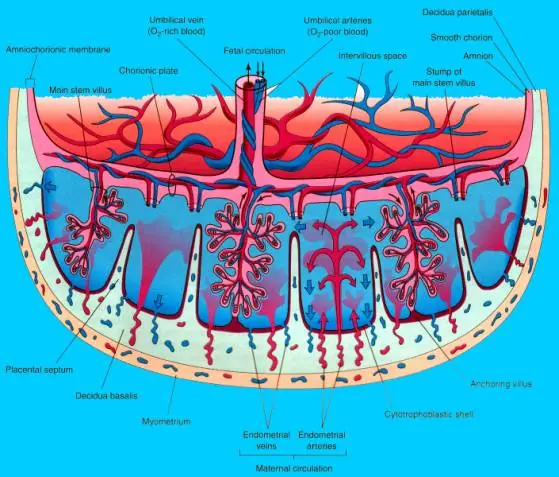
A New Direction in Autism Research
Autism spectrum disorder, commonly called autism or ASD, is a neurodevelopmental condition associated with differences in social communication, interaction, behavior, sensory processing, and patterns of interests or activities.
It is called a spectrum because autistic people have different characteristics, strengths, support needs, and experiences.
Some autistic individuals communicate primarily through speech.
Others use alternative forms of communication.
Some require substantial daily assistance, while others live independently and need relatively limited support.
There is no single explanation that accounts for every autistic person's development.
Researchers have identified numerous genetic contributions to autism, while environmental and biological factors may also influence developmental pathways.
The relationship between genetics and the prenatal environment is particularly complicated.
A developing fetus does not grow independently of the mother's body. It depends on a continuous exchange of oxygen, nutrients, hormones, and other biological signals through the placenta.
The maternal immune system also changes during pregnancy.
These changes are necessary because pregnancy involves a developing fetus with genetic material inherited from both parents.
The mother's immune system must maintain protection against harmful infections while also supporting the pregnancy.
This balance is delicate.
If immune activity becomes unusually strong or remains elevated under certain conditions, it may influence the environment in which fetal development takes place.
Scientists have investigated this possibility for years.
The September 2026 study from Cold Spring Harbor Laboratory adds another layer to that research by focusing on the placenta itself.
Rather than examining only the developing brain, the researchers investigated how immune changes at the maternal-fetal interface might influence early development.
Their findings suggest that the placenta may be an important part of the biological process.
What Exactly Did the September 2026 Study Discover?
The research was led by Associate Professor Lucas Cheadle and involved postdoctoral researcher Irene Sanchez Martin and colleagues at Cold Spring Harbor Laboratory.
The paper was published in Science Advances on September 16, 2026.
Its title is Maternal-fetal immune conflict contributes to male-specific impairments in a mouse model of neurodevelopmental disorders.
The researchers investigated maternal immune activation, a term used to describe the activation of the mother's immune system during pregnancy.
To study this process, the team used pregnant mice and introduced a compound called poly(I:C).
This substance stimulates an immune response that resembles certain aspects of the body's reaction to viral infection.
Importantly, the researchers did not need to infect the mice with an actual virus.
Instead, they used the compound to activate immune pathways and observe how the developing embryos and placenta responded.
The experiments were performed at different stages of pregnancy.
This allowed the scientists to investigate whether the timing of immune activation influenced developmental outcomes.
One particular stage attracted their attention.
When the immune response was triggered around 12.5 days into mouse pregnancy, the embryos appeared especially vulnerable.
Approximately 30 percent showed significant developmental abnormalities within 24 hours.
The remaining embryos developed without the same observed abnormalities.
The researchers also reported that the abnormalities appeared in a subset of male embryos rather than female embryos in the experimental model.
This observation became one of the most interesting aspects of the research.
Why would embryos exposed to the same maternal immune response develop differently?
Why would some appear vulnerable while others did not?
And what role could the placenta play in determining those differences?
These questions led the researchers to examine the placenta in much greater detail.
The Placenta: An Organ That Does Much More Than Nourish a Baby
To understand the findings, it helps to understand the placenta itself.
Many people think of the placenta simply as the organ that supplies oxygen and nutrients to a developing baby.
Although this is one of its most important functions, its responsibilities are much broader.
The placenta is a temporary organ that develops during pregnancy. It attaches to the wall of the uterus and connects to the fetus through the umbilical cord.
It supports the exchange of oxygen, nutrients, and waste products between the maternal and fetal circulations.
It also produces hormones that help maintain pregnancy and participates in communication between the mother's body and the developing fetus.
Perhaps most importantly for the September 2026 research, the placenta plays a role in regulating immune activity at the maternal-fetal interface.
This interface is the area where maternal and fetal tissues interact.
The mother's immune system must protect her from harmful pathogens while maintaining conditions that allow the developing fetus to grow.
The placenta helps coordinate this complicated relationship.
It is not simply a passive barrier.
Its cells respond to signals from the maternal body, participate in immune regulation, and influence the environment surrounding the fetus.
When researchers study pregnancy-related inflammation, they are therefore interested in more than whether a mother becomes ill.
They also want to understand how the biological signals generated during an immune response may influence placental function.
The new mouse research suggests that this relationship deserves further investigation.
Understanding the Maternal-Fetal Interface
The maternal-fetal interface is one of the most biologically interesting areas of pregnancy.
It involves several types of cells, tissues, blood vessels, and signaling molecules.
The placenta contains specialized cells that help establish and maintain the connection between the developing fetus and the mother's body.
Some cells contribute to nutrient exchange.
Others help regulate hormone production.
Still others participate in immune signaling.
The researchers at Cold Spring Harbor Laboratory focused on a particular group of cells known as spongiotrophoblasts.
These are cells found in the junctional zone of the mouse placenta.
The junctional zone is an important region involved in placental function.
The researchers discovered that these cells showed signs of damage in male embryos that developed abnormalities following maternal immune activation.
In embryos that developed without the same abnormalities, the corresponding placental region appeared healthier.
This observation suggested that the placenta might help explain why some embryos responded differently to the same inflammatory stimulus.
The researchers investigated the possibility that placental immune regulation was disrupted in vulnerable male embryos.
Their findings suggested that maternal immune activation could shift the maternal-fetal environment from a more protective, immunosuppressive state toward a more inflammatory condition.
This was an important observation because it provided a possible biological explanation for the differences between affected and unaffected embryos.
However, the finding does not establish that the same process occurs in human pregnancies.
Mouse and human placentas have important structural and biological differences.
Researchers must investigate whether comparable mechanisms exist in people before drawing clinical conclusions.
Why the Researchers Focused on Inflammation During Pregnancy
Inflammation is a normal biological response.
It is one of the ways the immune system protects the body against harmful microorganisms and responds to tissue damage.
When someone develops a viral infection, for example, the immune system releases signaling molecules that help coordinate the body's defense.
These signals can influence temperature, energy levels, immune-cell activity, and other physiological processes.