It depends on several factors, including the nature of the infection, its severity, the timing, the mother's overall health, genetic susceptibility, and other circumstances.
The Cold Spring Harbor Laboratory study used an experimental immune-activation model in mice.
It did not investigate all possible infections in pregnant women.
It did not establish that a common cold, seasonal influenza, or another routine illness causes autism.
It also did not establish that a particular inflammatory marker can predict an individual child's future.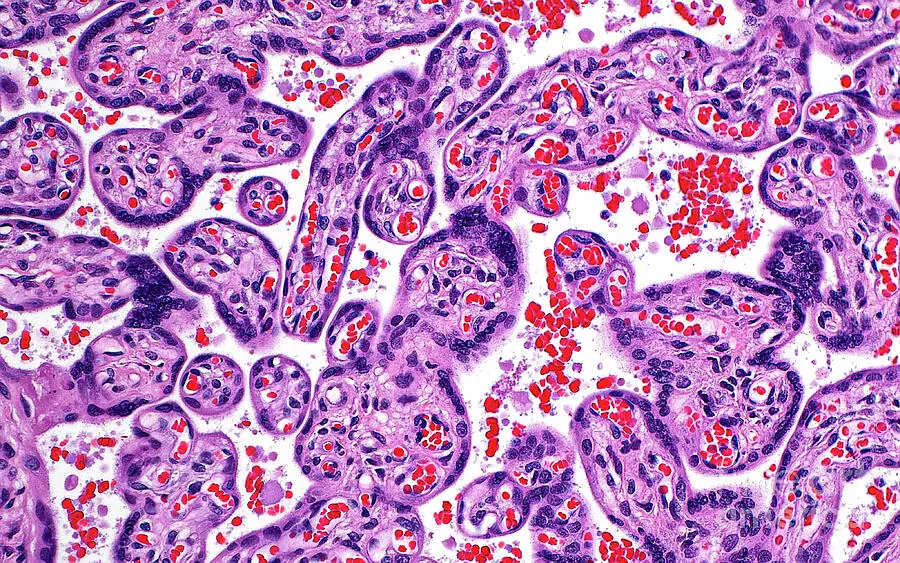
Why the Difference Between Association and Causation Matters
An association means that two factors are observed together more frequently than might be expected.
Causation is a stronger conclusion.
It means that one factor directly contributes to producing another outcome.
Establishing causation requires much more evidence.
For example, suppose researchers discover that a group of children with certain developmental characteristics had a higher frequency of a particular pregnancy-related condition.
That observation does not automatically prove that the condition caused those characteristics.
Other variables may be involved.
Genetic differences could influence both the pregnancy environment and the child's development.
A maternal medical condition could contribute to inflammation while also affecting other aspects of pregnancy.
Environmental exposures may influence multiple biological pathways simultaneously.
This is why researchers use different study designs.
Animal experiments help investigate possible mechanisms.
Human observational studies help identify patterns.
Larger prospective studies help evaluate whether those patterns can be reproduced.
Clinical trials may eventually investigate treatments when there is a scientifically justified and ethically appropriate intervention.
No single experiment should be used to make conclusions that go beyond its design.
Should Pregnant Women Be Worried About the New Findings?
The discovery is scientifically interesting, but it should not be interpreted as a reason for pregnant women to become frightened.
Pregnancy involves normal changes in the immune system.
Inflammation is not automatically harmful.
The body needs immune responses to protect against infection and maintain normal tissue function.
The September 2026 mouse experiment involved a specific laboratory method of activating immune pathways.
It does not provide evidence that everyday immune activity during pregnancy should be suppressed.
In fact, attempting to suppress the immune system without a medical reason could be harmful.
Pregnant women should continue receiving appropriate prenatal care and follow medical advice when they become ill.
If they develop fever, persistent symptoms, or signs of infection, they should contact a healthcare professional for assessment.
Treatment decisions should depend on the specific illness and the individual's circumstances.
What Pregnant Women Can Do
Although there is no proven method for preventing autism through dietary or lifestyle changes, general prenatal health remains important.
Women can support their health during pregnancy by following established medical recommendations.
Attend regular prenatal appointments.
Routine appointments allow healthcare professionals to monitor maternal health, fetal growth, and pregnancy progress.
Discuss infections and persistent symptoms with a doctor.
Do not ignore a high fever, unusual symptoms, or an illness that is getting worse.
A healthcare professional can determine whether testing or treatment is necessary.
Follow recommended vaccination guidance.
Vaccinations recommended during pregnancy can protect against certain infections and reduce the risk of serious illness.
The appropriate schedule should be discussed with a healthcare provider.
Take prescribed medication correctly.
Do not start or stop medication without professional advice.
This includes medications intended to influence inflammation or immune function.
Maintain a balanced diet.
A varied diet supports general maternal health and provides nutrients needed during pregnancy.
Avoid smoking and alcohol.
These exposures can affect pregnancy outcomes and fetal development.
Get appropriate rest and support.
Sleep, stress management, and access to healthcare contribute to maternal well-being.
None of these recommendations should be presented as a guarantee against autism.
They are general measures that support a healthy pregnancy.
Most importantly, mothers should not blame themselves if their child is autistic.
Autism is not evidence that a parent failed to do something correctly during pregnancy.
Why the New Findings Could Change Future Autism Research
The September 2026 study may influence how researchers approach early neurodevelopment.
For many years, autism research has concentrated heavily on the developing brain and the genetic factors associated with autism.
Those areas remain essential.
However, the new findings suggest that researchers may also need to investigate the biological environment surrounding the fetus.
The placenta could provide important clues about how maternal immune signals interact with fetal development.
If future research confirms similar mechanisms in humans, scientists may gain a better understanding of why some pregnancies are associated with different developmental outcomes.
There are several possible directions for future investigation.
1. Identifying More Precise Biological Risk Factors
One challenge in autism research is that the condition develops through multiple biological pathways.
Researchers need to understand why certain individuals are more susceptible to particular developmental influences.
The mouse study suggests that placental immune activity may help explain some differences between embryos.
Future research could examine whether particular placental proteins, inflammatory signals, or cellular changes are associated with different developmental outcomes in humans.
The goal would not be to label unborn children as autistic.
Instead, scientists would seek a more accurate understanding of biological development and the factors that influence it.
2. Understanding Why Some Embryos Are More Resilient
Another important question concerns resilience.
In the Cold Spring Harbor Laboratory experiments, approximately 30 percent of embryos showed major developmental abnormalities following immune activation at the identified sensitive stage.
The remaining embryos did not show the same abnormalities.
Why did they respond differently?
The researchers suggested that biological differences between embryos could contribute to this variation.
Understanding protective mechanisms could become an important area of research.
If certain placental pathways help protect embryos from excessive inflammatory signaling, scientists may eventually learn how these pathways work.
This knowledge could potentially inform future research into pregnancy complications and fetal development.
However, identifying a protective mechanism in mice is only an early step.
It does not establish that the same mechanism can be safely reproduced or modified in human pregnancy.
3. Investigating the Placenta as an Early Source of Biological Information
The placenta is usually examined in detail after delivery when there is a medical reason to investigate its condition.
Researchers are increasingly interested in whether information from placental biology could eventually help identify certain pregnancy-related risks earlier.
The 2026 studies may encourage additional research into placental tissue, inflammatory markers, and fetal brain development.
Scientists could investigate whether particular patterns are associated with measurable differences in pregnancy outcomes.
But there is an important distinction between a research marker and a useful clinical test.
A marker may be statistically associated with an outcome without being accurate enough to predict what will happen to an individual child.
Before any test could be recommended in clinical practice, researchers would need to establish its accuracy, reliability, safety, and usefulness.
At present, the findings discussed here do not establish a clinically validated prenatal autism screening test based on placental inflammation.
Can Scientists Predict Autism Before a Child Is Born?
This question is becoming increasingly important as researchers develop more advanced imaging techniques and investigate biological markers during pregnancy.
However, autism is a complex neurodevelopmental condition.
There is currently no single prenatal test that can reliably determine whether an individual fetus will be autistic.
Ultrasound examinations can assess important aspects of fetal growth and anatomy.
Genetic testing can identify certain genetic conditions and variants associated with developmental differences.
MRI research can help scientists study fetal brain structure and function.
Placental examination can identify certain inflammatory and structural abnormalities.
But none of these methods can independently predict every aspect of a child's future neurodevelopment.
The human study involving 105 pregnant participants identified associations between chronic placental inflammation, fetal brain connectivity, and later autism-related traits.
That is an important research finding.
But it is not equivalent to developing a diagnostic test.
Why Early Prediction Is Difficult
Autism is not defined by one physical feature or one biological measurement.
It involves developmental characteristics that become apparent through a person's communication, social interaction, behavior, and other aspects of development.
These characteristics vary widely.
Some may become noticeable during infancy or toddlerhood.
Others may become more apparent when children encounter increasingly complex social and communication environments.
Development also changes over time.
A prenatal biological measurement cannot capture every influence that will shape a child's development over the following years.
Researchers therefore need to be extremely cautious about claims of predicting autism before birth.
A test that incorrectly labels a child could create unnecessary anxiety for families.
It could also lead to inappropriate medical decisions.
Any future prenatal screening approach would need to demonstrate that its benefits clearly outweigh potential harms.