Funeral Procession Crossing Ends in Suspension Bridge Collapse, Leaving Eight Dead and More Than Thirty Injured
What began as a solemn journey to lay a loved one to rest became one of the most heartbreaking disasters in Lai Chau, Vietnam, when the Chu Va 6 suspension bridge suddenly failed beneath a funeral procession.
On the morning of February 24, 2014, residents of a remote mountain community in northern Vietnam gathered for a funeral. They were walking together across a suspension bridge, carrying a coffin toward its final resting place. It was a familiar route for people who depended on the narrow crossing to connect neighboring villages, and there was no reason for the mourners to expect that an ordinary act of paying their respects would turn into a catastrophe.
Then, without warning, the bridge gave way.
People fell toward the rocky stream below. The coffin plunged with them. Those who remained on the bridge or nearby were confronted with a scene of confusion, cries for help, and desperate attempts to reach the injured. By the time the scale of the disaster became clear, eight people had died and 38 others had been injured.
But the most disturbing part of the story was not simply that a suspension bridge had collapsed. The bridge had been opened only a little over a year earlier. It was supposed to serve the community for everyday journeys, connecting people to relatives, schools, markets, and essential services. How could a relatively new structure fail so suddenly during a funeral procession?
The first explanations focused on the number of people crossing at once. Yet the subsequent technical investigation revealed a more troubling failure involving a critical anchoring component that had not been manufactured according to the approved design and technical requirements. The findings shifted attention from the mourners on the bridge to the construction, inspection, and oversight processes that were supposed to keep them safe.
To understand why this tragedy left such a lasting mark, it is necessary to look beyond the moment the bridge collapsed: at the funeral that brought the community together, the desperate rescue that followed, and the investigation that exposed serious questions about infrastructure safety.
Chapter 1: The Funeral Journey That Became a Disaster
A Community Gathering for a Final Farewell
The funeral procession was moving through the mountainous area of Sơn Bình Commune, in Tam Đường District, Lai Châu Province. The mourners were traveling from Chu Va 8 toward Chu Va 6, using a suspension bridge that connected the two settlements.
In a rural mountain community, a funeral is rarely a private event involving only the closest relatives. Neighbors, friends, and other residents may come together to accompany the family, offer condolences, and help carry out the traditional duties surrounding a death. People walk together because the journey itself is part of showing respect.
That morning, the procession carried a coffin across the bridge. The mourners were not undertaking an unusual expedition or attempting a dangerous adventure. They were following a route that had become part of everyday life in the area.
For local residents, the bridge was more than a structure suspended above a stream. It was a practical connection between communities. It helped people move between settlements and reach places that would otherwise require a longer or more difficult journey.
The bridge was approximately 54 metres long and stood around nine metres above the stream. It had opened to the public in December 2012, meaning that it had been in service for only a little more than a year when the disaster occurred.
Its relatively recent opening made the collapse particularly shocking. People naturally expect a newly built bridge to be safe, especially when it has been constructed to serve a community's daily needs. Residents crossing it would not normally be expected to inspect the technical condition of its anchors, cables, or metal connections. They depended on the people responsible for designing, building, and checking the structure.
As the funeral procession moved onto the bridge, the mourners had no reason to anticipate that a critical component could fail. The structure was part of their familiar surroundings, and the crossing was simply one stage of a solemn journey.
Then the bridge suddenly tilted and collapsed.
The Moment the Bridge Gave Way
The incident happened at approximately 8:30 a.m. on February 24, 2014. Reports described the procession as having moved only a short distance onto the bridge when the structure failed.
The collapse was sudden. The bridge deck tilted sharply, and people were thrown toward the rocky stream below. The coffin also fell, turning a funeral procession into a mass-casualty emergency.
A suspension bridge relies on a carefully connected system of cables, anchors, towers, and supporting components. If a critical connection fails, the forces that hold the structure in position can change dramatically. A failure at one point can affect the stability of the entire crossing.
For the people on the bridge, however, there was no time to understand the engineering problem. They were confronted with a structure that was no longer supporting them.
The stream below was not a smooth, deep body of water. The reports described a rocky channel containing large stones and uneven surfaces. Falling from the bridge therefore carried a serious risk of impact injuries, even for people who might otherwise have survived the fall itself.
The scene was made more difficult by the number of people involved. The procession included mourners who had been walking together, and the collapse left multiple people needing help at the same time.
Some victims were trapped or injured among the rocks. Others needed assistance getting away from the damaged bridge and reaching medical care. The sudden destruction of the crossing also created a problem for rescuers trying to move safely around the site.
The bridge had been a connection between two settlements. In the aftermath, it became a dangerous obstacle that emergency teams had to approach with caution.
Eight People Died and 38 Were Injured
The final reported toll was eight people dead and 38 injured. Early accounts varied as emergency teams continued their work and information was updated, but the later official figures confirmed the eight deaths and 38 injuries.
The distinction matters because the first reports from a disaster scene are often incomplete. Rescue workers may still be searching the area, transporting patients, and identifying victims. The number of injured can change as people are located and their conditions are assessed.
In this case, the toll was already devastating. Eight families lost loved ones, while dozens of other people required medical treatment.
The people who died were not simply names in an incident report. They were members of a community in which daily life depended on family relationships, neighborly cooperation, and shared responsibilities. Their deaths affected relatives and friends, but also the wider network of people who had known them.
The 38 injured faced a different set of challenges. Some required urgent treatment, and reports described serious injuries that demanded hospital care. The rocky stream and the height of the bridge made the consequences of the fall particularly severe.
The number of casualties also placed pressure on local medical services. A remote district hospital can be required to respond to an emergency involving many patients within a very short period. Medical teams must assess injuries, prioritize treatment, and decide which patients need to be transferred to larger facilities.
The disaster therefore affected the community in several ways at once: loss of life, emergency medical needs, family grief, and the sudden loss of a route that residents had relied on.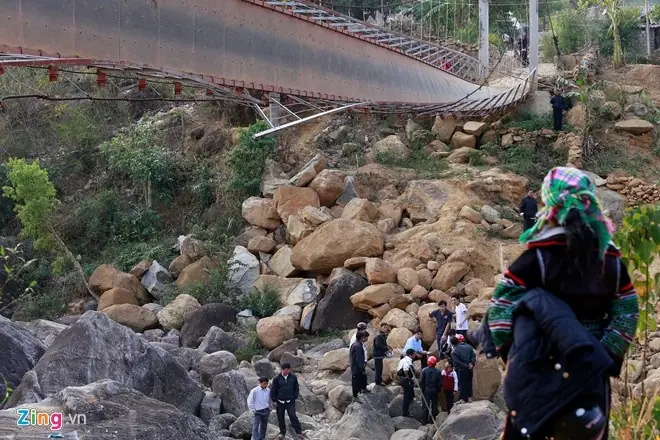
Why the Rocky Stream Below Made the Fall So Dangerous
The height of the bridge was reported to be approximately nine metres above the stream. That distance, combined with the uneven rocks below, made the collapse especially dangerous.
A fall from a height can cause serious injuries even when the landing surface is relatively soft. When the ground consists of large rocks, the risk becomes more severe because the body may strike hard surfaces at different angles.
The injuries can include fractures, head trauma, damage to internal organs, and other life-threatening conditions. A person may also suffer multiple injuries at once, complicating the work of emergency medical teams.