A turnbuckle is a mechanical device used to connect and adjust tension in cables or rods. In a suspension bridge, anchoring components help transfer forces from the main cable system into the supporting structure.
Although a turnbuckle may be much smaller than the bridge deck or the main cables, it can perform a vital structural function.
The Chu Va 6 failure demonstrated how a defect in a relatively small component can compromise an entire bridge.
The technical examination found that the broken anchoring component did not match the approved design in important ways. Its shape and dimensions were not correct, and the manufacturing quality did not meet the required technical standards.
The investigation also identified problems with the surface around the pin hole. The roughness and inaccurate machining created a concentration of stress in an area that needed to withstand significant forces.
In simple terms, the component was not able to carry the forces it was supposed to handle.
The failure was not merely a matter of a bridge becoming old or worn out after years of use. The investigation pointed to problems in the way a critical component had been made and in the procedures that should have ensured it met the design requirements.
That conclusion changed the focus of the case from the people using the bridge to the chain of decisions and checks involved in delivering the structure.
How a Defective Component Could Cause the Whole Bridge to Collapse
A suspension bridge is designed as a connected system. Its deck, cables, anchors, towers, and supporting parts must work together.
The main cables carry tension. The anchors transfer those forces into the supporting structure and the ground. If a critical anchoring point fails, the cable may no longer be held in the position required to support the deck.
When the upstream anchor component at Chu Va 6 broke, the main cable lost its ability to provide the necessary support. The bridge deck then tilted and collapsed.
The technical explanation may sound complicated, but the basic principle is straightforward: a bridge is only as reliable as the critical connections that hold its structural system together.
A component that appears small can carry enormous responsibility. If it is made with the wrong dimensions, processed incorrectly, or installed without proper verification, the entire structure may become vulnerable.
The investigation's findings showed why quality control must extend to every stage of construction. It is not enough for a bridge to look complete or for its main visible elements to appear strong.
The materials and connections must meet the approved design, and the people responsible for inspection must verify that the work has been completed correctly.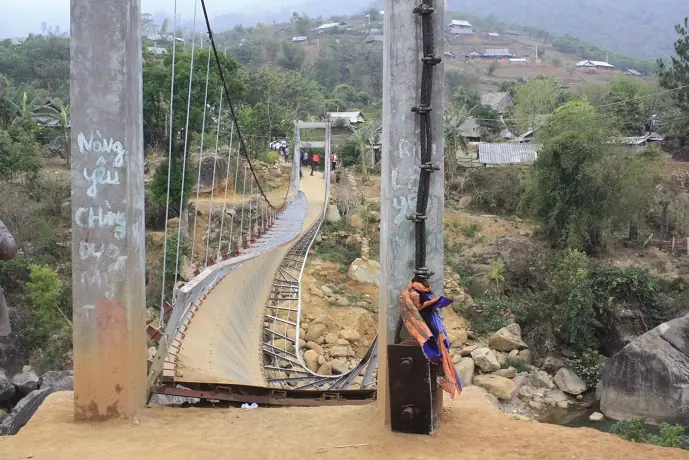
The Manufacturing Errors Identified by Investigators
The technical findings identified two major problems in the manufacture of the anchor turnbuckle.
First, the component's dimensions and form did not match the approved design. The threaded section differed from the specified design, and the dimensions at the point where the component had fractured were not consistent with the technical drawings.
Second, the machining around the pin hole was of poor quality. The surface was uneven, creating conditions in which stress could concentrate rather than being distributed as intended.
The investigation found that these defects reduced the component's ability to withstand the forces placed on it.
The process used to heat and manufacture the steel was also identified as an important technical concern. Improper processing can change the mechanical properties of metal, potentially making it more brittle or less capable of handling the loads for which it was intended.
The fracture pattern indicated a sudden failure after a crack had developed and grown in the affected area. As the bridge operated under load, the remaining material at the weakened section eventually failed.
This is why technical standards are not simply paperwork.
The specified dimensions, machining requirements, and manufacturing procedures exist because each one affects how a component behaves under stress. A deviation that may appear small during production can have serious consequences when the structure is in use.
Construction Work Also Failed to Meet Requirements
The investigation did not stop at the broken turnbuckle.
Authorities also identified problems involving the construction of the anchoring tower supports. Certain work had not been carried out in accordance with the technical requirements, and the application of brick and plaster coverings to parts of the support structures was not included in the approved design documentation.
These findings raised questions about whether the construction process had been properly controlled.
A project involves more than the company physically building a structure. There are design consultants, construction supervisors, project owners, and other parties who have responsibilities at different stages.
The designer must prepare a technically sound plan. The contractor must build according to that plan. The supervising organization must check the work and identify deviations. The project owner must ensure that the process is managed properly and that the completed structure meets the required standards before it is accepted for public use.
If one stage fails, the next stage should identify and correct the problem.
The Chu Va 6 findings suggested that weaknesses occurred at multiple points in this chain.
The issue was not only that one metal component broke. It was that the component had been produced incorrectly, and the wider system of construction supervision and quality control had failed to prevent the defect from reaching a bridge used by the public.
Why the Crowd Was Not Found to Be the Cause
The distinction between the early overload explanation and the later technical conclusion deserves particular attention.
At first, the large number of people in the funeral procession led to questions about whether the bridge had been carrying too much weight.
The final technical assessment found that the total load was below the bridge's designed capacity. It also ruled out synchronized crowd movement, wind, and temperature as the main explanation for the collapse.
This meant that the people attending the funeral were not responsible for the structural defect identified by investigators.
A bridge must be designed to carry the loads specified in its approved engineering documents. The public should not have to guess whether a normal group of pedestrians is too large for a bridge that has been opened for community use.
Of course, every bridge has a defined capacity, and users should follow posted restrictions. But in this case, the technical investigation found that the procession's load did not exceed the bridge's designed capacity.
The failure therefore pointed to a construction and manufacturing problem rather than a simple case of excessive crowd weight.
This distinction is important for the families of the victims and for public understanding of the disaster. It directs attention toward the people and organizations responsible for ensuring that infrastructure is safe before it is opened.
The Role of Design, Construction, and Supervision
The Chu Va 6 bridge project involved several different responsibilities.
The design process determines the dimensions, materials, and technical specifications that a structure must meet. The contractor is responsible for carrying out the work in accordance with the approved design and applicable construction requirements.
Supervision is meant to provide an independent check during the work. Supervisors should monitor the quality of materials, manufacturing, installation, and construction. If a component does not match the design or fails to meet technical requirements, it should not simply be accepted.
The project owner also has responsibilities. It must ensure that the project is managed properly and that the necessary checks and approvals are completed.
The official investigation identified shortcomings involving the contractor, design consultancy, supervision, and project management. These findings illustrated how failures in several parts of the process can combine to create a dangerous outcome.
A construction project cannot rely on trust alone. Each participant must carry out their duties, maintain proper records, and respond when technical requirements are not met.
The public usually sees only the finished bridge. They do not see the drawings, production records, inspection reports, or acceptance documents behind it.
That is why effective oversight is essential. It protects people who have no practical way to verify the safety of a structure themselves.
The Investigation Became a Criminal Case
As technical evidence developed, authorities moved beyond the initial rescue and assessment stages.