For the family, recovering that small photograph felt important. It represented a part of their ordinary life that had survived the disaster.
Elsewhere, an older fisherman named Sato returned to inspect the harbor. He had spent most of his life working on the ocean, which had provided his family with food and income for decades.
Now several boats were damaged, equipment was scattered, and the docks were covered with debris.
He stood quietly for several minutes before saying:
"The ocean gives us life. Sometimes it reminds us how powerful it is."
His words reflected the complicated relationship coastal communities have with the sea. The ocean provides employment, food, transportation, and identity, but it can also become extremely dangerous during a major natural disaster.
Meanwhile, the city's infrastructure crisis continued.
Roads needed repairs. Electrical networks had to be restored, and water systems required inspection. Businesses could not operate normally, schools remained closed, and transportation was interrupted.
Even simple tasks became difficult. Finding medicine could take hours. Charging a phone required patience, and obtaining reliable information sometimes depended on battery-powered radios.
The disaster demonstrated how interconnected modern life had become. When electricity fails, communication systems may also be affected. When roads are blocked, emergency supplies become harder to deliver. When water systems are damaged, even temporary shelters face additional challenges.
Volunteer networks became an important part of the recovery process.
Local businesses donated supplies. Students carried food and water. Medical professionals worked long shifts, while teachers helped organize temporary learning spaces. Neighbors checked on elderly residents and people living alone.
Some volunteers had lost homes themselves, yet still found ways to help others.
Recovery did not happen overnight. Buildings needed inspections, roads required repairs, and damaged homes had to be cleaned or rebuilt. Families faced the difficult task of replacing documents, appliances, furniture, vehicles, and countless personal belongings.
The emotional recovery could take even longer.
For some residents, returning to everyday routines would take months. Others might need years to feel secure again. A familiar street could suddenly remind someone of the disaster, while a quiet ocean might bring back memories of the approaching wave.
Children needed reassurance that adults were working to keep them safe. Families needed support, and residents needed time to understand what they had experienced.
The disaster was no longer only about surviving the earthquake and tsunami. It was about learning how to live afterward.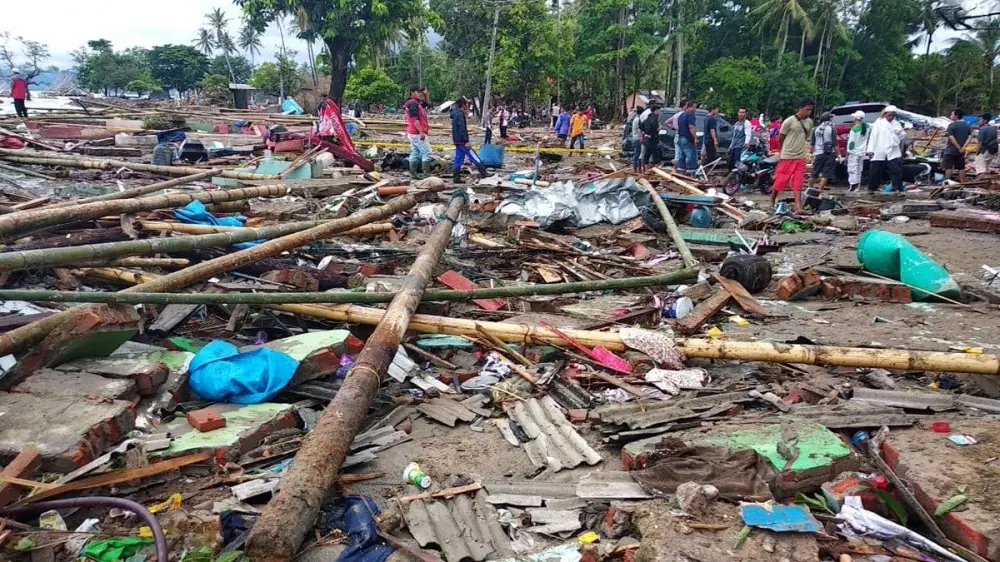
Chapter 5: The Lessons Miyako Would Never Forget
As the weeks passed in this fictional account, residents began asking an important question:
Could something like this happen again?
Communities in earthquake-prone regions must always take future seismic activity seriously. Aftershocks can occur, and additional tsunami hazards may exist after a major offshore earthquake. The exact timing of future earthquakes cannot be predicted with certainty.
That uncertainty can be frightening, but it does not mean people are helpless.
Preparedness can reduce risk.
Knowing evacuation routes matters. Understanding tsunami warnings matters. Keeping emergency supplies available matters. Having a family communication plan matters. Knowing where higher ground is located can make a critical difference when time is limited.
One of the most important lessons from the fictional Miyako disaster was the value of immediate evacuation.
People should not wait to see a tsunami before moving to safety when an official warning or evacuation instruction has been issued. They should not travel toward the coastline to watch the water, return home to collect belongings, or assume the danger has ended after the first wave.
Tsunamis can arrive in multiple waves, and later waves may be more dangerous. Strong currents can remain hazardous long after the first surge has passed.
In the months following the disaster, Miyako began changing its approach to preparedness. Emergency drills became more meaningful. Families reviewed their evacuation plans, schools taught children where to go, and businesses considered how they could operate during emergencies.
For younger residents, the event became a story passed down by parents and grandparents.
They would ask where their families had been, how they had escaped, and who had helped them. Every family would have a different account. Some stories would be heartbreaking, others hopeful, and some almost impossible to believe.
Hana, the young girl from the Tanaka family, eventually returned with her parents to a safe location overlooking the ocean.
The water was calm. Waves moved gently along the coastline, and the horizon looked almost exactly as it had before the disaster.
Hana stared at the sea for a long time.
"Is the ocean angry?" she asked her father.
He thought carefully before answering.
"No. Sometimes nature is powerful in ways we cannot control."
She was quiet for a moment.
"Can we still love the ocean?"
Her father smiled.
"Yes."
They stood together, holding hands and watching the waves.
Months after the fictional disaster, signs of recovery began appearing throughout the city. Construction workers repaired roads, shops reopened, and schools gradually welcomed students again. Some buildings had disappeared entirely, but new lights were beginning to appear in neighborhoods that had once been dark.
Life was returning, although it was not exactly the same life residents had known before.
The city had changed. Its people had changed. But the determination to rebuild remained.
The most important moments of the disaster had not necessarily been the moments when the largest waves arrived. They were the minutes before the water reached the coast, when residents heard warnings and decided whether to evacuate.
Those minutes mattered.
A tsunami can move rapidly across coastal areas, leaving little time for hesitation. Preparedness means turning the available warning time into meaningful distance from danger.