Hand Dermatitis: Symptoms, Causes & How to Find Relief
Dry, itchy, peeling hands may be more than ordinary dryness. Learn what triggers hand dermatitis, how to recognize its symptoms, and what can help restore your skin.
Imagine waking up one morning and noticing that the skin on your palm feels unusually tight. At first, it seems like a little dryness. You apply hand cream, wash your hands, and carry on with the day. But over the next few days, the skin begins to peel. Small cracks appear around your fingers, the itching becomes difficult to ignore, and even ordinary activities such as washing dishes, typing, opening a bottle, or holding someone's hand start to feel uncomfortable.
For some people, the problem develops slowly. For others, it arrives in an uncomfortable flare, with redness, swelling, tiny blisters, and areas of skin that seem to split whenever the hands bend. The photograph accompanying this article shows a palm with extensive dryness, scaling, peeling, and irritated patches around the wrist and lower palm. These visible changes are consistent with features that can occur in hand eczema, although a photograph alone cannot confirm a diagnosis.
The condition is known as hand dermatitis, also commonly called hand eczema. It is an inflammatory skin problem that can affect the palms, backs of the hands, fingers, and spaces between the fingers. It may be temporary, recurrent, or persistent for months or even years. In more severe cases, it can interfere with work, household tasks, sleep, and confidence.
The frustrating part is that hands are exposed to potential irritants throughout the day. Water, soap, detergents, cleaning products, disinfectants, gloves, metals, fragrances, and workplace chemicals can all contribute to irritation or allergic reactions in susceptible people. Even repeated contact with water—something that seems harmless—can weaken the skin's protective barrier when exposure is frequent.
But there is good news: many cases can be improved with the right combination of skin protection, moisturising, trigger avoidance, and medical treatment when necessary. The key is understanding what type of dermatitis may be affecting the hands rather than assuming every dry, flaky patch is simply a lack of moisture.
So how can you recognize hand dermatitis, what makes it flare up, and why does it sometimes return even after the skin appears to heal? The answers begin with understanding what is happening beneath the visible surface.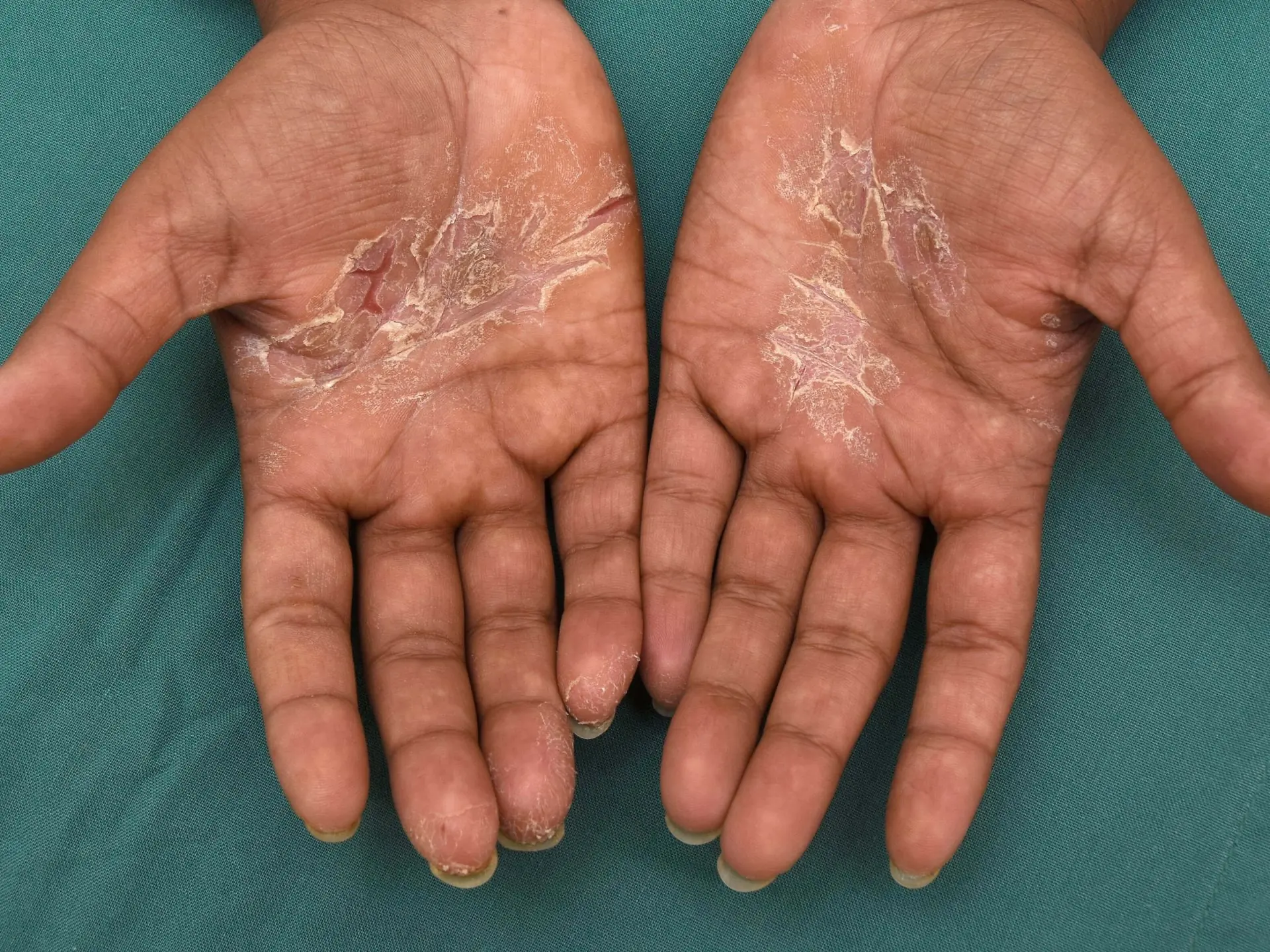
Chapter 1: What Is Hand Dermatitis, and How Can You Recognize It?
Understanding hand dermatitis
Hand dermatitis is a form of eczema that causes inflammation of the skin on the hands. The word dermatitis simply refers to inflammation of the skin, while eczema describes a group of conditions that can cause dryness, itching, irritation, and changes in the skin's appearance.
The condition can affect one or both hands. Some people mainly develop symptoms on the palms, while others experience irritation across the backs of their hands, fingertips, knuckles, or the sides of their fingers. In certain cases, the skin around the wrists may also become affected.
Hand dermatitis is not one single disease with one universal cause. It can develop through several different mechanisms, including direct irritation, allergic reactions, and an underlying tendency toward eczema. These causes can overlap, which is one reason why identifying the exact trigger is not always straightforward.
For example, a person who washes their hands repeatedly at work may develop irritant contact dermatitis because frequent exposure to water and soap damages the skin barrier. Another person may develop allergic contact dermatitis after using a fragranced hand cream or wearing gloves containing a particular chemical. Someone with a history of atopic eczema may be more vulnerable to both types of reaction.
The visible symptoms can look similar even when the underlying causes are different. This means that effective treatment often begins with a careful history of daily activities, products, work conditions, and previous skin problems.
The first warning sign: Persistent dryness
One of the earliest signs of hand dermatitis is skin that feels unusually dry, rough, or tight.
At first, the change may be subtle. The hands may feel uncomfortable after washing, or the fingertips may seem rough even after applying an ordinary moisturiser. The skin may lose its smooth appearance and develop fine lines or small areas of scaling.
Many people initially dismiss these changes as normal dryness caused by weather, frequent washing, or air conditioning. However, hand eczema can progress beyond simple dryness.
As inflammation develops, the skin may become itchy, red or discoloured, thickened, and increasingly sensitive. Small cracks can appear, particularly around the finger joints, fingertips, and palm creases.
A useful distinction is that ordinary dry skin often improves with consistent moisturising and reduced exposure to harsh conditions. Hand dermatitis may require more than moisturiser alone because inflammation and an underlying trigger may continue to damage the skin.
Itching, burning, and discomfort
Itching is one of the most common symptoms of hand dermatitis. It can range from mild irritation to an intense sensation that distracts a person throughout the day.
Some people notice that their hands itch most strongly after washing dishes, cleaning, handling chemicals, or using a particular product. Others experience itching even when they are resting.
Burning or stinging may also occur. This can be especially noticeable when applying alcohol-based products, fragranced creams, or other substances to already irritated skin.
The skin barrier normally helps protect the body from external substances and reduces water loss. When this barrier becomes damaged, the skin can become more sensitive. Products that previously caused no discomfort may suddenly produce a stinging sensation.
Scratching may temporarily relieve the itch, but it can also worsen inflammation and damage the skin further. Repeated scratching may create small wounds, increase discomfort, and raise the risk of secondary infection.
For this reason, persistent itching should not simply be ignored, especially when it occurs alongside peeling, redness, cracks, or blisters.
Redness, discoloration, and inflammation
Inflammation may cause the affected areas to look red, pink, or swollen on lighter skin tones. On darker skin tones, the colour changes may appear brown, purple, grey, or darker than the surrounding skin.
The appearance is not always uniform. Some people develop clearly defined patches, while others notice widespread dryness and irritation across much of the palm.
The skin may feel warm or tender during an active flare. In more severe cases, swelling can make the fingers feel stiff or uncomfortable when bending.
These symptoms can vary depending on the cause and stage of the condition. Acute hand dermatitis may appear suddenly with swelling, blisters, or weeping areas. Chronic hand dermatitis more commonly involves persistent dryness, scaling, thickening, and cracks.
Peeling skin and visible scales
The photograph supplied with the article shows a hand with widespread white scaling and peeling across the palm and fingers. This is an important visual feature of some forms of hand eczema.
Peeling occurs when the outer layer of skin becomes damaged and sheds. It may appear as fine flakes, larger sheets of loose skin, or areas that look as though the surface is lifting away.
Sometimes the peeling is accompanied by redness and tenderness underneath. In other cases, the skin becomes thick and rough, with dry scales that repeatedly return.
Peeling does not automatically mean a person has hand dermatitis. Fungal infections, psoriasis, and other skin conditions can also cause scaling. If symptoms are persistent, widespread, or unusual, a healthcare professional should examine the skin rather than relying on appearance alone.