Repeated scratching damages the surface, creates small wounds, and may increase the risk of infection. Pulling away loose skin can also cause painful cracks.
Instead, try applying a cool, damp compress briefly when itching becomes uncomfortable, followed by an appropriate moisturiser.
Keep fingernails short and avoid aggressive rubbing.
If itching is severe or prevents sleep, ask a healthcare professional about suitable treatment rather than relying on repeated scratching or unverified home remedies.
5. Use prescribed anti-inflammatory creams correctly
When hand dermatitis is actively inflamed, moisturiser alone may not be enough.
Healthcare professionals commonly prescribe topical corticosteroids to reduce inflammation during flare-ups. The appropriate strength depends on the severity, location, and characteristics of the skin condition.
The hands have relatively thick skin in some areas, so treatment may differ from that used on delicate areas such as the face.
Follow the prescribed instructions regarding how much to apply, how often to use it, and how long treatment should continue.
Using a stronger steroid than necessary or applying it for longer than advised can increase the risk of side effects, including skin thinning in susceptible areas.
Do not use someone else's prescription cream or repeatedly apply leftover medication without medical guidance.
6. Other treatments may be considered for persistent cases
Some people have hand dermatitis that does not respond adequately to basic skin care and short courses of topical treatment.
Depending on the diagnosis and severity, a dermatologist may consider other options, including:
-
Topical calcineurin inhibitors in selected cases.
-
Other prescription anti-inflammatory creams.
-
Phototherapy.
-
Oral medicines for severe or difficult-to-control disease.
-
Specialist treatments for chronic hand eczema.
The choice depends on the cause, previous treatment response, medical history, and local treatment availability.
These options should be supervised by a qualified clinician. They are not interchangeable, and some require monitoring for side effects.
7. Do not assume natural remedies are always safer
Aloe vera, essential oils, herbal creams, and other natural products are sometimes promoted as solutions for irritated skin.
However, natural ingredients can still cause irritation or allergic contact dermatitis. Fragrances and plant extracts are particularly relevant for people with sensitive skin.
Applying lemon juice, vinegar, alcohol, or strong household substances to cracked hands can cause additional irritation and pain.
If a product causes burning, itching, or worsening redness, stop using it and seek advice.
A simple, fragrance-free moisturiser is often a more sensible starting point than experimenting with multiple unverified remedies.
Chapter 5: Prevention, Warning Signs, and When to See a Dermatologist
Build a daily hand-care routine
Preventing repeated flare-ups often requires small changes that become part of everyday life.
A practical routine might look like this:
In the morning: Apply a suitable moisturiser before starting daily activities. If work involves cleaning or chemicals, prepare appropriate protective gloves.
During the day: Wash hands when necessary using a gentle cleanser, dry them carefully, and reapply moisturiser after washing. Avoid unnecessary exposure to detergents and harsh products.
During household tasks: Use suitable protective gloves, avoid prolonged contact with cleaning products, and take breaks if hands become sweaty or uncomfortable.
Before bed: Apply a thicker moisturiser or ointment if recommended and if it feels comfortable. Keep the routine simple enough to maintain every night.
Consistency is important because the skin barrier may take time to recover even after visible inflammation improves.
Learn to recognize your personal triggers
Different people react to different substances.
One person may develop symptoms after using a particular dishwashing liquid, while another reacts to a glove ingredient or workplace chemical.
Keeping a short diary may help identify patterns. Record when symptoms become worse, which products were used, and whether particular activities occurred before a flare.
If a specific product seems suspicious, keep its packaging or ingredient list so that a dermatologist can review it.
Avoid deliberately testing a suspected allergen on damaged skin. A formal assessment is safer and more reliable.
When should you seek medical advice?
Consider seeing a healthcare professional if:
-
The rash does not improve with regular moisturising and sensible skin protection.
-
It repeatedly returns or continues for several weeks.
-
The skin becomes thick, deeply cracked, or painful.
-
Blisters or extensive peeling develop.
-
Symptoms interfere with work, sleep, or daily activities.
-
You suspect an allergy to a product or workplace substance.
-
The diagnosis is uncertain.
A dermatologist may be particularly helpful when the condition is persistent, severe, or not responding to initial treatment.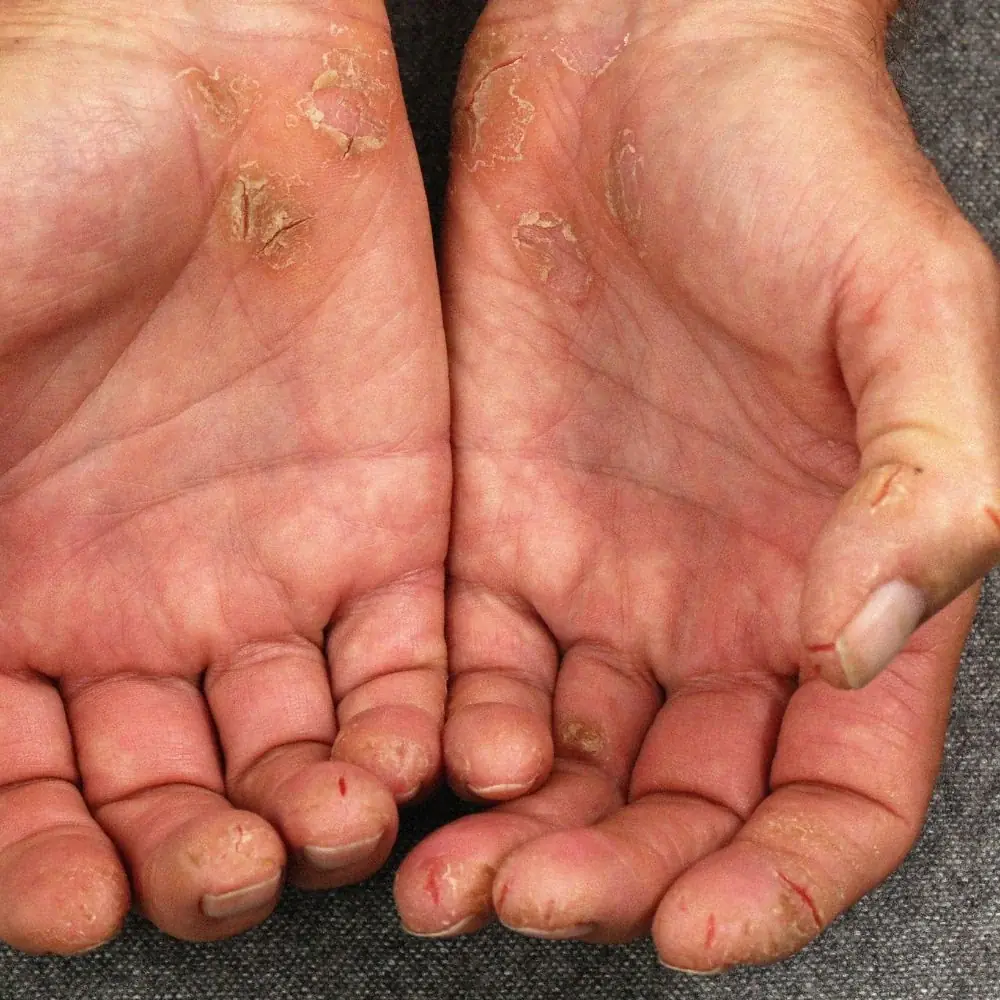
Signs that may indicate infection
Damaged skin can sometimes become infected.
Warning signs include increasing pain, warmth, swelling, spreading redness or discoloration, pus, yellowish crusting, or rapidly worsening symptoms.
Fever or feeling generally unwell alongside a worsening skin lesion also requires prompt medical assessment.
Seek urgent care if redness spreads rapidly, severe pain develops, or you feel seriously unwell. Do not attempt to treat a suspected infection with leftover antibiotics or prescription creams without professional advice.
Why hand dermatitis sometimes returns after treatment
One of the most frustrating experiences is seeing the hands improve, only for the rash to return a few weeks later.
This can happen because visible healing does not always mean the skin barrier has fully recovered.
The skin may still be vulnerable to irritants even after redness and itching have decreased. Returning too quickly to frequent wet work, harsh cleansers, or allergen exposure can trigger another flare.
In other cases, the original cause has not been identified. A person may use medication to calm the inflammation but continue coming into contact with the substance that started the reaction.
This is why prevention and treatment need to work together.
If the condition repeatedly returns, ask whether the original diagnosis should be reviewed or whether patch testing and additional investigations may be appropriate.
Can hand dermatitis be completely cured?
The outlook depends on the underlying cause.
Some cases of contact dermatitis improve substantially when the responsible irritant or allergen is identified and avoided. Other forms, particularly those associated with an underlying tendency toward atopic eczema, may be chronic and prone to recurring flares.
Even when the condition cannot be permanently eliminated, many people can achieve better control with appropriate treatment and consistent skin care.
The important thing is not to assume that persistent symptoms are something that must simply be tolerated.
A final reminder: Your hands deserve more attention than you think
Hand dermatitis may begin with what looks like ordinary dryness, but persistent itching, peeling, redness, blisters, and painful cracks can turn everyday activities into uncomfortable challenges.
The photograph at the beginning of this article illustrates how extensive hand eczema can become. However, similar-looking symptoms may have different causes, and a photograph cannot determine whether a particular person has irritant dermatitis, allergic dermatitis, atopic eczema, or another skin condition.
The most useful steps are to identify potential triggers, protect the skin from repeated irritation, moisturise consistently, and seek appropriate treatment when symptoms persist.
Remember these key points:
-
Hand dermatitis is an inflammatory skin condition and is not contagious.
-
Water, detergents, cleaning products, fragrances, glove chemicals, and workplace exposures may contribute.
-
Symptoms can include dryness, itching, burning, redness, blisters, scaling, and painful cracks.
-
Moisturisers and protective skin care are important, but active inflammation may require medical treatment.
-
Persistent or recurring symptoms deserve professional assessment.
-
Increasing pain, pus, spreading inflammation, or fever may indicate infection and should not be ignored.
Healthy hands are essential for almost every part of daily life. Giving them regular protection and appropriate care can help reduce discomfort, prevent repeated irritation, and make ordinary tasks easier again.