There may also be a cycle in which skin discomfort increases stress, while stress makes the person more aware of itching and more likely to scratch.
Managing stress cannot replace treatment or trigger avoidance, but maintaining regular sleep, taking breaks, and using relaxation techniques may support overall well-being.
12. Other skin conditions can look similar
Not every dry, peeling palm is caused by hand dermatitis.
Several other conditions can produce similar symptoms, including:
-
Psoriasis: May cause thickened, well-defined plaques and scaling, sometimes with cracks.
-
Fungal infection: Can affect one hand or both and may cause scaling, itching, or changes to the nails.
-
Scabies: Can cause intense itching, often worse at night, with characteristic burrows or rashes in other areas.
-
Keratolysis exfoliativa: Can cause superficial peeling of the palms and fingers.
-
Other inflammatory skin conditions: May produce redness, blisters, or scaling that resembles eczema.
This is why a persistent rash should not automatically be treated as hand dermatitis without considering other possibilities.
A healthcare professional may examine the hands, feet, nails, and other areas of skin. Depending on the findings, they may recommend fungal testing, patch testing, or another investigation.
Why identifying the cause is so important
The same moisturiser may help one person but provide little relief to another because their underlying triggers are different.
Someone with irritant dermatitis may need to reduce wet work and protect the skin barrier. Someone with allergic contact dermatitis may need to identify and avoid a specific ingredient. Someone with atopic hand eczema may need ongoing treatment to control inflammation and prevent repeated flares.
If the trigger remains present, symptoms may return even after the skin temporarily improves.
That is why successful management involves more than treating the visible rash. It also requires understanding what is repeatedly irritating or inflaming the hands.
Chapter 3: How Doctors Diagnose Hand Dermatitis
Why appearance alone is not enough
The appearance of the hands provides important clues, but it does not always reveal the exact cause.
A dermatologist will usually ask when the symptoms began, where they first appeared, whether they come and go, and what makes them better or worse.
They may also ask about work, hobbies, cleaning routines, handwashing frequency, gloves, cosmetics, and previous skin conditions.
These questions help identify possible exposures and determine whether the problem is more likely to be irritant, allergic, atopic, or caused by another skin condition.
The importance of a detailed exposure history
A person may find it helpful to prepare for an appointment by making a list of products and substances that come into contact with their hands.
This might include:
-
Soaps and hand cleansers.
-
Hand creams and moisturisers.
-
Household cleaning products.
-
Disinfectants and sanitizers.
-
Gloves and protective equipment.
-
Workplace chemicals.
-
Jewellery, tools, and metal objects.
-
Gardening or hobby materials.
It can also be useful to note whether symptoms improve when the person avoids a particular activity.
Photographs taken during different stages of a flare may help show how the condition changes over time.
What is patch testing?
Patch testing is used to investigate allergic contact dermatitis.
During the procedure, small amounts of selected substances are placed on patches that are applied to the skin, usually on the back. The patches remain in place for a specified period and are removed according to the clinic's instructions.
The skin is then assessed for signs of an allergic reaction. Additional readings may be needed because some reactions take time to develop.
Patch testing is different from a skin-prick test and is designed to identify delayed contact allergies.
It may be recommended when allergic contact dermatitis is suspected, when hand eczema persists despite appropriate treatment, or when the cause remains unclear.
A positive result must be interpreted in context. It is important to determine whether the allergen is actually relevant to the person's daily exposures.
When other tests may be needed
If the appearance suggests a fungal infection, a clinician may take a skin scraping for laboratory examination.
In unusual or difficult cases, additional tests may be considered to investigate other diagnoses.
Not every patient needs extensive testing. Many cases can be assessed through medical history and physical examination, with further investigations selected according to the individual findings.
The goal is to avoid treating the wrong condition and to choose a plan that addresses the real cause.
Chapter 4: How to Find Relief and Help Your Hands Heal
The most effective approach to hand dermatitis usually combines two goals: calming the inflammation that is already present and preventing further damage to the skin barrier.
A person may need different treatments depending on the severity and cause of the condition. Mild irritation may improve with careful skin protection and moisturising, while more persistent or severe inflammation may require prescription medication.
1. Moisturise frequently, not just when your hands feel dry
Moisturising is one of the foundations of hand eczema care.
The outer layer of healthy skin contains natural oils and other substances that help retain moisture and protect against external irritants. When this barrier is damaged, water escapes more easily and the skin becomes dry, rough, and sensitive.
Emollients help soften the skin and support the barrier. They are available as ointments, creams, and lotions.
-
Ointments are generally thicker and contain more oil. They can be useful for very dry or cracked skin because they help reduce water loss.
-
Creams are less greasy and may be more convenient for daytime use.
-
Lotions are lighter but may not provide enough protection for severely dry hands.
People with hand eczema often find that a fragrance-free cream or ointment is more comfortable than a heavily scented product.
Apply moisturiser after washing and drying the hands, and reapply throughout the day whenever the skin feels dry. Keeping a small container near the sink, workplace, or bedside can make regular use easier.
The goal is to maintain the skin barrier consistently rather than waiting until the hands become severely irritated.
2. Choose gentle cleansers
Harsh soaps and detergents can worsen dryness and irritation.
When possible, choose a mild, fragrance-free cleanser or a soap substitute recommended for sensitive skin. Avoid products that leave the hands feeling unusually tight or stripped of moisture.
Use lukewarm water rather than very hot water. Hot water may remove more of the skin's natural oils and can make irritation worse.
After washing, gently pat the hands dry with a clean towel. Pay attention to the spaces between the fingers, where moisture can remain.
Apply moisturiser soon after drying to help reduce water loss.
People working in healthcare or other environments with strict hand hygiene requirements should follow workplace infection-control procedures and seek advice about skin-compatible products rather than reducing necessary hygiene.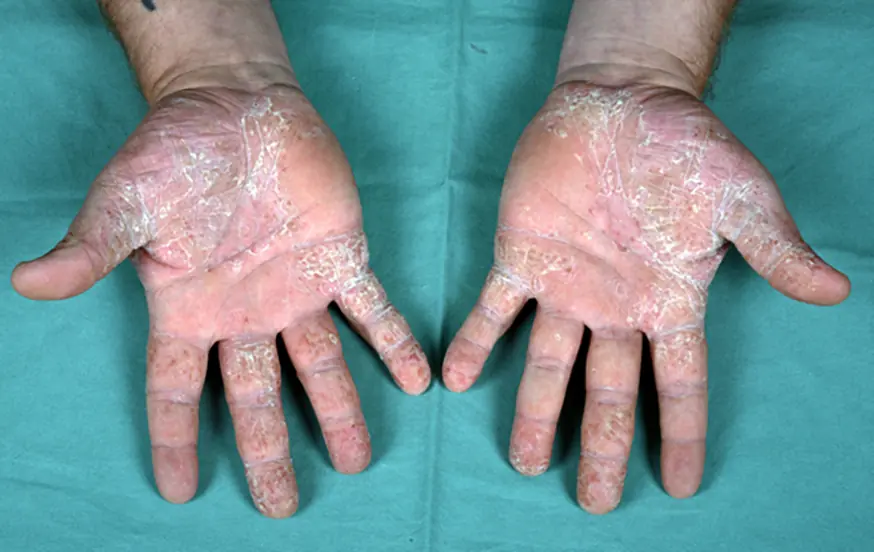
3. Protect your hands when cleaning or washing dishes
Household cleaning is a common source of repeated exposure to irritants.
When using detergents, bleach, or other cleaning products, wear suitable protective gloves and follow the manufacturer's safety instructions.
Gloves should be appropriate for the substance and task. If the hands become sweaty inside them, cotton liners may help in some situations. Change gloves if they become wet or damaged inside.
Avoid wearing protective gloves for longer than necessary, particularly if heat and moisture cause discomfort.
If a particular glove material causes itching or a rash, stop using it and discuss alternatives with a healthcare professional.
4. Avoid scratching and peeling the skin
Scratching may feel relieving for a moment, but it can make inflammation worse.