Dishwashing liquid, laundry detergents, bathroom cleaners, disinfectants, bleach, and degreasers may cause irritation, particularly when they come into direct contact with already damaged skin.
Some products are highly concentrated. Others contain fragrances, preservatives, or additional ingredients that may cause problems for certain individuals.
A person may notice that their hands become dry and uncomfortable after cleaning the bathroom or washing dishes. If the exposure continues, redness, peeling, and cracks may develop.
Protective gloves can reduce direct contact with cleaning products, but gloves need to be used correctly. Wearing them for a long time can cause sweating and moisture buildup, which may also irritate the skin. Some glove materials or additives can trigger allergic reactions.
For household tasks, people can choose gloves appropriate for the product being used, follow the product instructions, and avoid prolonged unnecessary exposure.
If gloves cause itching or a rash, the material itself may be part of the problem and should be discussed with a healthcare professional.
4. Allergic contact dermatitis: When the immune system reacts to a substance
Allergic contact dermatitis is different from irritant dermatitis.
It occurs when the immune system becomes sensitised to a substance and later produces an inflammatory reaction after contact with it.
The first exposure may not cause an obvious rash. Sensitisation can develop over time, and a reaction may occur after the person has encountered the substance repeatedly.
Once sensitised, even relatively small amounts of the allergen may trigger symptoms.
Common contact allergens include certain fragrances, preservatives, rubber chemicals, metals, adhesives, and ingredients found in cosmetics or workplace products.
The reaction may appear on the hands because they are the body parts that directly touch the substance. However, symptoms can sometimes extend beyond the exact area of contact.
Allergic contact dermatitis may be difficult to identify because a person can use the same product for months or years before noticing a problem. The cause may also be an ingredient in a product rather than the product's main advertised component.
For example, someone may suspect that a hand cream is moisturising poorly when a fragrance or preservative in the formula is actually contributing to irritation.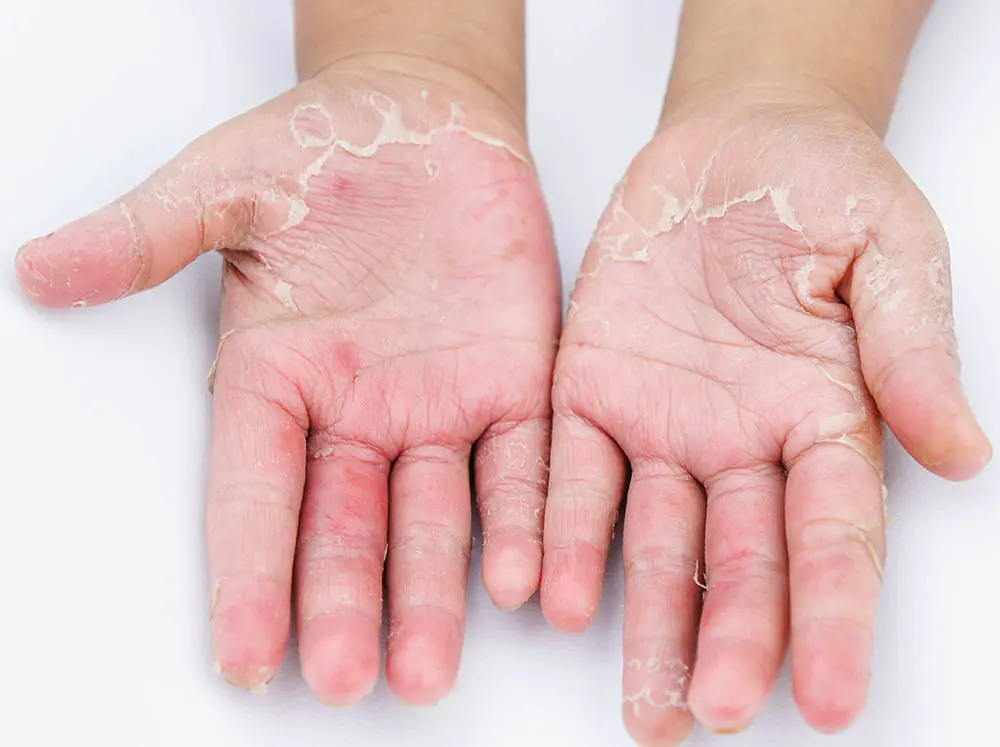
5. Nickel and other metals
Nickel is a well-known contact allergen. It can be found in certain jewellery, metal objects, tools, fasteners, and other everyday items.
People who are allergic to nickel may develop an itchy rash after repeated contact with items containing the metal.
Although nickel allergy is often associated with reactions around earrings, watches, or belt buckles, hand exposure can also occur. A person may handle metal tools, coins, keys, or equipment as part of work or daily activities.
Other metals and metal-related substances can also cause allergic reactions in some individuals.
If a rash repeatedly appears after handling a particular object, it may be useful to record the exposure and discuss it with a dermatologist. Patch testing may help identify whether a metal allergy is involved.
6. Rubber gloves and protective equipment
Gloves are often recommended to protect irritated hands, but they are not automatically harmless.
Some people react to rubber chemicals used in the manufacture of gloves. Others experience irritation because their hands become hot and sweaty inside gloves worn for extended periods.
Gloves can also trap moisture against the skin. If the skin is already inflamed, prolonged occlusion may worsen discomfort.
For people with hand dermatitis, glove choice matters.
Depending on the task and suspected allergy, alternatives such as suitable nitrile or other non-latex gloves may be considered. However, some non-latex gloves also contain chemical additives that can trigger reactions.
Cotton glove liners may help absorb sweat during certain tasks, provided the outer protective gloves remain suitable for the job.
The correct choice depends on the exposure, occupation, and individual's skin sensitivity. People with suspected glove allergy should seek professional advice rather than repeatedly switching products without identifying the trigger.
7. Fragrances and preservatives in personal-care products
Hand creams, soaps, liquid cleansers, sanitizers, and cosmetics can contain ingredients that irritate or cause allergic reactions.
Fragrances are a common source of contact allergy. Preservatives are also important because they help prevent products from becoming contaminated, but certain preservatives can trigger reactions in sensitised individuals.
A product described as natural, botanical, or gentle is not necessarily free of allergens.
Essential oils and plant extracts can also cause allergic contact dermatitis in some people.
For someone with recurring hand eczema, a fragrance-free moisturiser with a relatively simple ingredient list may be a sensible starting point. However, even products labelled fragrance-free can contain ingredients that are unsuitable for a particular person.
If a rash repeatedly appears after using a certain cream or soap, stop using the suspected product and seek advice about possible testing.
8. Atopic dermatitis and an inherited tendency toward eczema
Some people develop hand dermatitis because they have an underlying tendency toward atopic skin disease.
Atopic dermatitis, commonly called atopic eczema, is a chronic inflammatory condition associated with an impaired skin barrier and an altered immune response.
People with a history of eczema during childhood, asthma, or allergic rhinitis may have a greater tendency toward atopic conditions. However, not everyone with hand eczema has this background, and a family history alone does not establish the diagnosis.
When the skin barrier is naturally more vulnerable, contact with ordinary irritants may produce stronger reactions.
A person may find that their hands become irritated more easily during cold weather, after frequent washing, or when using cleaning products.
Atopic hand dermatitis can occur alone or alongside eczema on other parts of the body. Treatment often involves long-term skin care and measures to reduce exposure to irritants.
9. Cold weather, low humidity, and dry indoor environments
Environmental conditions can influence the severity of hand dermatitis.
Cold air and low humidity may increase water loss from the skin. Indoor heating and air conditioning can also create dry environments that make already irritated hands feel worse.
People may notice more peeling and cracking during colder months, especially if they wash their hands frequently or spend time outdoors without protection.
Weather is not necessarily the original cause of the condition, but it can act as a trigger that aggravates existing skin-barrier problems.
Protecting the hands from cold air, using moisturiser after washing, and avoiding excessively hot water may help reduce discomfort.
10. Occupational exposure and hobbies
The workplace can play a major role in recurring hand dermatitis.
Hairdressers may handle dyes, shampoos, and chemical treatments. Healthcare workers may wash their hands frequently and use disinfectants. Cleaners may handle detergents and bleach. Mechanics may encounter oils, solvents, and industrial substances.
People who work with cement, paints, adhesives, resins, or metals may also face specific skin hazards.
Hobbies can create similar exposures. Gardening, painting, woodworking, crafting, cooking, and cleaning equipment may all involve materials that irritate or sensitise the skin.
A useful approach is to consider what the hands touch during a normal week rather than focusing only on products used at home.
If symptoms improve during holidays or days away from work and return after resuming certain tasks, this pattern may provide an important clue.
However, it does not prove that the workplace is responsible. A dermatologist or occupational health professional can help investigate the relationship.
11. Can stress make hand dermatitis worse?
Stress does not explain every case of hand eczema, and it is not usually the sole cause.
However, stress may influence inflammatory skin conditions and can make itching more difficult to manage. Some people notice that flare-ups become more troublesome during periods of emotional pressure, poor sleep, or demanding work schedules.