If the garden already provides dense cover and suitable shelter, the combination of fallen fruit, rodents, and concealed vegetation may make it more useful to snakes.
This is an indirect relationship. The food is not usually appealing to snakes themselves; the animals that gather around it may be the more relevant factor.
Why fallen fruit deserves attention
Consider a fruit tree beside a fence, with overgrown plants beneath it and several pieces of decaying fruit scattered across the ground.
The fallen fruit can attract insects and rodents, while the vegetation provides hiding places for those animals.
If rodents become established, snakes that hunt them may eventually pass through the area.
This does not guarantee that snakes will appear, but keeping the ground clean can help reduce the resources available to some unwanted wildlife.
How to manage fruit trees
Collect ripe and fallen fruit regularly.
Dispose of rotting fruit appropriately rather than leaving it in a pile beside the house. Store harvested fruit in secure containers, and avoid allowing food waste to accumulate in open bins.
Keep the area beneath the tree reasonably clear and make sure branches do not create concealed passages around important access points.
Trim vegetation beneath the tree where appropriate, while keeping the plant healthy and avoiding excessive removal of roots or branches.
If rodents are present, address the underlying food, shelter, and access points. Simply removing a snake while leaving a rodent problem unchanged may not solve the broader issue.
Fruit trees can be an excellent part of a home garden. Proper maintenance helps preserve their benefits while reducing unnecessary wildlife conflicts.
8. Thick Hedgerows That Run Along Property Boundaries
Hedgerows are often planted to create privacy, reduce wind exposure, mark boundaries, or provide habitat for birds and beneficial insects.
A carefully maintained hedge can be a valuable landscaping feature.
Problems may arise when a hedge becomes extremely dense at ground level, grows into adjacent debris, or creates a continuous strip of concealment from one end of the property to the other.
Snakes moving through the area may use such cover to avoid open ground. Rodents and other small animals may also shelter beneath thick hedges.
For homeowners, the main difficulty is visibility. A narrow hedge may appear tidy from above while its base contains leaves, branches, openings, and hidden spaces.
What makes a boundary hedge harder to manage?
A hedge that touches a shed, extends into tall grass, and runs behind a pile of firewood can connect several different sheltering areas.
If the fence itself contains holes or gaps, snakes and other animals may pass through without being noticed.
Continuous dense growth can also make it difficult to inspect the property boundary and identify where wildlife is entering.
A safer landscaping arrangement
Maintain hedges at a manageable size and keep the area around their bases accessible.
Trim branches that spread into paths, regularly clear excess debris, and avoid letting the hedge merge with piles of lumber, unused equipment, or other clutter.
Where privacy is important, you can retain the hedge while maintaining a cleaner strip along the ground. The exact design will depend on the hedge species and local climate.
Inspect gates and fence openings periodically. If you find a snake in the hedge, do not insert a stick or your hand to drive it out.
Give the animal space and seek professional assistance when necessary.
The objective is to preserve privacy without creating an extensive, inaccessible zone immediately beside the house.
9. Ground-Level Vines and Creeping Plants Around Sheds and Storage Areas
Some of the most problematic plant arrangements are not in flower beds. They occur around sheds, garages, outdoor cabinets, compost areas, and places where household materials are stored.
Ground-level vines can creep beneath structures, cover openings, and grow around stacked objects.
When combined with cardboard, lumber, unused pots, tools, or discarded materials, this vegetation can create many small sheltered spaces.
Snakes may use these spaces if the local environment provides suitable conditions. Rodents and insects may also shelter there.
This is particularly relevant because people often reach into storage areas without looking carefully. A person moving a pot or lifting a board could unknowingly disturb an animal hiding underneath.
How to reduce the risk
Keep outdoor storage areas organized and inspect them regularly.
Avoid allowing plants to cover entrances, vents, access panels, or the ground immediately around sheds.
Store lumber, unused pots, and similar materials in a way that minimizes ground-level hiding spaces. Where suitable, use shelving or storage solutions that allow you to inspect the area underneath and behind items.
Do not reach blindly beneath a shed or into a tangled patch of vines.
Before moving stored materials, look at the surrounding area and use appropriate tools rather than placing your hands into unseen spaces.
If a snake appears inside a shed or enclosed storage area, do not corner it. Keep people and pets away and contact a qualified professional.
This is one situation in which good housekeeping may be more important than which ornamental plants you choose.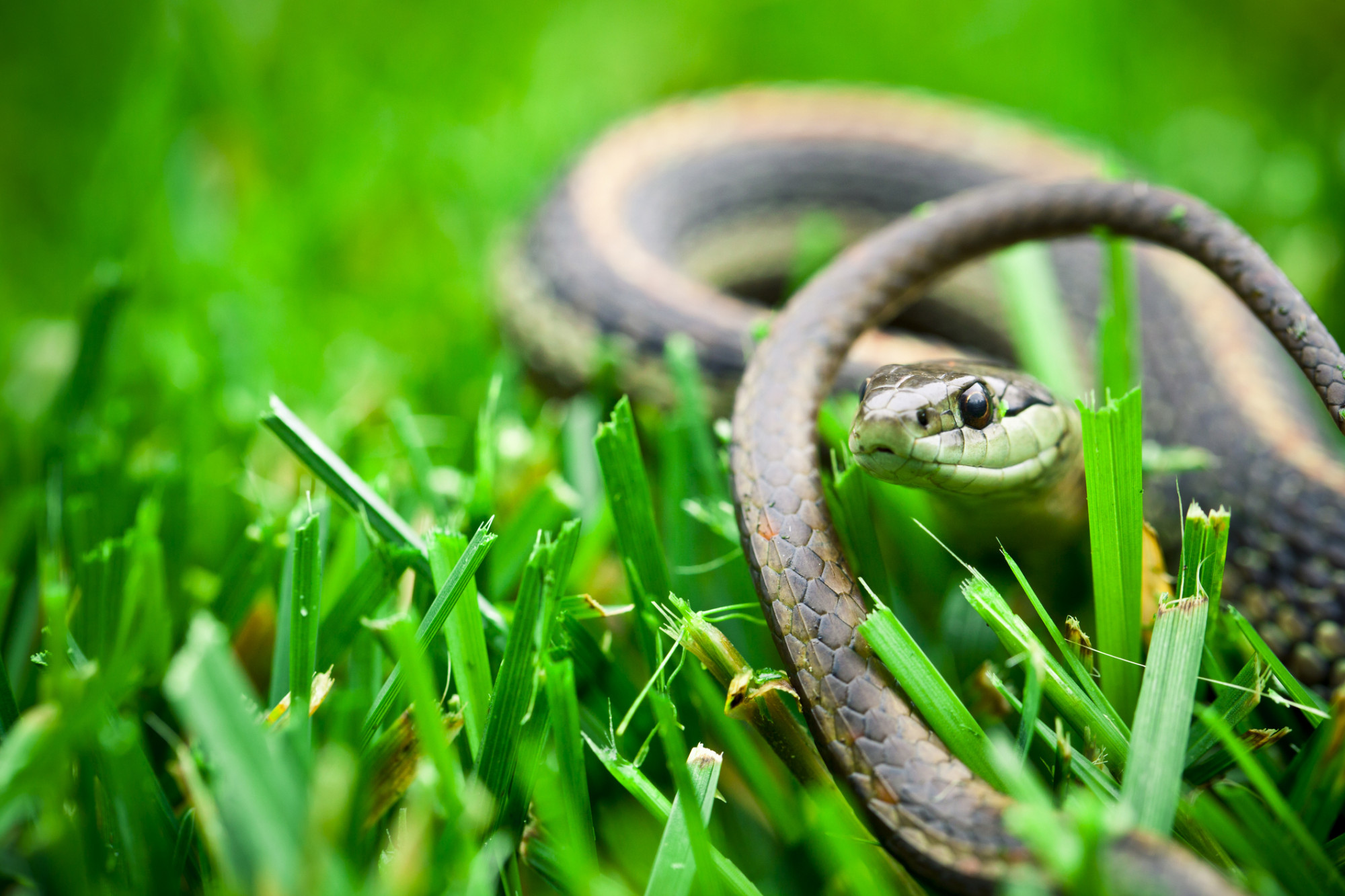
10. Water-Loving Plants and Dense Vegetation Near Ponds
Water features can make a garden peaceful and attractive. Ponds, small streams, decorative pools, and water gardens may support plants such as reeds, rushes, water lilies, and other aquatic or moisture-loving species.
These features can also create suitable habitat for frogs, insects, and other small animals.
Some snake species feed on frogs, fish, amphibians, or other animals associated with water. As a result, a pond may occasionally form part of a habitat used by local snakes.
But water plants do not automatically attract venomous snakes, and a garden pond does not necessarily create a dangerous situation.
Many homeowners have water features without experiencing snake encounters. The likelihood depends on the region, available wildlife, vegetation, and how the surrounding property is managed.
Why dense pond edges can create hidden spaces
Tall vegetation around a pond can make it difficult to see the ground or water's edge. Rocks, fallen leaves, damp soil, and overhanging plants may provide shelter for small wildlife.
If a person approaches a pond through thick plants, they may not see a snake resting nearby.
This can be particularly relevant for children who play around water or adults who maintain pumps, filters, and other equipment.
How to maintain a water garden
Keep access routes around the pond clear enough to walk safely.
Trim vegetation that blocks visibility, remove excess dead plant material, and avoid allowing the edge of the pond to merge with dense groundcover or an unmanaged woodpile.
Store pond equipment neatly, and inspect the area before reaching into plants or placing hands between rocks.
If local snakes commonly use wetlands or garden ponds, consult a wildlife professional about landscaping appropriate to your area.
Do not introduce chemicals or attempt to kill wildlife indiscriminately in an effort to make a pond snake-free. Such actions may damage the ecosystem without eliminating the underlying habitat.
A well-managed pond can remain a beautiful garden feature while reducing the chance of unexpectedly encountering wildlife.
11. Piles of Leaves, Mulch, Rocks, and Firewood Can Matter More Than the Plants
When people discuss plants that attract snakes, they often focus on the species growing in the garden.
However, the materials surrounding the plants can be just as important—or more important—than the plants themselves.
Piles of fallen leaves, stacked rocks, firewood, unused construction materials, and other objects may create protected cavities where small animals can hide.
Some snakes use such spaces for shelter, temperature regulation, or protection from disturbance.
The same areas may also provide refuge for rodents and other prey species.