Decluttering can help reduce hiding places for both snakes and small animals that may serve as prey.
5. Reduce rodent activity
Keep food waste in secure containers, clean up spilled animal feed, and avoid leaving pet food outdoors overnight when practical.
Inspect buildings for entry points that allow rodents inside, and address any infestation using appropriate methods.
If rodents remain abundant, snakes that hunt them may continue to pass through the area even after some vegetation has been removed.
6. Maintain fences, doors, and outdoor structures
Inspect gates, foundation gaps, vents, and spaces beneath sheds.
Repair damaged structures where appropriate and use suitable screens or barriers that do not interfere with ventilation or drainage.
No ordinary fence guarantees that every snake will be excluded, but well-maintained structures can reduce some opportunities for unwanted animals to enter buildings.
7. Learn about the snakes found in your region
The species present in one country or region may differ substantially from those in another.
Local wildlife organizations, public-health authorities, and qualified snake specialists can provide information about common species and recommended precautions.
Learn whom to contact if a snake enters your home or appears in an area where children and pets spend time.
Regional knowledge is often far more useful than generic online lists of supposedly dangerous plants.
16. What Should You Do If You Find a Snake in Your Garden?
Even a well-maintained garden may occasionally be visited by a snake.
If you encounter one, the safest response is to remain calm, stop approaching it, and give it space.
Do not try to inspect its head or markings at close range. Head shape, color, pupil shape, and other visible characteristics are not universally reliable indicators of whether an unidentified snake is venomous.
Move away slowly when it is safe to do so, and guide children and pets away from the area.
Do not throw stones, strike the snake with a shovel, or attempt to capture it. These actions can provoke a defensive response and increase the chance of a bite.
If the snake is passing through an open garden, it may leave without intervention.
If it is inside a home, garage, shed, or another occupied structure, keep people away and contact an appropriate local wildlife-removal professional or emergency service.
Do not reach blindly into plants, move a container with your hands near the snake, or attempt to kill it.
If someone is bitten in an area where venomous snakes occur, seek emergency medical assessment immediately. Do not wait for symptoms or attempt to identify the snake before obtaining help.
Avoid cutting the wound, sucking out venom, applying ice, or using a tight tourniquet. Follow the instructions of local emergency services and qualified medical professionals.
The goal is to prevent a frightening encounter from becoming a preventable injury.
17. Are Snakes Always a Sign of Poor Garden Maintenance?
No. A snake in the garden does not necessarily mean the property is dirty or neglected.
Snakes may move through clean, carefully maintained landscapes while traveling between natural habitats. Some species can enter gardens because of nearby forests, fields, waterways, parks, or other areas where they naturally live.
A homeowner may have a well-kept yard and still encounter a snake occasionally.
Likewise, removing all ornamental plants would not guarantee that snakes would never appear.
Habitat extends far beyond individual property boundaries. A garden may be only one small part of a larger landscape used by wildlife.
The purpose of maintaining plants and reducing clutter is to make the area around the home easier to inspect and reduce unnecessary shelter close to human activity—not to create an absolute barrier against nature.
It is also worth remembering that snakes play ecological roles. Many help regulate populations of rodents and other small animals, and some species are important components of local ecosystems.
Whenever possible, safe coexistence is preferable to indiscriminate killing.
If snakes regularly enter living spaces or create a specific hazard, seek professional help to identify likely access routes and appropriate preventive measures.
18. Common Myths About Plants That Attract Snakes
Online gardening advice often contains simplified claims about particular plants. Understanding what these claims get wrong can prevent unnecessary fear.
Myth 1: Certain flowers attract snakes because of their fragrance.
There is no reliable general rule that common fragrant flowers attract snakes simply because they smell pleasant to people. Shelter and access to prey are usually more relevant factors.
Myth 2: Planting jasmine or roses automatically brings snakes into the garden.
A snake found near a flowering shrub may simply be using the cover or passing through the area. The presence of a plant does not establish that the plant attracted the animal.
Myth 3: All thick plants should be removed.
Dense vegetation can provide shelter, but plants are also important parts of healthy gardens and ecosystems. Selective trimming, thoughtful spacing, and regular maintenance are often more reasonable than removing every shrub or groundcover.
Myth 4: Bamboo always attracts snakes.
Bamboo does not universally attract snakes. Dense, poorly maintained bamboo may provide cover, but the overall habitat and the species present in the region matter.
Myth 5: A tidy garden can never contain snakes.
Snakes may visit even well-maintained properties, especially when the surrounding landscape provides suitable habitat. Good maintenance reduces some risks but cannot guarantee their complete absence.
Myth 6: Snakes only enter gardens looking for places to live.
Some snakes may be moving through a garden while searching for food, avoiding unfavorable weather, or traveling between habitats. Not every encounter means a snake has established a permanent shelter.
Myth 7: Removing one plant will solve a snake problem.
If the property still provides rodents, dense debris, structural gaps, and other sheltering areas, removing one plant may have little effect. A broader approach is generally more useful.
The central lesson is to evaluate the whole environment rather than treating a particular flower or ornamental plant as the cause of every snake encounter.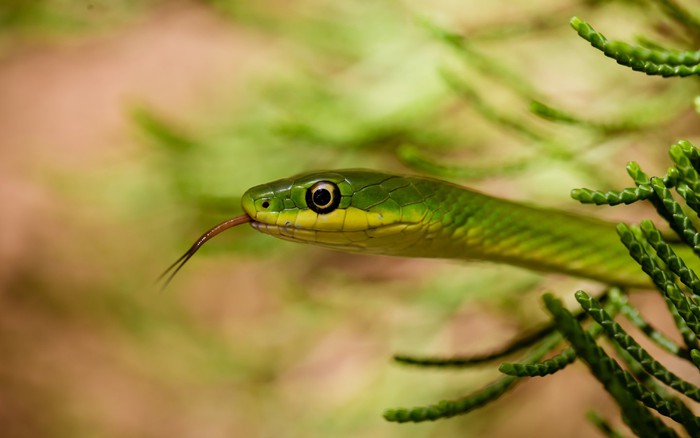
Final Thoughts: You Can Enjoy a Beautiful Garden Without Creating Unnecessary Hiding Places
Plants play an important role in making a home garden attractive, comfortable, and environmentally useful. Trees provide shade, flowers add color, shrubs create privacy, and groundcover can protect soil from erosion.
There is no need to abandon gardening because of fears about snakes.
However, the way plants are arranged and maintained can influence the amount of shelter available around a home. Dense groundcover, tall ornamental grasses, overgrown shrubs, climbing vines, large thickets, and neglected vegetation around storage areas may create places where snakes can remain concealed.
Fruit trees and water features can also contribute indirectly to a suitable habitat when they are combined with fallen food, abundant prey, and dense cover.
These relationships are not universal rules. No ordinary garden plant can be said to attract snakes in every location, and the presence of a particular plant does not prove that a snake will appear.
The most practical approach is to keep vegetation manageable, maintain visibility along walkways and building edges, remove unnecessary debris, reduce rodent activity, and inspect outdoor structures regularly.
If you see a snake, keep your distance and seek professional help when necessary. Do not attempt to handle or kill it, regardless of whether you believe it is dangerous.
A garden can remain green, colorful, and full of life while being easier to maintain and safer to use.
The real goal is not to eliminate plants. It is to prevent the area around your home from becoming an unmanaged network of hiding places, food sources, and concealed entry points.
With thoughtful landscaping, routine maintenance, and an understanding of local wildlife, you can continue enjoying your garden while reducing the likelihood of an unexpected encounter with a snake.