This Popular Fish May Contain More Than You Expect: What the Viral Photo Really Reveals
The sight is enough to make many seafood lovers pause before taking another bite. A silver-scaled fish lies among other freshly caught fish, its mouth held open to reveal dozens of tiny, dark, oval-shaped objects packed tightly inside. At first glance, the discovery looks disturbing. Some viewers may immediately think of parasites, while others wonder whether the fish was carrying something dangerous that could have reached the dinner table.
But the image raises a much more interesting question: What are those tiny objects inside the fish's mouth, and does their presence mean the fish is unsafe to eat?
The dramatic warning circulating with the photograph urges people to stop eating the fish immediately. Yet a shocking photograph alone cannot establish that a fish is contaminated, identify the species, or prove that eating it poses a health risk.
To understand what may really be happening, we need to look beyond the frightening close-up. Fish biology offers several explanations for unusual objects inside a fish's mouth, including natural reproductive behavior, food carried by the fish, and—in some circumstances—parasites.
The distinction matters. One possibility is a normal biological process that has been misunderstood. Another could indicate a fish that should be rejected during inspection. And a third may have little to do with the safety of properly prepared fish at all.
The following article examines the photograph carefully, explains the possible biological causes, and explores what seafood consumers should actually look for before deciding whether a fish is safe to prepare and eat.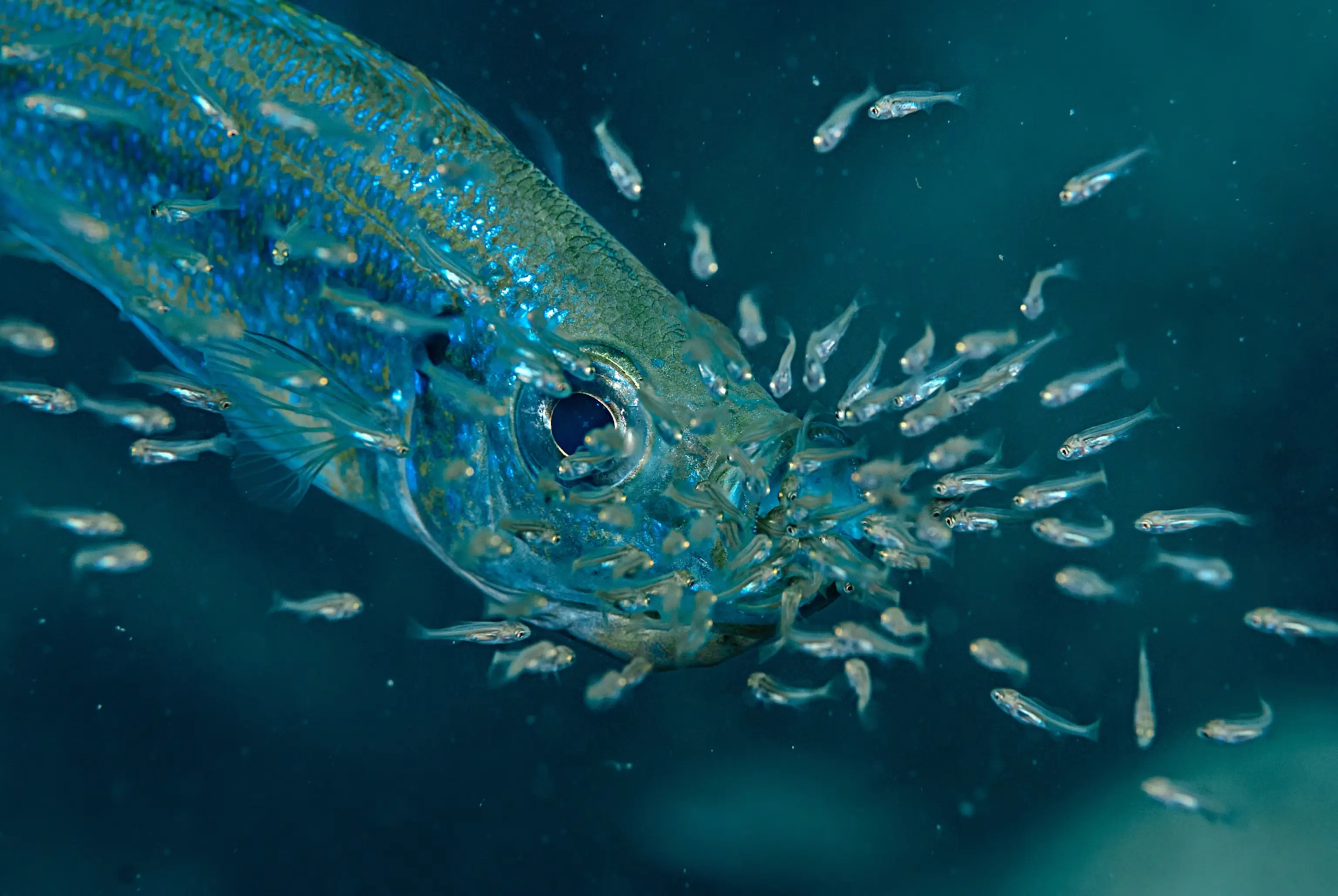
What could be inside the fish's mouth?
The most important detail in the photograph is the arrangement of the objects. They appear clustered within the mouth rather than scattered randomly across the fish's body. That pattern is one reason a natural reproductive process deserves serious consideration.
Several fish species use a remarkable strategy called mouthbrooding. Instead of leaving their eggs exposed on the bottom of a lake or river, they carry them inside the mouth, where the eggs can be protected from predators and environmental danger.
The behavior is well documented in cichlids, including tilapia, as well as in several other fish families. Depending on the species, the parent may carry fertilized eggs, newly hatched larvae, or small fry.
However, the photograph does not provide enough reliable information to confirm that the fish shown is a mouthbrooding species. The exact identity of the fish and the objects inside its mouth cannot be established from the image alone.
That uncertainty is precisely why the photograph should not be treated as proof that a popular fish is dangerous to eat.
The surprising fish behavior that may explain the photograph
One of the most fascinating examples of parental care in the underwater world is mouthbrooding.
In ordinary fish reproduction, eggs may be deposited on plants, rocks, gravel, or other surfaces. Depending on the species, the parents may guard the eggs until they hatch, or the eggs may receive little protection after being released.
Mouthbrooding takes a different approach.
A parent fish collects its eggs or young into its mouth and keeps them there during an important stage of development. The mouth becomes a temporary nursery, providing a protected space where the offspring are less exposed to predators.
This behavior is not limited to one unusual fish. It has evolved in several different groups of fish, including cichlids, cardinalfish, gobies, and certain other species.
In some cichlids, the female collects fertilized eggs shortly after spawning. She then carries them inside her mouth for a period that may last days or weeks, depending on the species and environmental conditions.
During this time, she may reduce or completely stop feeding. Her priority is protecting the developing offspring rather than searching for food.
The behavior can look strange to someone who has never encountered it. A fish with a swollen mouth or a mouth filled with tiny round objects may appear sick, injured, or infested.
Yet the objects may actually be eggs or young fish.
Researchers have documented mouthbrooding as a highly specialized reproductive strategy that helps protect offspring from predators and environmental stress.
Why would a fish carry eggs inside its mouth?
The answer is survival.