The role of proper cooking
Cooking is one of the most effective ways to reduce the risk of illness from seafood.
The FDA recommends cooking most seafood thoroughly. Fish should generally reach an internal temperature of 145°F (63°C), or be cooked until the flesh is opaque and separates easily with a fork.
This temperature guidance applies to ordinary finfish preparation. It does not mean that spoiled or contaminated fish can always be made safe simply by cooking it.
Cooking cannot reverse every form of deterioration, remove all chemical contaminants, or make an obviously spoiled fish suitable for consumption.
Proper cooking should therefore be combined with safe purchasing, refrigeration, and handling.
Why raw fish requires extra care
Raw fish dishes can be delicious, but they require special attention.
Some parasites can survive in fish that has not been adequately cooked.
The FDA explains that freezing under specified conditions can kill certain parasites in fish intended for raw consumption. However, freezing does not eliminate every harmful microorganism.
FDA+1
Consumers should not assume that an ordinary home freezer automatically provides the same conditions as a controlled commercial parasite-destruction process.
People who are pregnant, older adults, young children, and individuals with weakened immune systems should be particularly cautious about raw or undercooked seafood.
For these groups, thoroughly cooked seafood is generally the safer choice.
What should consumers do if they find something unusual inside a fish?
The first step is to stop and examine the situation calmly.
If the fish is still raw, do not taste it to determine whether the object is harmless.
Avoid touching the material unnecessarily, particularly if it appears to be a parasite or an unidentified organism.
If possible, keep the fish separate from other food and prevent its juices from contacting utensils, cutting boards, or ready-to-eat ingredients.
Take a clear photograph of the fish and the unusual material.
If the fish was purchased from a store or market, contact the seller and explain what was found. A reputable seller may be able to identify the species, explain its normal biological characteristics, or arrange an inspection.
If the material appears suspicious or the fish may be contaminated, local food-safety authorities can provide guidance.
The important point is not to panic, but not to ignore an unexplained finding either.
Why viral food photographs can cause unnecessary fear
Food photographs are powerful because they make a discovery appear immediate and personal.
A viewer does not need to read a scientific explanation to feel disgust when seeing an unfamiliar object inside an animal.
That emotional response can be useful when it encourages people to pay attention to food hygiene. But it can also lead to exaggerated conclusions.
A photograph may show a natural reproductive process, an unusual but harmless biological feature, or a genuine problem. Without context, viewers cannot reliably distinguish among these possibilities.
The most responsible way to interpret a viral food image is to ask a few basic questions:
-
What species is shown?
-
Where was the fish caught or raised?
-
What exactly is visible?
-
Has the material been identified by an expert?
-
Is there evidence of a food-safety risk?
-
Does the warning come from a reliable source?
These questions help separate useful information from sensational claims.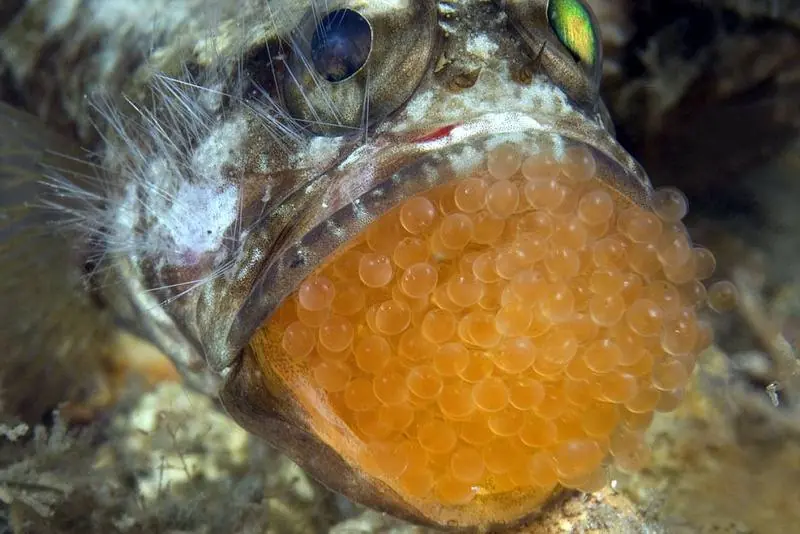
The biology behind mouthbrooding is more extraordinary than it looks
If the objects in the photograph are eggs or fry, the discovery may reveal something remarkable about fish reproduction.
Mouthbrooding parents are not simply carrying food in their mouths. They are protecting living offspring during a vulnerable stage of development.
The behavior requires significant physical effort.
The parent must maintain normal breathing while keeping the eggs or young inside the mouth. In some species, specialized movements help circulate water and keep the developing offspring supplied with oxygen.
Research on Nile tilapia has examined the mechanics of mouthbrooding and the movements used to protect and ventilate eggs inside the mouth.
The process can also affect the parent's feeding behavior.
Some mouthbrooding fish eat very little while carrying their offspring. This can reduce their energy reserves and affect their growth or ability to reproduce again.
In evolutionary terms, mouthbrooding represents a trade-off.
The parent invests time and energy in protecting a relatively small number of offspring, increasing their chances of survival while temporarily sacrificing other activities.