The following steps are practical starting points.
1. Walk regularly
Walking activates the calf muscles, which help push blood upward through the veins.
You do not need to begin with long or intense workouts. A comfortable walk around the neighborhood, a shopping center, or even indoors can be a useful way to break up long periods of inactivity.
Consistency is more important than trying to exercise intensely once in a while.
If you have a medical condition that limits your mobility, ask your healthcare professional which movements are appropriate.
2. Avoid remaining in one position for too long
If you sit for work, try to stand up and move around regularly.
If your job requires standing, take opportunities to sit, walk, or change your position.
Even small movements, such as gently shifting your weight or moving your ankles, can help activate the muscles in your lower legs.
The goal is to avoid remaining completely still for hours at a time.
3. Raise your legs when resting
For people who experience mild swelling or heaviness, elevating the legs may provide relief.
When resting on a sofa or bed, place a cushion beneath your lower legs so that your feet are comfortably raised.
This can help reduce the pressure associated with blood pooling in the lower legs.
Leg elevation is not a substitute for medical assessment if swelling is sudden, severe, or limited to one leg.
4. Maintain a healthy weight if appropriate
Excess body weight can increase pressure on the veins.
If weight management is recommended for your overall health, aim for gradual and sustainable changes rather than restrictive diets.
A balanced eating pattern, regular movement, and adequate sleep are more realistic long-term strategies than trying to lose weight quickly.
5. Choose comfortable clothing
Very tight clothing around the waist, groin, or upper legs may be uncomfortable and can restrict movement.
Choose clothes that allow you to move freely, particularly if you spend long periods sitting or standing.
Ordinary clothing is not usually the main cause of varicose veins, so there is no need to become overly concerned about every tight garment.
6. Discuss compression stockings with a healthcare professional
Compression stockings apply controlled pressure to the legs. They may help reduce swelling and discomfort in some people with venous conditions.
However, the correct type and pressure level matter.
Compression garments are not suitable for everyone, particularly people with certain arterial circulation problems. A healthcare professional can help determine whether they are appropriate and how to use them correctly.
Do not assume that the tightest stockings provide the greatest benefit.
7. Avoid smoking
Smoking is harmful to blood vessels and overall cardiovascular health.
Stopping smoking can support circulation and reduce several other health risks.
If quitting is difficult, a healthcare professional can discuss practical support, counseling, and evidence-based treatments.
8. Keep the skin moisturized
Dry, itchy skin around the lower legs can become irritated, especially when circulation problems are present.
Using a gentle moisturizer may help maintain the skin barrier and reduce dryness.
However, moisturizers cannot repair damaged vein valves or remove varicose veins. If you notice persistent discoloration, inflammation, or sores, seek medical advice rather than relying on skin products.
9. Schedule an assessment when symptoms persist
Do not wait until veins become very large or painful before seeking advice.
A routine appointment can help clarify whether the visible lines are ordinary spider veins, varicose veins, or signs of a more significant circulation problem.
Early assessment may also help you understand which lifestyle measures or treatments are appropriate.
Foods and Hydration: Can Your Diet Make a Difference?
There is no single food that can remove purple veins or restore damaged vein valves. However, a balanced diet supports overall cardiovascular health and helps maintain the tissues that form blood vessels.
A sensible eating pattern can include:
Fruit and vegetables: These provide vitamins, minerals, and plant compounds that support general health. Citrus fruits, berries, leafy greens, peppers, and tomatoes are examples of nutrient-rich choices.
Fiber-rich foods: Whole grains, beans, lentils, vegetables, and fruit can support digestion. Avoiding constipation may also reduce unnecessary straining, which can be uncomfortable for people with certain venous conditions.
Protein-rich foods: Fish, eggs, poultry, beans, tofu, and dairy products provide protein needed for tissue maintenance and repair.
Healthy fats: Nuts, seeds, olive oil, and oily fish can form part of a balanced eating pattern.
Adequate fluids: Drinking enough water helps maintain normal body functions. Hydration is particularly important in hot weather and during physical activity.
It is important to be realistic about what nutrition can achieve. Drinking more water will not close enlarged veins, and eating a particular fruit will not cure chronic venous insufficiency.
Be cautious about supplements marketed as vein-cleansing or circulation-repair products. Claims that a capsule can remove varicose veins or dissolve blood clots without medical treatment should be treated skeptically.
If you take medication or have a chronic health condition, discuss supplements with a qualified professional before using them.
Treatments for Spider Veins and Varicose Veins
Treatment depends on the type of vein problem, its severity, the symptoms involved, and the person's overall health.
Some people do not need treatment beyond monitoring and practical self-care. Others may benefit from medical procedures.
Sclerotherapy
Sclerotherapy is a commonly used treatment for spider veins and some smaller varicose veins.
A clinician injects a special solution into the affected vessel. The solution irritates the inner lining of the vessel, causing it to close gradually. Over time, the body absorbs the treated vessel and its appearance may fade.
Several treatment sessions may be necessary, depending on the number and size of the veins.
Sclerotherapy is not appropriate for every person or every type of vein problem. A clinician should first determine whether an underlying circulation issue needs attention.
Laser treatment
Certain laser treatments can target small visible blood vessels through the skin.
The laser delivers controlled energy to the affected vessel, causing it to close over time.
Laser treatment may be considered for selected spider veins, especially when injections are not preferred or are not suitable.
The number of sessions and the results vary according to the size, color, depth, and location of the vessels.
Endovenous procedures
For some people with larger varicose veins and abnormal blood flow, clinicians may recommend procedures that close the affected vein from within.
Techniques may use heat or other methods to seal the abnormal vessel. Blood can then return through healthier veins.
These procedures are generally considered after an appropriate examination and, often, an ultrasound assessment.
Compression and conservative care
Compression garments, regular walking, leg elevation, and other lifestyle measures can help manage symptoms.
They may not eliminate existing visible veins, but they can be useful parts of a broader treatment plan.
The best approach is individualized. A treatment that works well for one person may not be suitable for another.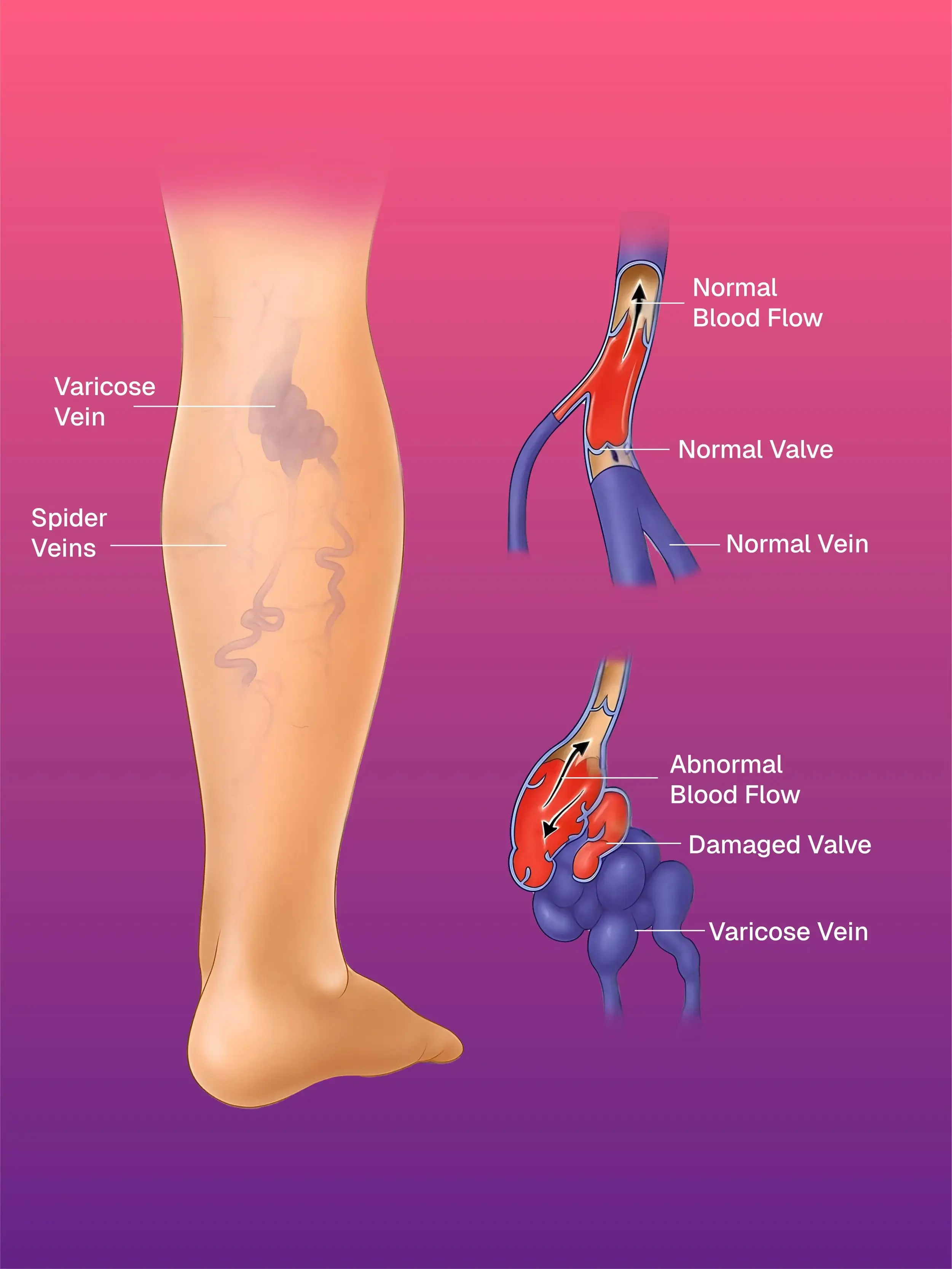
Common Mistakes People Make When They Notice Purple Veins
Finding new marks on the legs can lead people to search for quick solutions. Unfortunately, some common reactions may delay proper care or cause unnecessary irritation.
Mistake 1: Assuming every purple line is dangerous
Small spider veins are common and often harmless. Seeing a few fine purple branches does not automatically mean that you have a serious vascular disease.