Notice Purple Veins Appearing on Your Legs? Here Are 6 Possible Reasons You Should Know
You step out of the shower, glance down at your legs, and suddenly notice something you do not remember seeing before: thin purple lines spreading beneath the skin, perhaps around your thighs, calves, or knees. At first, they look like tiny branches on a tree. Some are faint and delicate; others are darker, more noticeable, and seem to form a small web.
It is natural to wonder whether these marks are simply part of getting older or whether they are warning signs of a circulation problem.
The reassuring news is that many visible purple veins are common and are not dangerous on their own. They may be spider veins, small blood vessels that have become more visible near the surface of the skin. However, certain patterns can occur alongside enlarged varicose veins or problems with blood returning from the legs to the heart.
The important thing is not to panic when you notice a new vein, but also not to dismiss every change as harmless. The appearance of the vessels, whether they are raised or flat, and whether you experience pain, swelling, warmth, or skin changes can all help determine what deserves attention.
There are six common explanations worth understanding. Some are related to family history and natural changes in the body. Others involve hormones, daily habits, or the way blood circulates through the legs. And one important distinction can help you recognize when a seemingly ordinary change needs a medical assessment.
Let's look at what those purple lines may mean, what you can do to support healthy circulation, and which symptoms should never be ignored.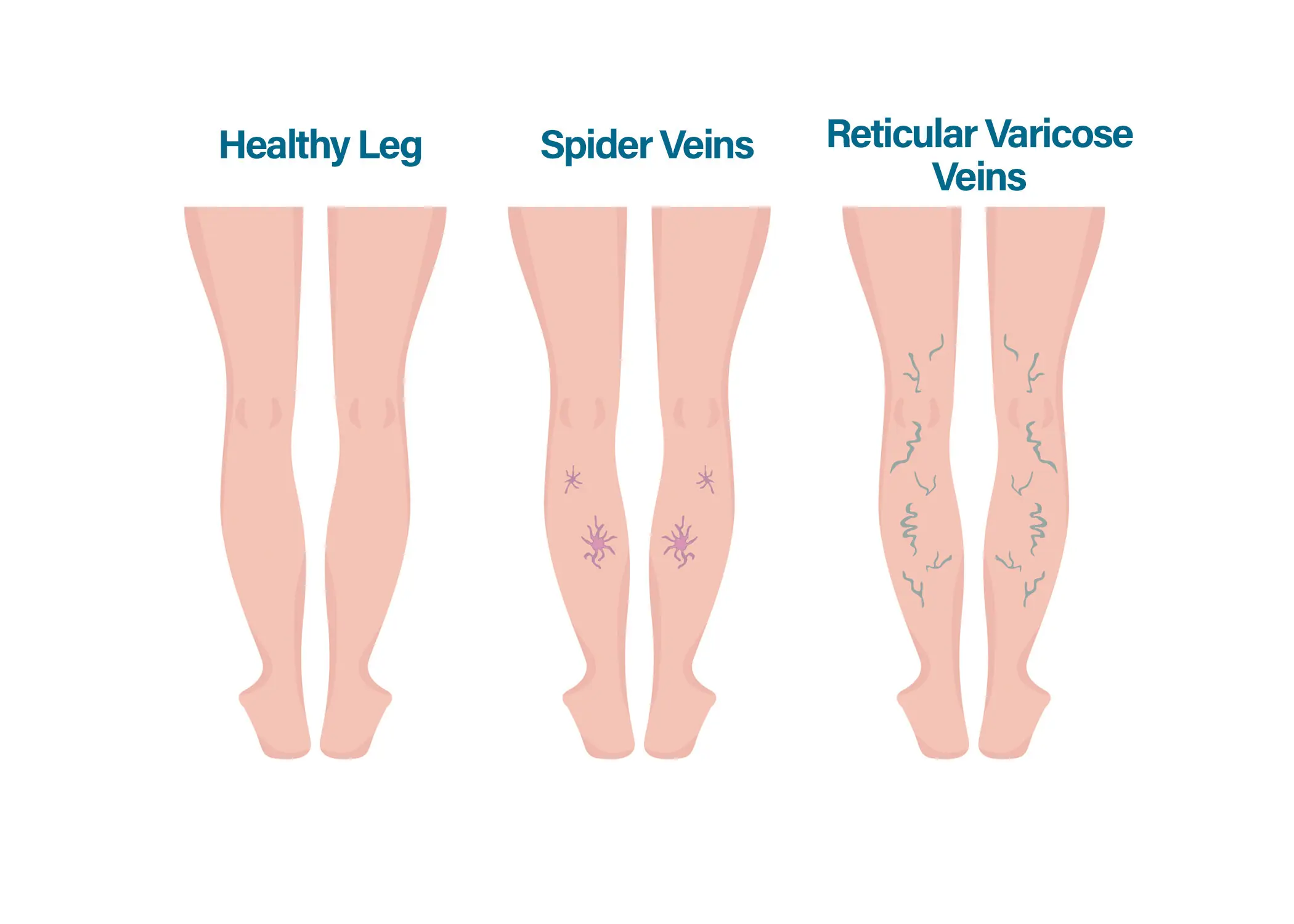
What Are the Purple Lines Appearing Beneath the Skin?
Before considering the possible causes, it helps to understand what you are actually seeing.
Blood vessels carry blood throughout the body. Arteries transport blood away from the heart, while veins return it toward the heart. In the legs, veins have to move blood upward against gravity. Small one-way valves inside them help prevent blood from flowing backward.
When these valves work properly, blood moves in the right direction. The muscles in the calves also help by squeezing the veins when you walk, creating a natural pumping action.
However, some small blood vessels can become enlarged or more visible beneath the skin. Depending on their size, depth, and location, they may appear red, blue, violet, or dark purple.
Two terms are particularly important:
-
Spider veins: Small, thin blood vessels close to the skin's surface. They often form branching patterns that resemble a spider web or tree branches. They are usually flat and may be red, blue, or purple.
-
Varicose veins: Larger veins that become enlarged, twisted, and sometimes raised above the skin. They are commonly blue or dark purple and may look like cords beneath the surface.
These conditions are related, but they are not identical. A person may have spider veins without having significant symptoms, while varicose veins can sometimes cause aching, heaviness, swelling, or skin changes.
A photograph of purple lines alone cannot establish which condition is present. A healthcare professional may need to examine the legs and, when appropriate, arrange an ultrasound to assess blood flow.
1. Spider Veins: The Most Common Explanation for Fine Purple Lines
One of the most common reasons people notice delicate purple lines on their legs is the development of spider veins, medically known as telangiectasias.
These small blood vessels sit close to the surface of the skin. They can appear as isolated lines, branching patterns, or clusters that resemble a spider's web. Some are bright red, while others look blue or purple. They frequently develop around the thighs, calves, ankles, and behind the knees.
Spider veins are often discovered by accident. Someone may notice them while changing clothes, applying lotion, or looking at their legs after a shower. In many cases, they cause no pain or discomfort.
That is why their appearance can be surprising: the skin may feel completely normal even though a network of colored lines has become visible.
Why do spider veins appear?
Spider veins develop when small blood vessels beneath the skin become enlarged or damaged. Several factors may contribute, including inherited tendencies, hormonal changes, pregnancy, prolonged sitting or standing, and previous injury.
The exact reason is not always identifiable. Some people develop noticeable spider veins despite being physically active and having no other circulation symptoms.
It is also possible for spider veins to become more visible as the skin changes with age. Thinner skin can make underlying blood vessels easier to see, although this does not necessarily mean that the vessels themselves have suddenly become dangerous.
Are spider veins dangerous?
In many cases, spider veins are primarily a cosmetic concern. They do not automatically indicate a serious circulation disorder, and they usually do not cause major health problems by themselves.
However, they can sometimes occur alongside varicose veins or chronic venous insufficiency. If you notice spider veins together with persistent leg aching, swelling, burning, cramping, or skin changes, it is worth discussing those symptoms with a healthcare professional.
The important distinction is that the visible lines are not the only thing to consider. How your legs feel and whether the appearance is changing also matter.
For people who are concerned about the appearance of spider veins, treatments such as sclerotherapy or certain laser procedures may be available. A qualified clinician can explain whether treatment is appropriate and whether any underlying circulation problem should be addressed first.
Cleveland Clinic+1
2. Varicose Veins: When Purple Vessels Become Larger and Raised
Not every purple line is a spider vein. If the vessels look thicker, twisted, swollen, or raised above the surface of the skin, they may be varicose veins.
Varicose veins develop when the walls or valves of certain veins become weakened. The valves normally help blood travel upward toward the heart. When they do not close properly, some blood can flow backward and collect in the vein.
As blood accumulates, pressure inside the vessel increases. Over time, the vein may stretch, enlarge, and become visibly twisted.
This is why varicose veins often look different from the fine branching lines associated with spider veins. Instead of delicate threads, they may resemble thick blue or purple cords beneath the skin.
What symptoms can accompany varicose veins?
Some people have visible varicose veins without experiencing discomfort. Others notice symptoms that become more obvious after a long day on their feet.
Common complaints include:
-
Aching or throbbing in the legs.
-
A heavy or tired feeling in the calves.
-
Burning or itching around enlarged veins.
-
Muscle cramps, particularly at night.
-
Swelling around the ankles or lower legs.
-
Discomfort that becomes worse after prolonged standing or sitting.
Symptoms may improve after resting or raising the legs. This happens because changing the position of the legs can help reduce pressure in the affected veins.
However, improvement with rest does not mean that persistent symptoms should be ignored.
Why should varicose veins be assessed?
Varicose veins are common, and many cases are not emergencies. Nevertheless, some can lead to complications, including skin inflammation, bleeding, or ulcers near the ankles.