Your first instinct may be to run into the water and pull them back to shore. But attempting an unprepared rescue can turn one emergency into two.
Many people have drowned while trying to rescue someone caught in a rip current.
Even strong swimmers can be overwhelmed by the same conditions that caused the original person to struggle.
The safest response is to get professional help immediately.
1. Alert a Lifeguard
If a lifeguard is present, call for them immediately.
Point toward the person in trouble and provide a clear description of their location. Do not assume that someone else has already alerted the lifeguard.
If no lifeguard is available, call the local emergency number.
Give the exact beach location, nearby landmarks, and the number of people in difficulty.
2. Throw Something That Floats
If you can do so safely, throw a flotation device toward the person.
This might be a life ring, rescue buoy, approved flotation aid, or another suitable object that can help them stay above water.
A floating object can provide support while trained rescuers approach.
Do not throw something that could injure the person or create another hazard.
3. Keep Giving Clear Instructions
If the person can hear you, shout simple instructions.
Tell them to stay calm, float, and signal for help.
If they are capable of swimming, tell them not to fight the current and to move sideways out of it if they can do so safely.
Avoid giving complicated instructions. Someone in the water may be frightened, exhausted, and unable to process several directions at once.
4. Do Not Attempt an Untrained Water Rescue
Do not swim into a rip current simply because you are a confident swimmer.
Unless you are trained and properly equipped for water rescue, entering the water can put your life at risk.
Never form a human chain with other beachgoers as an improvised rescue method. The people holding hands may be pulled into the water, creating several additional victims.
The safest contribution may be to alert professionals, throw flotation equipment, and help keep other people away from the dangerous area.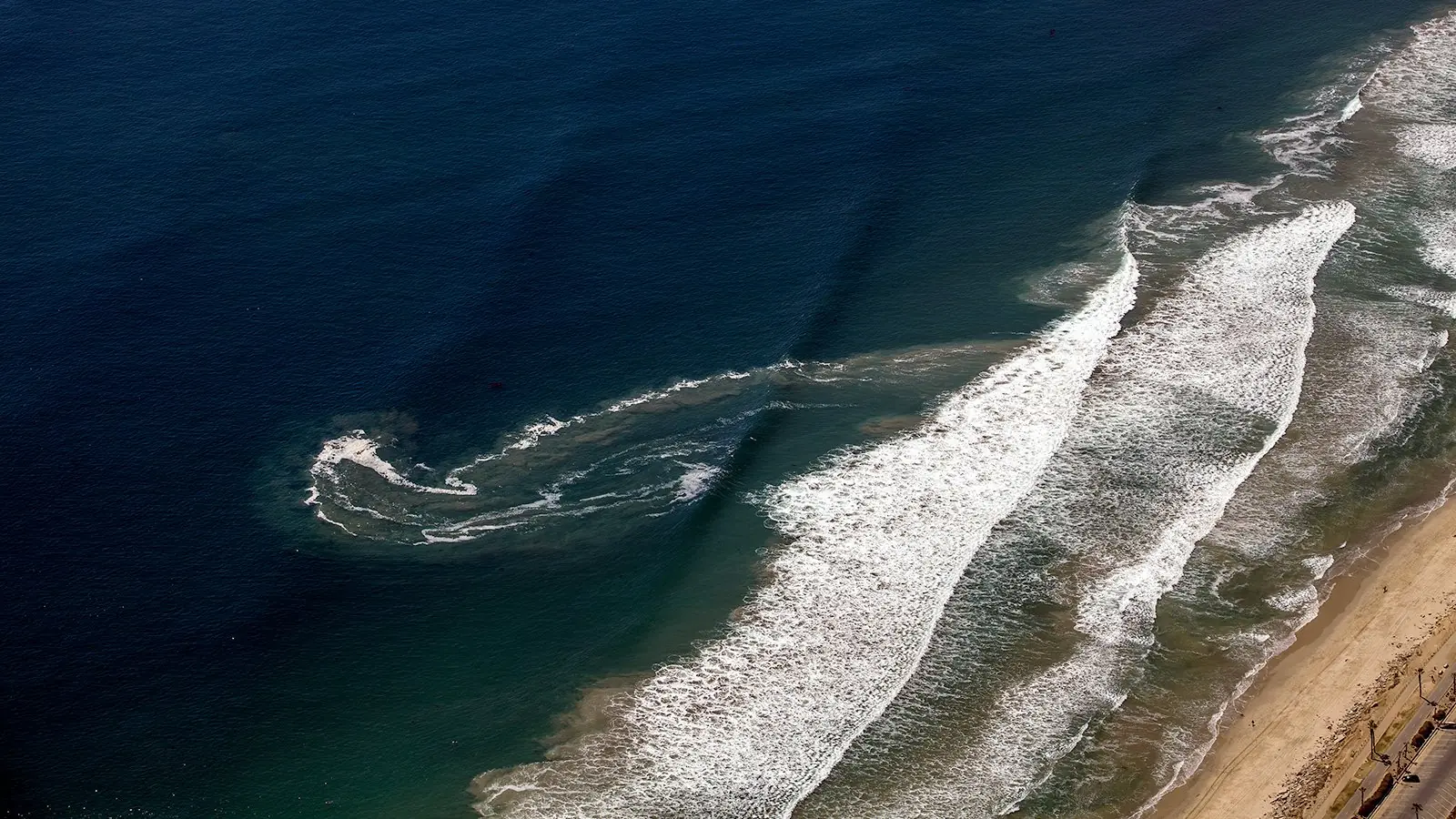
Why Children and Older Adults Need Extra Protection
Rip currents can threaten anyone, but some beachgoers face additional challenges.
Children may not recognize danger in the water. A gap between waves may look like a quiet swimming area, and a child may enter before an adult realizes what is happening.
Their smaller bodies and limited swimming ability can make it harder to remain afloat in rough conditions.
Older adults may also face greater risks.
Reduced strength, joint problems, limited mobility, heart conditions, and certain medications can affect a person's ability to respond to waves and currents.
Someone who becomes tired quickly may have difficulty swimming out of a dangerous area.
This does not mean children or older adults should avoid beaches entirely. It means their swimming activities should be planned carefully.
Families should choose beaches with lifeguards, follow posted warning flags, and keep children within close supervision.
An adult should remain close enough to respond immediately if a child becomes distressed.
Inflatable toys and flotation accessories should never be treated as substitutes for supervision or properly fitted life jackets.
For older adults, entering the water should depend on their health, swimming ability, and the conditions at the beach.
If there are strong waves, warning flags, or lifeguard instructions against swimming, staying out of the water is the safest choice.
The Role of Lifeguards and Beach Warning Flags
Lifeguards are trained to observe the water, identify hazards, and respond to emergencies.
They may recognize rip currents that are difficult for ordinary beach visitors to see.
They also understand local conditions, including where dangerous channels tend to form, which areas are affected by structures, and how changing waves may influence the surf.
This is why swimming near lifeguard-protected areas is one of the most important beach-safety recommendations.
Warning flags provide additional information, although their colors and meanings can differ between countries and beach authorities.
Some beaches use a system in which:
-
Green indicates relatively low hazard, but does not mean there is no risk.
-
Yellow indicates caution because of moderate surf or currents.
-
Red indicates dangerous conditions and may prohibit swimming.
-
Double red flags may mean the water is closed to the public.
-
Purple may indicate dangerous marine life.
These meanings are not universal. Always follow the specific flag system displayed at the beach you are visiting.
Never assume that a green flag means the ocean is completely safe.
Conditions can change during the day. A beach that was relatively calm in the morning may become more dangerous as waves and wind increase.
If lifeguards advise visitors to stay out of the water, follow that instruction even if other people appear to be swimming without difficulty.
Why Piers, Jetties, and Rocks Can Be Particularly Dangerous
A beach may have structures that look like convenient places to swim or explore.
Piers, jetties, groins, breakwaters, and large rocks can create areas of changing water movement.
These structures interfere with the natural movement of waves and currents. Water may be concentrated around their edges, and rip currents can form nearby.
A person standing close to a pier may assume the structure provides protection from waves. In reality, the surrounding water may contain strong currents.
There are also physical hazards.
Submerged rocks, sharp edges, slippery surfaces, and sudden changes in depth can injure swimmers.
People fishing from jetties or walking along breakwaters may be struck by waves or swept into the sea.
The safest approach is to remain away from the water near these structures unless a beach authority has clearly identified the area as suitable for swimming.
Follow signs and stay at least as far away as local safety guidance recommends.
How to Choose a Safer Place to Swim
Before entering the water, spend several minutes observing the beach.
Look at the pattern of incoming waves. Notice whether there are narrow gaps between areas of breaking surf, streams of foam moving offshore, or patches of churning water.
Do not choose a swimming location simply because it looks calm.
Instead, use the following checklist.
Choose a lifeguard-protected beach. This provides access to trained people who understand local water conditions.