In reality, the posture is primarily procedural.
Flight attendants are trained to follow specific safety requirements regardless of whether they personally feel nervous.
Even highly experienced crew members continue to follow the same procedures on routine flights.
The purpose is not to anticipate a disaster but to maintain readiness.
Aviation safety depends on preventing problems where possible and preparing people to respond effectively if something unexpected happens.
This is why seemingly minor actions, such as securing a seat belt, positioning the hands correctly, and remaining seated during takeoff, are treated seriously.
A small routine can be an important part of a much larger safety system.
20. A Small Gesture That Reveals a Much Bigger Safety System
At first glance, placing both hands underneath the thighs may seem like an insignificant detail.
Most passengers probably never notice it, and those who do may assume it is simply an unusual habit.
But in aviation, many small actions have specific purposes.
The position can help keep a flight attendant's arms and hands close to the body, support a controlled seated posture, and form part of the airline's prescribed brace-position procedure.
Combined with the jumpseat restraint system, emergency training, and cabin safety checks, it contributes to the crew member's preparedness during takeoff and landing.
It is also a reminder that flight attendants are not merely service professionals. They are trained safety personnel whose responsibilities become especially important when something unexpected happens.
21. Why Repetition Is So Important in Flight Attendant Safety Training
One of the most important aspects of aviation safety is repetition. Flight attendants do not simply learn emergency procedures once and rely on their memory for the rest of their careers. They regularly participate in training and assessments to maintain their knowledge and practical skills.
During training, cabin crew members practice different emergency scenarios, including rapid decompression, onboard fires, emergency landings, and passenger evacuations. They also learn how to use emergency equipment and communicate effectively under stressful conditions.
The seated safety position is part of this broader training culture. By repeating the same routine before takeoff and landing, flight attendants become familiar with the movements and procedures expected of them.
This consistency can be especially valuable during stressful situations, when people may struggle to process information or make decisions quickly.
However, repetition alone is not enough. Crew members must also understand why each procedure exists and when it should be applied. Aviation training therefore combines practical exercises, theoretical knowledge, and scenario-based assessments.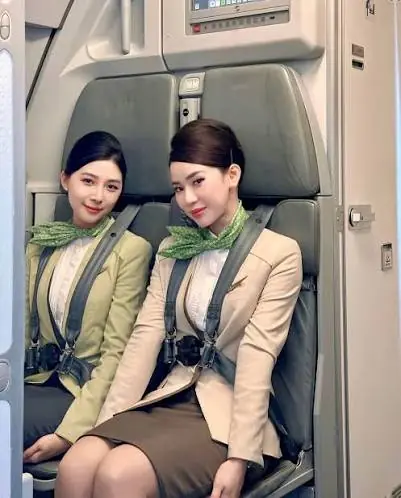
22. Why Passengers Should Never Distract Cabin Crew During Takeoff
Another important detail is that flight attendants need to concentrate during critical phases of flight.
Once they have completed their final cabin checks and taken their assigned jumpseats, passengers should avoid unnecessary requests unless assistance is genuinely needed.
This is not because cabin crew members do not want to help. It is because they must remain attentive to the aircraft's movements, cabin conditions, and any instructions from the flight deck.
Passengers can contribute to a safer environment by following instructions promptly, keeping seat belts fastened, and avoiding unnecessary movement around the cabin.
These simple actions support the work of the crew and help ensure that everyone is properly prepared.
Ultimately, aviation safety is a shared responsibility. Pilots, cabin crew members, ground personnel, and passengers all contribute to making each flight as safe and orderly as possible.
Final Thoughts: The Next Time You Fly, Pay Attention to the Cabin Crew
The next time you sit on an airplane and watch the flight attendants take their seats before takeoff, you may notice a small detail that previously escaped your attention.
Some may sit upright with their hands tucked beneath their thighs, their feet positioned carefully, and their eyes focused on the cabin.
That posture is not necessarily a sign of nervousness, discomfort, or a secret aviation tradition.
It may be part of a carefully trained safety procedure designed to help them maintain the correct position and remain prepared for an emergency.
The exact technique varies between airlines and aircraft, but the underlying principle is the same: preparation, consistency, and protection.
So the next time you see a flight attendant sitting in this unusual position, remember that even the smallest movements inside an aircraft can have a purpose.
And sometimes, one of the most interesting details about flying is not what happens in the cockpit or outside the window, but the quiet safety routines taking place right in front of you.