
Health 10/02/2026 22:48
Why Your Brain Processes Images Faster Than Words — And What That Means for Your Daily Life
Have you ever noticed how quickly a single image can capture your attention — far faster than a paragraph of text? There is a biological reason behind this phenomenon. The human brain is remarkably efficient at interpreting visual information, processing images thousands of times faster than written language.
From an evolutionary perspective, this ability helped our ancestors survive. Long before written language existed, humans relied on visual cues to detect danger, locate food, recognize faces, and interpret environmental changes. Rapid visual processing wasn’t just helpful — it was essential.
Today, that same neurological wiring still shapes how we perceive the world.
Nearly half of the brain is involved in visual processing in some capacity. When your eyes take in an image, signals travel through the optic nerve to the visual cortex, where the brain begins decoding shapes, colors, motion, and spatial relationships — often in a fraction of a second.
Reading, on the other hand, is a more complex task. Written language is a relatively recent invention in human history, so the brain has no specialized “reading center.” Instead, it recruits multiple regions to translate symbols into sounds and meaning. This takes more time and cognitive effort.

That difference explains why visual content often feels easier to understand and remember.
You may have experienced this yourself:
Diagrams that clarify complex ideas instantly
Maps that feel more intuitive than directions
Demonstrations that outperform instructions
Infographics that simplify dense data
The brain favors efficiency, and images provide it.
But the implications go beyond learning style. Visual processing influences attention, decision-making, and even emotional response.
Images can trigger emotional pathways faster than words because they require less interpretation. A facial expression, for example, communicates mood almost instantly — no translation required.
This is also why visual environments matter more than many people realize. Cluttered spaces can fragment attention, while organized surroundings may support mental clarity. Your brain is constantly scanning what it sees, whether you are aware of it or not.

There is also a memory advantage. Visual encoding tends to be stronger because it activates multiple neural networks simultaneously — spatial, emotional, and associative systems all contribute.
This is sometimes called the “picture superiority effect,” a well-documented psychological finding showing that people generally remember images better than text alone.
So how can you work with this natural tendency?
Consider integrating more visual structure into your daily routines:
Use calendars with color coding
Sketch ideas instead of only writing them
Create visual checklists
Organize spaces to reduce visual noise
Take breaks by focusing on distant scenery
Even something as simple as stepping outside can help reset visual fatigue.

Importantly, this doesn’t mean text is inferior — only that pairing words with images often enhances comprehension.
Your brain evolved to see first and analyze second.
Understanding that preference allows you to communicate more clearly, learn more efficiently, and design environments that support — rather than compete with — your cognitive strengths.
Sometimes the fastest way to understand something… is simply to see it.
News in the same category

Why Stepping Outside Can Wake Your Brain Faster Than Your Phone

Bones Are Alive: The Constant Renewal Happening Inside Your Skeleton
Why Your Brain Loves Habits — And How They Quietly Save Mental Energy

Why Food Seems Tasteless When Your Nose Is Blocked

Why Your Heart Rhythm Changes With Every Breath — And Why That’s a Good Thing
Why Your Eyes Never Truly Stay Still — Even When You Think They Do

Why Your Body Burns More Energy in Cooler Environments

How Changing Your Posture Can Boost Alertness Within Minutes

Cravings Aren’t Always Hunger — Understanding What Your Body May Really Be Asking For

20,000 Breaths a Day: The Invisible Rhythm Sustaining Your Body
The Extraordinary Sensitivity of Your Fingertips
What Really Happens to Your Body When You Eat One Banana a Day
A simple banana a day could support energy and heart health.

Yawning and Brain Cooling: Why This Common Reflex May Help You Stay Alert

The “Weed” in Your Yard That Might Be a Hidden Herbal Treasure
This common backyard plant may hold surprising health benefits.
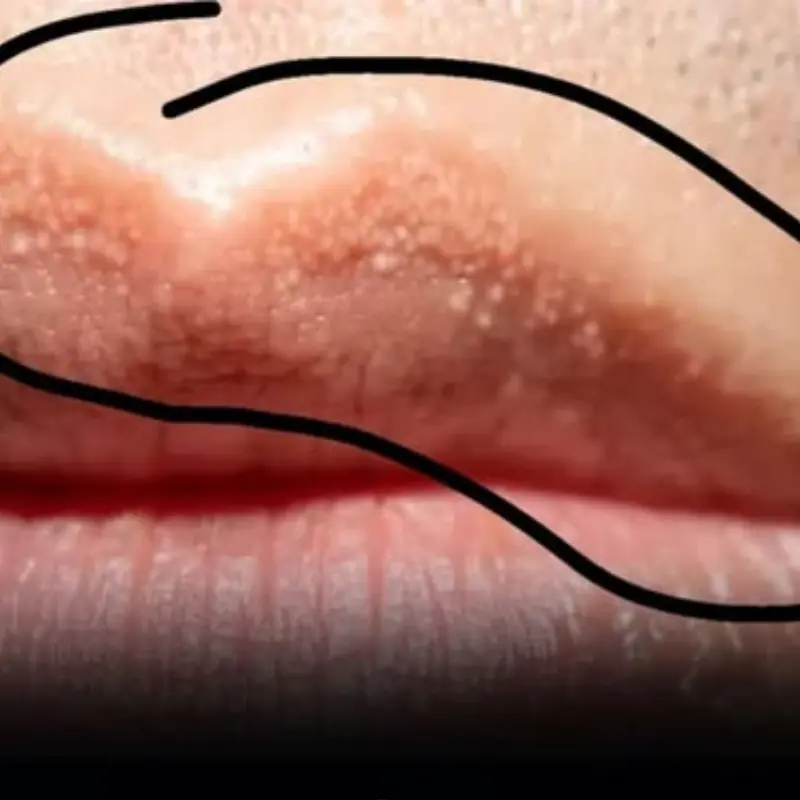
What Causes Small White Bumps on Lips or Intimate Areas?
Small white bumps on lips or private areas? Know the real causes.

Are Foot Symptoms an Early Warning Sign of Cervical Cancer? What You Should Know
Foot symptoms may signal deeper health issues you shouldn’t ignore
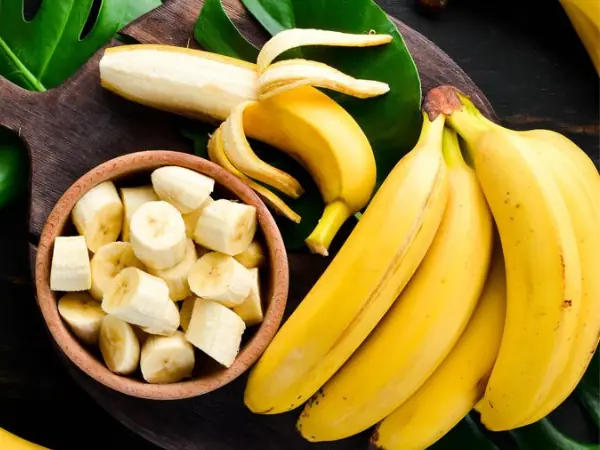
What Really Happens to Your Blo.od Pressure When You Eat Bananas Every Day?
How Does Eating Bananas Every Day Affect Your Blo.od Pressure?

A month before a stro:ke, your body warns you: 10 signs not to ignore
Before a Stroke Happens: 10 Subtle Signs Your Body Tries to Warn You
News Post
Why Time Feels Faster When You’re Engaged — And Slower When You’re Not
Health 10/02/2026 23:19
Why Stepping Outside Can Wake Your Brain Faster Than Your Phone
Health 10/02/2026 23:18
Bones Are Alive: The Constant Renewal Happening Inside Your Skeleton
Health 10/02/2026 23:16
Why Your Brain Loves Habits — And How They Quietly Save Mental Energy
Health 10/02/2026 23:15
Why Food Seems Tasteless When Your Nose Is Blocked
Health 10/02/2026 23:13
Why Your Heart Rhythm Changes With Every Breath — And Why That’s a Good Thing
Health 10/02/2026 23:11
Why Your Eyes Never Truly Stay Still — Even When You Think They Do
Health 10/02/2026 23:10
Why Your Body Burns More Energy in Cooler Environments
Health 10/02/2026 23:08
How Changing Your Posture Can Boost Alertness Within Minutes
Health 10/02/2026 23:07
Cravings Aren’t Always Hunger — Understanding What Your Body May Really Be Asking For
Health 10/02/2026 23:05
20,000 Breaths a Day: The Invisible Rhythm Sustaining Your Body
Health 10/02/2026 23:04
The Extraordinary Sensitivity of Your Fingertips
Health 10/02/2026 23:02
What Really Happens to Your Body When You Eat One Banana a Day
A simple banana a day could support energy and heart health.
Health 10/02/2026 22:55
Yawning and Brain Cooling: Why This Common Reflex May Help You Stay Alert
Health 10/02/2026 22:49

“I Returned a Lost Wallet — The Owner Invited Me to Dinner, and That Night Changed My Career.”
Story 10/02/2026 22:46

“My Quiet Coworker Secretly Paid for Everyone’s Lunch — Until We Learned Why He Never Joined Us.”
Story 10/02/2026 22:44

“A Man Sat in My Assigned Airplane Seat — What He Said Made Me Trade Tickets with Him.”
Story 10/02/2026 22:42

“My Sister Asked Me to Babysit Her Son for a Week — Then I Found Out He Wasn’t Leaving.”
Story 10/02/2026 22:39
The “Weed” in Your Yard That Might Be a Hidden Herbal Treasure
This common backyard plant may hold surprising health benefits.
Health 10/02/2026 22:35