What makes the situation even more frustrating is that these marks sometimes appear on brand-new towels or towels that were perfectly clean just a few days earlier.
You might wonder whether the washing machine is dirty, whether the towels are poor quality, or whether something in your bathroom is causing the discoloration.
The surprising answer is that your towels may not be the problem at all.
In many cases, stubborn orange or rust-colored stains are caused by a chemical reaction involving iron, minerals, moisture, and oxygen. The iron may be present in your household water supply, even when the water looks perfectly clear. As towels repeatedly absorb and release water during washing, tiny amounts of iron can accumulate in their fibers and eventually create visible discoloration.
However, iron is not the only possible explanation. Certain personal care products, cleaning chemicals, cosmetics, and even the washing process itself can contribute to unusual orange stains.
Understanding what causes these marks is the first step toward removing them and preventing them from returning.
Here is what may really be happening to your towels, why ordinary laundry detergent often fails, and what you can do to keep your fabrics looking fresh and clean.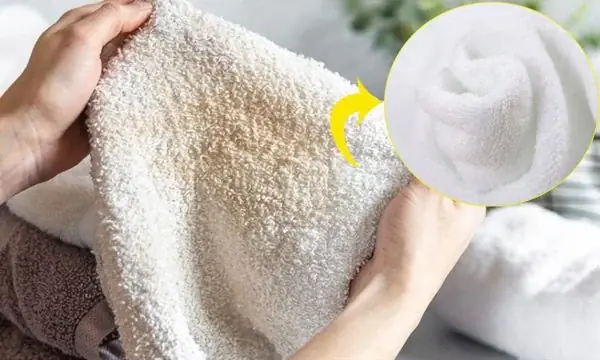
1. The Most Common Culprit: Iron Hidden in Your Water Supply
One of the most common explanations for persistent orange or rust-colored stains on towels is iron in the household water supply.
Iron is a naturally occurring mineral found in soil, rocks, groundwater, and many water systems. In certain areas, particularly those that rely on groundwater or private wells, water may contain elevated levels of dissolved iron.
The interesting thing is that water containing dissolved iron does not necessarily look orange when it comes out of the tap.
In fact, it may appear completely clear.
This happens because certain forms of iron, particularly ferrous iron, can remain dissolved in water without producing an obvious color.
When the water comes into contact with oxygen, however, the iron can undergo oxidation. It changes into forms of iron that are less soluble and may produce reddish-brown particles or deposits.
These deposits can settle onto surfaces, accumulate inside plumbing fixtures, and become trapped in fabrics.
If your towels repeatedly come into contact with water containing iron, small amounts of these deposits may gradually build up in the fibers.
Over time, what initially seemed like a harmless water-quality issue can become a frustrating laundry problem.
2. Why Do Iron Stains Look Orange or Rust-Colored?
The familiar orange color of rust is the result of a chemical process called oxidation.
When iron reacts with oxygen in the presence of moisture, it can form iron oxides and related corrosion products.
These compounds often have reddish, orange, yellow-brown, or dark brown appearances.
This is the same general process responsible for the reddish-brown corrosion you may notice on an old metal gate, a rusty pipe, or an outdoor metal object exposed to rain.
A similar process can occur when iron-containing water leaves deposits on towels and other fabrics.
The color may vary depending on the type of iron compounds present, the amount deposited, and the surrounding conditions.
Some towels develop small orange spots, while others gradually turn yellowish or brown over larger areas.
The discoloration may become more noticeable after washing because the water distributes the minerals across the fabric.
This explains why towels can look perfectly normal before laundering but develop visible marks after repeated exposure to the same water supply.
3. Why Towels Are More Vulnerable Than Ordinary Clothing
If iron is present in your water, you may wonder why your towels seem to develop stains more frequently than your shirts, trousers, or other clothing.
There are several practical reasons.
First, towels are designed to absorb large amounts of water. Their thick, looped fibers hold moisture much more effectively than many lightweight fabrics.
Second, towels are used frequently. Bath towels, hand towels, and washcloths may be washed several times each week, exposing them repeatedly to the same water supply.
Third, towels often remain damp for longer periods.
After use, they may be left hanging in a humid bathroom, placed in a laundry basket while still wet, or folded before they have completely dried.
Moisture can encourage mineral deposits to remain on the fabric and may contribute to further discoloration.
Finally, towels are frequently washed at relatively warm or hot temperatures and dried using heated dryers.
Although heat does not automatically make iron stains permanent, drying can make existing stains more difficult to remove, particularly if the wrong treatment has already been used.
When these factors occur repeatedly, towels can become especially susceptible to persistent mineral staining.