Some products are marketed under names such as Iron Out or similar rust-removal brands.
Always check the exact formulation and whether it is approved for use on towels.
Oxalic-acid-based rust removers
Oxalic acid can dissolve certain iron deposits and is used in some rust-removal products.
However, concentrated oxalic acid can be hazardous and may damage fabrics if used incorrectly.
A ready-made laundry product should be used according to its label rather than attempting to create an improvised chemical mixture.
Chelating treatments
Certain products contain ingredients that bind metal ions and help prevent them from redepositing onto fabrics.
These can be useful in water-treatment or laundry applications, depending on the formulation.
Remember that a product designed to clean rust from metal, stone, or bathroom surfaces is not automatically safe for towels.
Never use a cleaning chemical on fabric unless its manufacturer specifically indicates that the product is suitable for that purpose.
14. Does White Vinegar Remove Orange Rust Stains?
White vinegar is a popular household cleaning ingredient because it contains acetic acid.
It can help dissolve certain mineral deposits, reduce some odors, and loosen certain types of residue.
However, vinegar is not a guaranteed treatment for established iron stains.
Its effectiveness depends on the type and amount of iron compounds present, the fabric, and how long the stain has been there.
For light mineral deposits, an appropriate acidic treatment may sometimes help.
For stubborn rust discoloration, a dedicated fabric-safe rust remover is usually a more reliable option.
There is another important point: never combine vinegar with chlorine bleach.
Mixing acidic products with chlorine bleach can release toxic chlorine gas.
Also, do not assume that combining vinegar and baking soda will create a stronger rust-removal solution.
The two ingredients react with each other, producing carbon dioxide and neutralizing much of their acidity.
This mixture may be useful for some household cleaning tasks, but it is not a dependable solution for deeply embedded iron stains.
15. Why Baking Soda Is Not a Guaranteed Solution
Baking soda is often recommended for removing stains because it can help with odors and mild surface cleaning.
However, iron oxide is chemically different from ordinary dirt, food residue, or body oils.
Simply sprinkling baking soda onto an orange rust stain is unlikely to remove a deeply embedded iron deposit.
It may provide some mild mechanical cleaning when used appropriately, but it does not replace a dedicated iron-removal treatment.
For this reason, avoid spending time repeatedly scrubbing stubborn orange stains with baking soda if the actual cause is iron.
Identifying the stain first is a much more effective strategy.
16. How to Prevent Orange Stains From Returning
Removing existing stains is only half the solution.
If iron continues entering your washing machine, the same problem may return after a few weeks or months.
The most effective long-term strategy is to address the source of the iron.
Here are several practical steps.
Test Your Household Water
Start by finding out whether your water contains elevated iron.
You can use a home water-testing kit or contact a certified water-testing laboratory.
A professional test may also measure:
-
Total iron.
-
Dissolved iron.
-
Manganese.
-
Water hardness.
-
pH.
-
Other relevant water-quality indicators.
Testing is particularly important if you rely on a private well or notice rust-colored deposits around plumbing fixtures.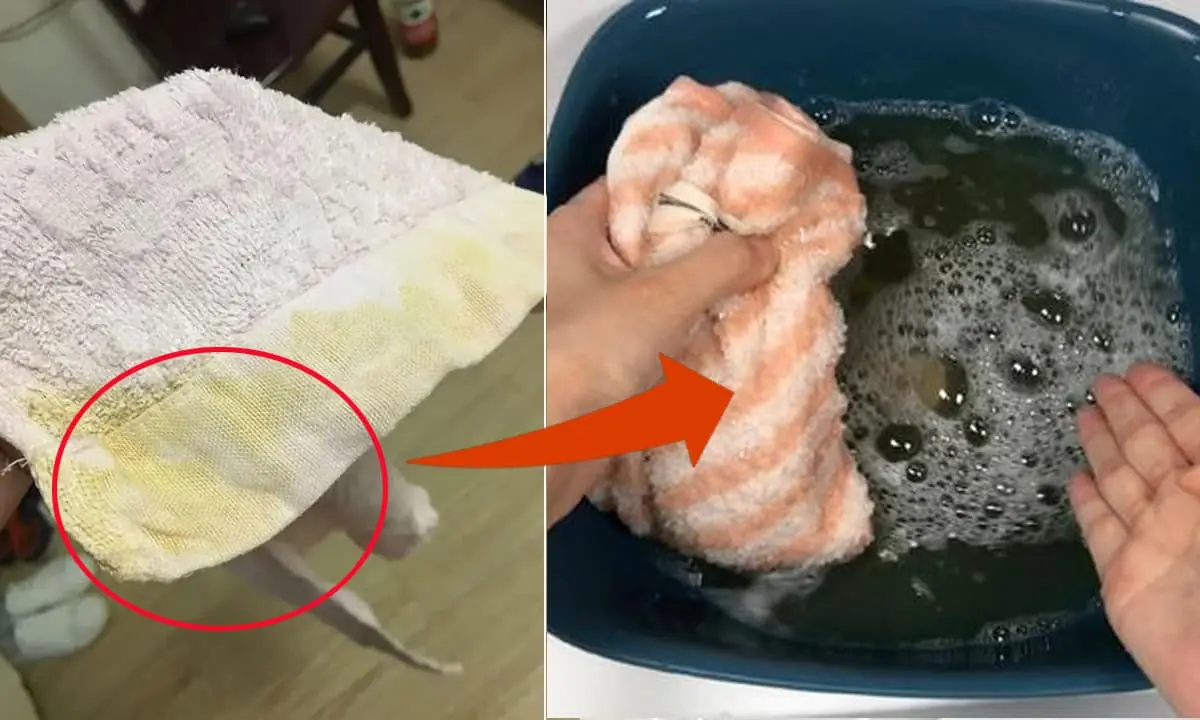
Consider an Appropriate Iron-Removal Filter
If testing confirms that iron levels are high, a suitable water-treatment system may help.
Depending on the type and concentration of iron, treatment options may include:
-
Oxidizing filters.
-
Iron-removal filtration systems.
-
Aeration followed by filtration.
-
Chemical oxidation and filtration.
-
Specialized treatment systems for well water.
A conventional water softener is not automatically the best solution for every iron problem.
Some water softeners can remove certain forms of dissolved iron within specified limits, but they may become fouled when iron concentrations are too high or when insoluble iron particles are present.
A water-treatment professional can recommend a system based on the actual test results.
Check Your Plumbing
If the water from certain taps appears discolored, have the plumbing inspected.
Corroded pipes, fittings, and water heaters may contribute iron particles to the water.
Addressing the source can prevent further contamination.
Use Appropriate Laundry Additives
Some laundry products are formulated to help control metal ions and prevent mineral deposits from settling onto fabrics.
Choose products specifically intended for iron control or hard-water laundry conditions.
Follow the recommended dosage because using too much product can create other washing problems.
17. Why You Should Be Careful With High-Temperature Washing
Hot water is useful for certain laundry tasks, but it is not automatically the best option for removing every type of stain.
If a towel contains iron deposits, heating it in a dryer before treatment may make the discoloration more difficult to remove.
High temperatures can also affect certain personal care product stains and fabric dyes.
For this reason, it is sensible to inspect towels before placing them in the dryer.
If orange marks are visible, identify the likely cause and use an appropriate treatment first.
Air drying can be a practical choice while you are testing a stain-removal method.