You Never Know When Something Like This Could Happen: A Sudden Street Attack Leaves a Neighborhood on Edge
It was supposed to be an ordinary evening. Residents were going about their routines, children were being brought home, and familiar streets were filled with the quiet activity that makes a neighborhood feel safe. Then a sudden attack shattered that sense of normality. In a matter of moments, the ordinary surroundings people had trusted for years became the setting of a frightening incident—and footage of what happened began spreading, leaving viewers asking how something so alarming could happen in a place that looked so familiar.
The most unsettling part was not only the suddenness of the incident. It was what followed. People who had once walked along the street without giving it a second thought began looking over their shoulders. Parents reconsidered how their children travelled home. Neighbors who rarely spoke started exchanging messages, checking on one another, and paying closer attention to what was happening around their homes.
The supplied account does not identify the town, the people involved, the exact date, or the official findings of an investigation. Those details should not be guessed. What it does describe is a sudden ambush, a video that spread quickly, and a community whose sense of security was shaken. The story therefore raises a question that reaches far beyond one street: what happens to a neighborhood when an unexpected act of violence changes the way people experience their own surroundings?
The answer is not simply fear. It is also the way people respond when they realize that safety cannot be taken for granted. The first hours may be filled with confusion, rumors, and unanswered questions. But in the days that follow, communication, practical precautions, and cooperation can help residents regain a sense of control.
And that is where this story becomes about more than the frightening footage. It becomes a closer look at the fragile feeling of security, the responsibility communities share, and the small decisions that can help protect people without allowing fear to take over everyday life.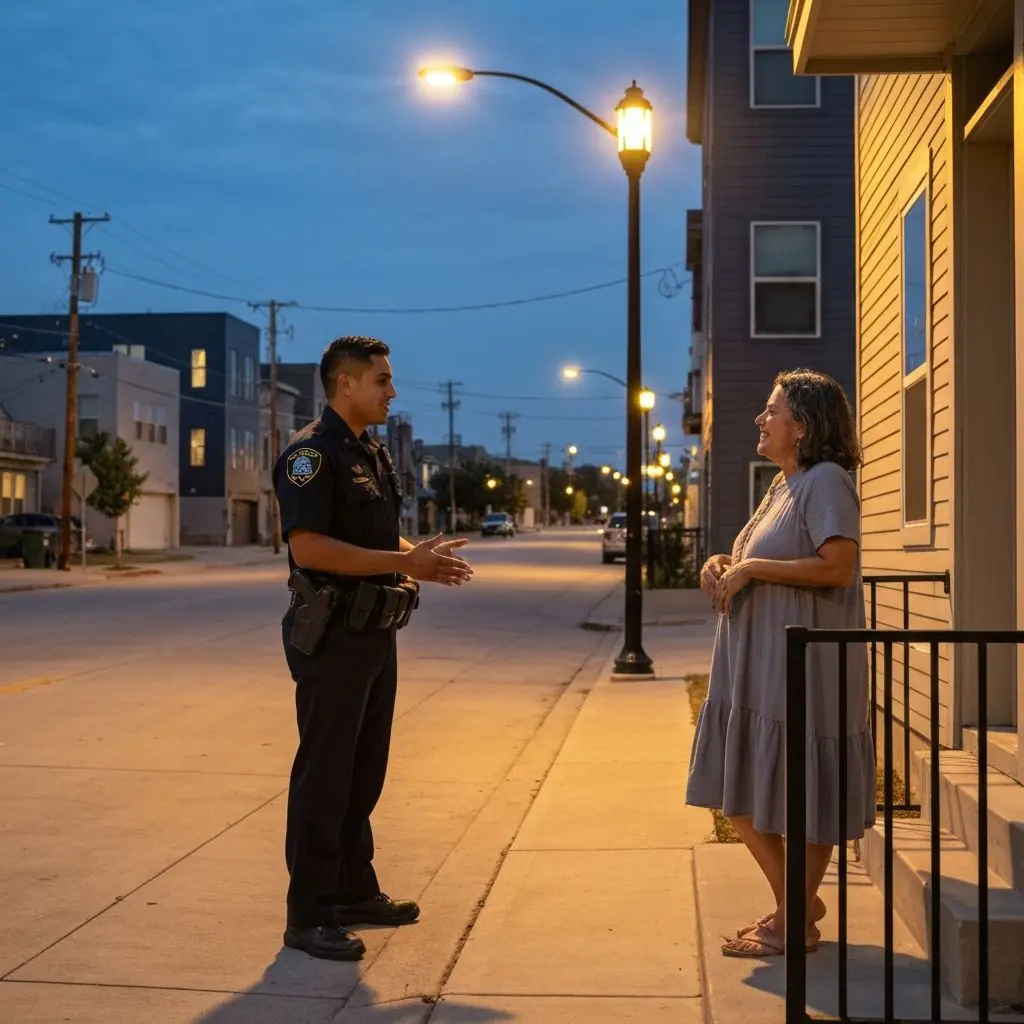
Chapter 1: The Ordinary Evening That Suddenly Changed
There is something deeply unsettling about an incident that takes place in a familiar environment. A remote location may already feel unpredictable to people who do not know it. A residential street, however, is different. It is a place where people expect to recognize their surroundings, where neighbors know which houses belong to familiar families, and where ordinary routines create a sense of stability.
That familiarity can make a sudden attack especially disturbing.
According to the account shown in the supplied image, the incident began during what appeared to be an ordinary evening. The calm was interrupted by an unexpected ambush, and the event was captured on video. The footage later spread, bringing the incident to the attention of people beyond the immediate neighborhood.
The account does not establish exactly how the confrontation began or what happened immediately before it. Without verified details, it would be irresponsible to describe a specific sequence of actions or assign motives to anyone involved. Yet the central point is clear: something unexpected happened quickly enough to make residents question how safe their everyday surroundings really were.
Why sudden incidents feel especially frightening
People tend to build their sense of safety around routine. They walk familiar routes, recognize nearby houses, and become accustomed to the ordinary sounds of the neighborhood. Over time, these repeated experiences create a quiet expectation that tomorrow will resemble today.
A sudden act of violence disrupts that expectation.
The mind often responds to an unexpected threat by trying to understand what happened and whether it could happen again. Residents may replay what they saw, search for information, and wonder whether there were warning signs they missed. Even people who were not directly involved can feel shaken when an incident occurs close to home.
This reaction does not mean that everyone is in immediate danger. It means that a familiar environment has become associated with an event that residents did not expect.
The distinction matters. Fear can be a natural response, but it is not always an accurate measure of the level of risk. A single incident deserves attention and an appropriate response, but it should not automatically lead residents to believe that every street, stranger, or unfamiliar movement represents a threat.
The shock of seeing an incident on video
The supplied account emphasizes that footage of the incident spread quickly. Video can make an event feel immediate, even to people who were nowhere near the scene.
A written report may describe an event in a few paragraphs. A recording can make viewers feel as though they are witnessing the moment themselves. They may watch it repeatedly, pause at particular moments, and share it with friends or relatives.
This can help bring attention to an incident, but it also creates challenges.
A short recording rarely shows everything that happened before or after the moment captured. It may not reveal the full context, the identities of those involved, or what investigators have established. A video can be genuine while still providing an incomplete account.
For that reason, residents should be cautious about treating every interpretation attached to a clip as fact. The recording may show a frightening moment, but the circumstances surrounding it require careful examination.
When a familiar street no longer feels the same
After a frightening incident, ordinary places can take on new meanings.
A corner where residents usually stop to talk may suddenly seem exposed. A poorly lit walkway may attract more attention. A quiet stretch of road that once felt peaceful may become a subject of discussion.
Some residents may choose different routes or avoid walking alone at certain times. Others may ask family members to send a message when they arrive home. Parents may begin accompanying children who previously travelled independently.
These adjustments can be understandable, especially during the first days after an incident. The challenge is to make decisions based on useful information rather than allowing uncertainty to create unnecessary restrictions.
A community needs time to process what happened. It also needs reliable information about any ongoing risk, practical advice from appropriate authorities, and opportunities for residents to ask questions.
Chapter 2: When the Video Spreads, Fear Travels With It
The account describes the footage spreading quickly and a wave of fear following it. This is one of the defining features of incidents recorded on phones or security cameras: the event may happen in one location, but the emotional reaction can travel much farther.
A resident who was not present may see the video in a family chat. Someone living several streets away may receive it from a friend. People who have moved away from the neighborhood may contact relatives to ask whether they are safe.
Within a short time, a local incident can become a subject of conversation among people who have no direct connection to the scene.