Why people share alarming footage
People often share a disturbing recording because they believe others should know about a possible danger.
A parent may send it to another parent as a warning. A neighbor may forward it to a community group to ask whether anyone recognizes the location. Someone else may share it because they are shocked and want others to understand what happened.
These motivations are not necessarily malicious. Many people share information because they care about the safety of others.
However, a good intention does not guarantee that the information is accurate or helpful.
A recording may be reposted without its original date or context. A caption may identify the wrong location. An unverified comment may claim that a particular person was responsible. As the clip moves between platforms, the original source can become difficult to identify.
The difference between awareness and rumor
Public awareness can help residents take sensible precautions. Rumors can make an already difficult situation worse.
An accurate warning might state that an incident has been reported in a particular area and advise people to follow official updates. A rumor might claim that similar attacks are happening everywhere, even when there is no evidence to support that statement.
The difference is important because fear spreads quickly when people believe that danger is widespread and unpredictable.
Before forwarding a video or message, residents can ask a few basic questions:
-
Is the location confirmed?
-
Is the date known?
-
Does the message come from a reliable source?
-
Has an official agency issued relevant information?
-
Does sharing the recording help people stay informed, or does it mainly expose viewers to disturbing material?
If the answers are unclear, it is better to avoid presenting the information as confirmed.
The emotional effect on people who watch
Not everyone reacts to disturbing footage in the same way.
Some viewers may feel anxious for a short time and then move on. Others may find themselves thinking about the event repeatedly, particularly if they have experienced violence before or believe the location is close to their own home.
Parents may feel especially unsettled when they imagine their children encountering a similar situation. Older residents or people who live alone may worry about whether help would be available if they needed it.
Repeated exposure can intensify these reactions. Watching the same clip again and again rarely provides new information, but it can keep the emotional experience active.
A healthier approach is to seek reliable updates, limit unnecessary exposure to graphic or distressing material, and speak with someone trusted if the incident has caused persistent anxiety.
Why online attention does not replace an investigation
A video may attract thousands of views, comments, and theories. None of those reactions replaces a proper investigation.
Authorities may need to establish the timeline, identify witnesses, examine available recordings, and assess physical or digital evidence. Some details may not be released immediately because they could affect the investigation or the privacy of those involved.
Residents should be careful not to treat online speculation as a conclusion.
The desire for answers is understandable. People want to know why the incident happened, who was responsible, and whether there is any continuing danger. But reliable answers require evidence, not the number of people repeating a claim.
Chapter 3: Parents Begin Rethinking the Journey Home
One of the clearest changes described in the supplied account is the reaction among parents. After the footage spread, some began walking their children home rather than allowing them to make the journey as they had before.
For families, this is not simply a question of choosing a different route. It touches one of the most important parts of daily life: allowing children to become independent while knowing they have a safe way to travel between home, school, and other activities.
The balance between independence and protection
Children gradually learn to move around their communities. They become familiar with crossings, sidewalks, shops, bus stops, and the homes of friends. These experiences help them develop confidence and practical judgment.
When a frightening incident occurs nearby, parents may feel that this independence needs to be reconsidered.
Some may decide to accompany younger children for a while. Others may arrange for children to walk in pairs or travel with a trusted adult. Families may also agree on a specific time for checking in after school or extracurricular activities.
These steps do not have to mean that children should become frightened of their surroundings. Instead, they can be presented as ordinary safety habits that help everyone feel more prepared.
Teach children how to seek help
Children benefit from knowing what to do if they feel unsafe.
They should know how to identify a trusted adult, where to go if they need assistance, and how to contact a parent or emergency service when appropriate. They should also understand that they do not need to approach or investigate a confrontation.
A child who sees an argument or suspicious situation should be encouraged to move away and seek help rather than trying to intervene.
Parents can explain these ideas calmly, without describing frightening details unnecessarily. The goal is to build awareness, not to make children believe that danger is waiting around every corner.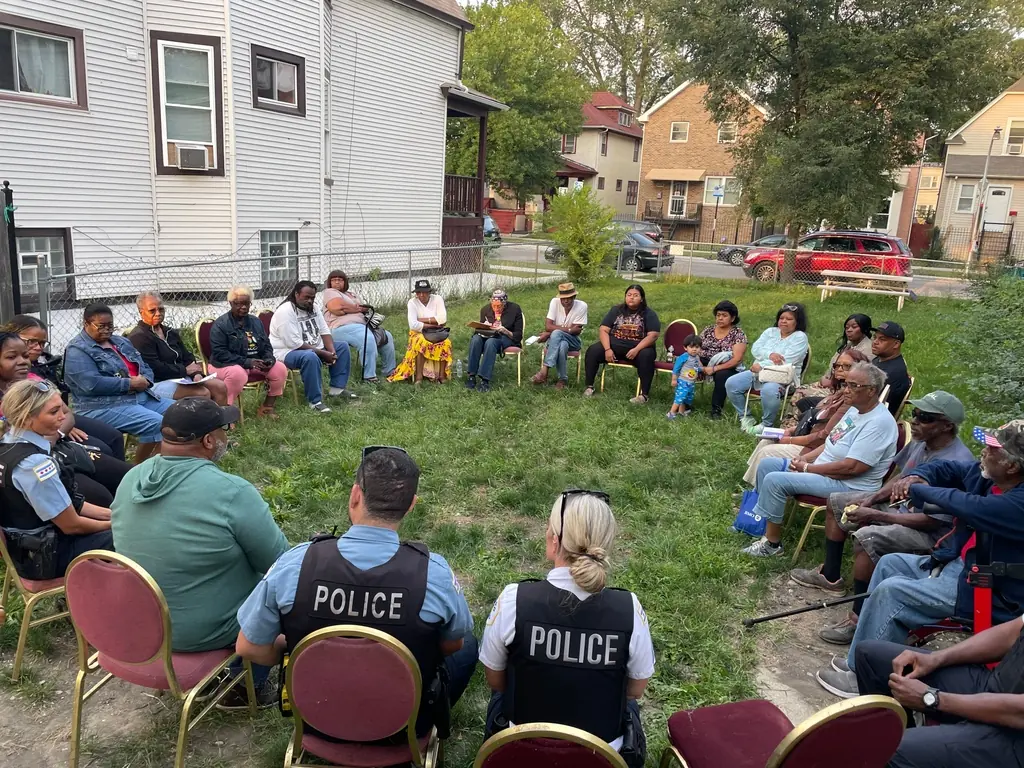
Agree on simple family check-ins
A family check-in plan can reduce uncertainty.
For example, parents and children can agree to send a brief message when a journey begins or ends. If a child is delayed, the family can establish whom to contact and what to do next.
The plan should be simple enough to follow consistently. A complicated system may create confusion, especially during a stressful situation.
Families should also consider what happens if a phone battery runs out, a device is lost, or a child cannot make a call. Knowing a trusted adult or safe public location can provide an alternative.
Avoid transferring adult fear to children
Children notice when adults are anxious. They may interpret worried conversations as evidence that something terrible is likely to happen again.
Parents do not need to hide their emotions, but they can choose how they discuss the incident.
A calm explanation might acknowledge that something frightening happened, explain that adults and authorities are working to understand it, and remind children of the practical steps the family follows to stay safe.
It is also useful to ask children how they feel. Some may have questions they are hesitant to raise. Others may not be especially concerned at all.
Listening helps parents respond to the child's actual feelings rather than assuming that every child has reacted in the same way.
Chapter 4: Neighbors Who Barely Spoke Begin Looking Out for One Another
Perhaps the most significant development in the supplied account is the change in relationships among residents.
People who had rarely spoken began exchanging warnings, sharing rides, checking on one another, and paying closer attention to the neighborhood. The incident created fear, but it also encouraged a form of cooperation that had not previously been part of everyone's routine.