This is a familiar pattern in communities facing a sudden challenge. An unexpected event can reveal how little neighbors know about one another, while also creating a reason to build stronger connections.
The importance of knowing who lives nearby
A neighborhood does not need to become a formal organization before residents can help one another.
Simple familiarity can make a difference. Knowing which neighbor has young children, who may need assistance carrying groceries, or who is often away from home can make communication easier during an emergency.
This does not mean residents should monitor one another's private lives. Respect for privacy remains important. The purpose is to build enough trust that people feel comfortable asking for help and sharing relevant safety information.
A brief conversation at the gate, a greeting during a walk, or an introduction at a community meeting can be the beginning of a useful relationship.
Checking on older residents and people living alone
Some residents may have fewer opportunities to receive information quickly.
Older adults, people with disabilities, and those who live alone may benefit from a simple check-in system, particularly when an incident has caused widespread concern.
A neighbor might offer to pass along official updates, help arrange transportation, or check whether someone needs assistance with an everyday task.
These gestures should be offered respectfully. People should not assume that an older neighbor is helpless or unable to make decisions. The best approach is to ask what support would be useful and allow the person to decide.
Sharing rides and practical help
The supplied account specifically mentions neighbors sharing rides.
This is a practical response when some residents feel uncomfortable travelling alone or when families need temporary help with transportation.
A neighbor may offer to accompany someone to a nearby bus stop, take a child to an activity with parental permission, or coordinate a shared journey for people travelling at similar times.
Arrangements should be clear. Families should know who is providing transportation, where the journey begins and ends, and how to contact the person responsible.
The aim is not to create a complicated system. It is to make everyday movement easier while residents are adjusting to the situation.
Building trust before the next emergency
The strongest neighborhood relationships are usually developed before a crisis occurs.
If residents know one another only through alarming messages, cooperation can become difficult. People may hesitate to ask for help or may not know whom to trust.
Regular contact helps prevent that problem.
A community gathering, a residents' association, or a simple messaging group can create a place where people exchange useful information. When an emergency occurs, residents are more likely to recognize familiar names and understand how to contact one another.
The National Crime Prevention Council describes neighborhood watch groups as organized efforts in which residents remain alert to suspicious activity and report relevant information to law enforcement. These programs are intended to strengthen cooperation, not to replace professional policing.
A shared promise not to leave people isolated
The supplied story describes a shared promise that no one would be left alone.
That idea is more than an emotional response. It can be translated into practical habits: checking whether a neighbor has received an important update, offering a lift when appropriate, helping someone contact authorities, and making sure vulnerable residents know where to seek assistance.
A community becomes stronger when support is dependable rather than limited to the first few days after a frightening event.
Chapter 5: What Residents Can Do Without Putting Themselves in Danger
When people feel threatened, they may want to take immediate action. Some may consider watching the street, following suspicious individuals, or confronting someone they believe is responsible.
Those reactions can be dangerous.
Community involvement is most useful when residents understand their role. They can observe, communicate, provide accurate information, and report concerns. They should not attempt to act as investigators or law enforcement officers.
Observe and report, rather than confront
If someone witnesses a crime or an immediate threat, the priority should be personal safety.
Residents should move to a safe location, contact emergency services when necessary, and provide information they have directly observed.
They should not approach a potentially dangerous person, attempt to restrain someone, or pursue a vehicle.
The Los Angeles Police Department's Neighborhood Watch guidance makes this distinction clear: residents serve as additional eyes and ears for reporting concerns. They are not expected to act as vigilantes.
This boundary protects both residents and the integrity of an investigation.
Make important information easy to communicate
A useful report should be as clear and factual as possible.
When contacting the appropriate authorities, a witness may be able to provide:
-
The location of the incident.
-
The time it occurred, or the closest estimate available.
-
What the witness personally saw or heard.
-
Whether anyone appears to need immediate medical assistance.
-
Whether there is an immediate danger to other people.
-
Any relevant description that can be provided without putting the witness at risk.
It is important to distinguish direct observation from assumptions. Saying that a person was seen leaving a location is different from claiming that the person committed an offence.
Clear reporting helps reduce confusion.
Keep recordings in their original form
If a resident has relevant security-camera footage, preserving the original file may be useful.
Editing, adding captions, or repeatedly converting a recording can affect its quality and remove information that investigators may need. If authorities request footage, residents should follow the official instructions for providing it.
They should also consider privacy. A recording may show victims, children, bystanders, or people who have no connection to the incident.
Posting such material publicly can expose individuals to unwanted attention and may spread misleading interpretations. Sharing it directly with the appropriate authorities is often more responsible than circulating it through social media.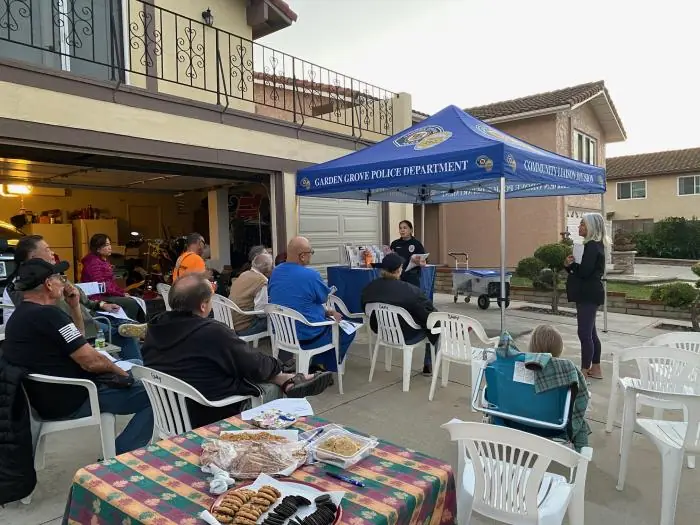
Improve visibility around shared spaces
Residents can also look at ordinary features of the neighborhood.
Poor lighting, overgrown vegetation, damaged sidewalks, and neglected public areas may make it harder for people to see what is happening around them. Reporting maintenance concerns to the relevant local authority can help improve the environment.
Better lighting does not guarantee that crime will not occur, and residents should avoid claiming that a single physical improvement can solve every safety problem. Nevertheless, well-maintained public spaces can make everyday movement more comfortable and improve visibility.
Create a communication plan
A neighborhood group can agree on a few basic communication rules:
-
Share confirmed information whenever possible.
-
Identify the source of important updates.
-
Avoid forwarding unverified accusations.
-
Use emergency services for urgent threats rather than relying only on group messages.
-
Respect the privacy of victims, witnesses, and families.
-
Correct inaccurate information when reliable facts become available.
A communication group should reduce confusion, not become a place where rumors and frightening images are repeatedly circulated.