Because they are usually not painful or itchy, people may ignore them or assume they are ordinary age-related marks.
Why do these spots appear?
Diabetic dermopathy is thought to involve changes in small blood vessels and the skin following minor injury.
It is more commonly reported in people who have had diabetes for several years, although it is not exclusive to diabetes.
The spots generally do not require specific treatment and may fade gradually, leaving behind subtle discoloration.
Importantly, diabetic dermopathy is not a reliable way to diagnose diabetes. Similar-looking marks can occur for other reasons.
If you notice persistent brown patches on your shins, particularly alongside other symptoms or risk factors, a clinician can help determine whether they are consistent with diabetic dermopathy or another skin condition.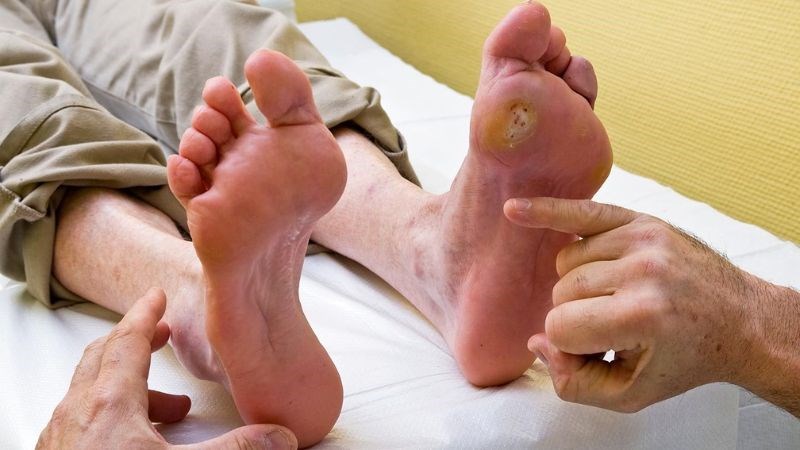
9. Yellowish or Reddish Raised Bumps on the Skin
A less common but more distinctive skin condition associated with diabetes is eruptive xanthomatosis.
It can produce clusters of small, firm, yellowish or reddish bumps, often surrounded by a red border.
They may appear suddenly, particularly on the buttocks, thighs, elbows, knees, or other areas.
The bumps can be itchy or tender.
What is happening inside the body?
Eruptive xanthomas are associated with markedly elevated blood triglycerides, a type of fat circulating in the bloodstream.
Severe hypertriglyceridemia can sometimes occur in people with poorly controlled diabetes because insulin plays an important role in regulating fat metabolism.
When insulin function is impaired, triglyceride levels may rise substantially.
The skin changes can therefore be a visible sign of an underlying metabolic problem.
Anyone who develops a sudden eruption of yellowish bumps should seek medical evaluation. Blood tests may be needed to assess triglycerides, glucose, and other metabolic markers.
Very high triglyceride levels can increase the risk of acute pancreatitis, so this is not a condition to dismiss as an ordinary rash.
10. Blisters That Appear Without an Obvious Injury
Some people with diabetes develop a rare condition called bullosis diabeticorum, also known as diabetic bullae.
It causes blisters to appear suddenly, often on the feet, toes, hands, or lower legs.
The blisters may be relatively large and can resemble those caused by friction or burns.
An unusual feature is that they may appear without a clear injury, and some are painless.
Why is this important?
The exact cause of diabetic bullae is not fully understood.
They are more often reported in people with long-standing diabetes and may occur alongside nerve or vascular complications.
Although many heal on their own over several weeks, they still require appropriate assessment.
Blisters can become infected, particularly if they break open or are exposed to repeated pressure.
Do not deliberately puncture or remove the skin covering a blister. If one appears unexpectedly, especially on the feet, have it assessed by a healthcare professional.
A blister should be treated urgently if it becomes increasingly red, warm, painful, swollen, or begins producing pus.
11. Thick, Tight, or Waxy Skin on the Hands and Fingers
Some people with diabetes develop skin changes that make the hands and fingers feel unusually stiff or tight.
One condition associated with this is called diabetic cheiroarthropathy, also known as limited joint mobility syndrome.
The skin over the backs of the hands may appear thickened, waxy, or less flexible.
Over time, the fingers may become difficult to straighten fully, making certain everyday movements more challenging.
How can it affect daily life?
Someone may notice difficulty placing their palms flat together, straightening their fingers, or gripping objects comfortably.
The condition is associated with long-standing diabetes and changes in connective tissue.
It can occur alongside other complications, particularly in people whose glucose levels have been elevated for many years.
This is not the same as ordinary dry skin or temporary stiffness after exercise.
If finger movement becomes progressively restricted, a medical evaluation can help identify whether diabetes-related connective tissue changes, arthritis, or another condition is responsible.
12. Thickened Skin Around the Fingers and Other Areas
Another possible skin manifestation is a condition sometimes described as diabetic scleroderma-like skin changes.
The skin may become thickened, firm, and less flexible, particularly around the upper back, shoulders, neck, or other areas.
In some cases, people with diabetes develop a condition called scleredema diabeticorum, which causes thickening of the skin, most commonly around the back of the neck and upper back.
The affected area may feel firm or rubbery rather than simply dry.
What makes this different from ordinary skin thickening?
Ordinary skin thickening can occur due to friction, pressure, or aging.
Scleredema involves changes in the deeper structure of the skin and connective tissue. It is more commonly associated with long-standing diabetes, particularly in people with additional metabolic risk factors.
The condition may cause discomfort or restrict movement if it becomes extensive.
Because several skin disorders can produce similar changes, professional assessment is important. A dermatologist may need to examine the skin and consider other possible causes before reaching a diagnosis.
13. Yellowish, Waxy Patches on the Lower Legs
Another relatively uncommon condition is necrobiosis lipoidica.
It often begins as small reddish-brown or dull red patches on the lower legs, especially over the shins.
Over time, the affected areas may become larger, develop a yellowish or waxy center, and show visible blood vessels.
The skin can appear thin and shiny. Some patches cause no symptoms, while others become itchy, tender, or painful.
In certain cases, the skin may break down and form ulcers.
Is it always caused by diabetes?
No.
Necrobiosis lipoidica is associated with diabetes, but it can also occur in people who do not have diabetes.