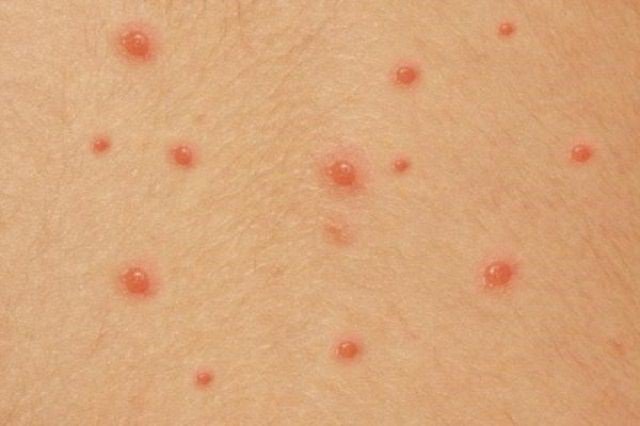
7. Folliculitis Can Cause Small Red Bumps Around Hair Follicles
If the red dots seem to be centered around individual hairs, folliculitis may be another possibility.
Folliculitis occurs when hair follicles become inflamed.
The bumps may resemble small pimples and can sometimes contain pus.
Potential triggers include:
-
Shaving
-
Friction
-
Sweat
-
Tight clothing
-
Bacteria
-
Yeast
-
Certain skin products
You may notice the spots on areas that experience repeated friction or shaving.
Mild cases may improve with gentle skin care and avoiding the trigger.
Persistent, painful, spreading, or pus-filled lesions should be assessed by a healthcare professional because treatment depends on the underlying cause.
8. Viral or Other Infections Can Sometimes Cause Red Spots
Certain infections can produce skin changes.
Depending on the infection, spots may occur with:
-
Fever
-
Fatigue
-
Sore throat
-
Muscle aches
-
Headache
-
Swollen lymph nodes
-
Cough
-
Gastrointestinal symptoms
Some infections produce distinctive rashes, while others create nonspecific red spots.
This is why the overall picture matters more than the appearance of one spot.
If a sudden rash develops together with fever or significant illness, it is better to seek medical advice rather than trying to identify the cause solely from photographs or descriptions.
9. Certain Medications Can Cause Skin Changes
A new medication can sometimes trigger a rash or other skin reaction.
This can happen with prescription medications, over-the-counter medicines, and occasionally supplements.
If you notice a new rash shortly after starting a medication, make a note of:
-
The medication name
-
When you started taking it
-
When the spots appeared
-
Whether the rash is spreading
-
Whether you have itching, swelling, fever, or other symptoms
Do not automatically stop an important prescription medication without discussing it with the prescribing clinician, unless you are experiencing a severe allergic reaction requiring emergency care.
10. Vitamin or Blood-Related Problems Can Sometimes Affect the Skin
In some situations, widespread or recurrent tiny red or purple spots can be associated with abnormalities involving platelets or blood clotting.
Platelets help your blood form clots when you are injured.
If platelet numbers are unusually low or platelet function is impaired, a person may develop:
-
Easy bruising
-
Petechiae
-
Nosebleeds
-
Bleeding gums
-
Prolonged bleeding
-
Heavier-than-usual menstrual bleeding
Several conditions can cause these problems, including infections, medications, immune disorders, nutritional deficiencies, and diseases affecting blood-cell production.
A cluster of unexplained bleeding-related symptoms deserves medical assessment.
Do Red Dots Turn White When You Press Them?
One simple observation can sometimes provide useful information.
Gently pressing a red spot may cause some vascular redness to temporarily become lighter because blood is pushed out of the superficial vessels. This is called blanching.
Other spots, including petechiae, generally do not blanch.
However, this is not a diagnostic test.
A person should not try to diagnose a skin condition solely by pressing on it.
Instead, consider this observation as one piece of information that can help describe the skin change to a healthcare professional.