A stall does not mean that an engine has stopped. It occurs when the wing exceeds its critical angle of attack and can no longer generate the required lift. A wing can stall even while the aircraft is moving forward at high speed if its angle of attack becomes too great or if its configuration changes.
In Flight 191's case, the left wing reached a stall condition while the right wing continued generating more lift. The difference in lift created a powerful rolling moment toward the left.
The aircraft began to roll. The pilots attempted to counter the motion, but the aerodynamic imbalance was severe. As the roll continued, the aircraft's nose dropped, and it descended toward the ground.
The sequence demonstrates why the engine separation was only the beginning of the disaster. The physical loss of the engine caused a cascade of damage. The hydraulic failure allowed the slats to retract. The altered wing configuration increased the stall speed on one side. The resulting asymmetric stall produced a roll that the crew could not overcome.
4. The Warning Systems That Were Lost
The hydraulic damage was only part of the problem. The separation also disrupted electrical power supplied by the left engine's generator. That electrical loss affected several instruments and warning systems.
Among the affected equipment were the captain's flight instruments, the left stall warning computer, the stick shaker motor, the No. 1 engine instruments, and the slat-disagreement warning system. These systems served different purposes, but together they helped the crew understand the aircraft's condition.
The stall warning system was especially important. A stall warning is designed to alert pilots when the aircraft is approaching a dangerous aerodynamic condition. On many aircraft, a stick shaker provides a physical warning by vibrating the control column. It is intended to attract the pilots' attention immediately.
Flight 191 lost the relevant warning capability on the captain's side. The loss of the slat-disagreement indication also meant that the crew did not receive the expected warning that the left and right wing slats were no longer in the same configuration.
This combination made the emergency even more difficult. The aircraft was developing an aerodynamic problem, but some of the systems that should have helped the crew recognize that problem were no longer available.
The loss of instruments also complicated the crew's ability to interpret the event. The pilots were dealing with an engine separation during the most time-critical phase of flight. They had to maintain control, assess the remaining engine performance, follow procedures, and manage an aircraft whose aerodynamic configuration had changed unexpectedly.
It is easy, from the safety of the present day, to look at the accident sequence and ask why the crew did not simply take a different action. But that question ignores the limited information available in the cockpit and the extremely short time available to respond.
The National Transportation Safety Board's investigation considered the crew's actions, the procedures they followed, and the unusual nature of the emergency. The final report identified the aircraft's systems and the maintenance-induced structural failure as central factors in the accident.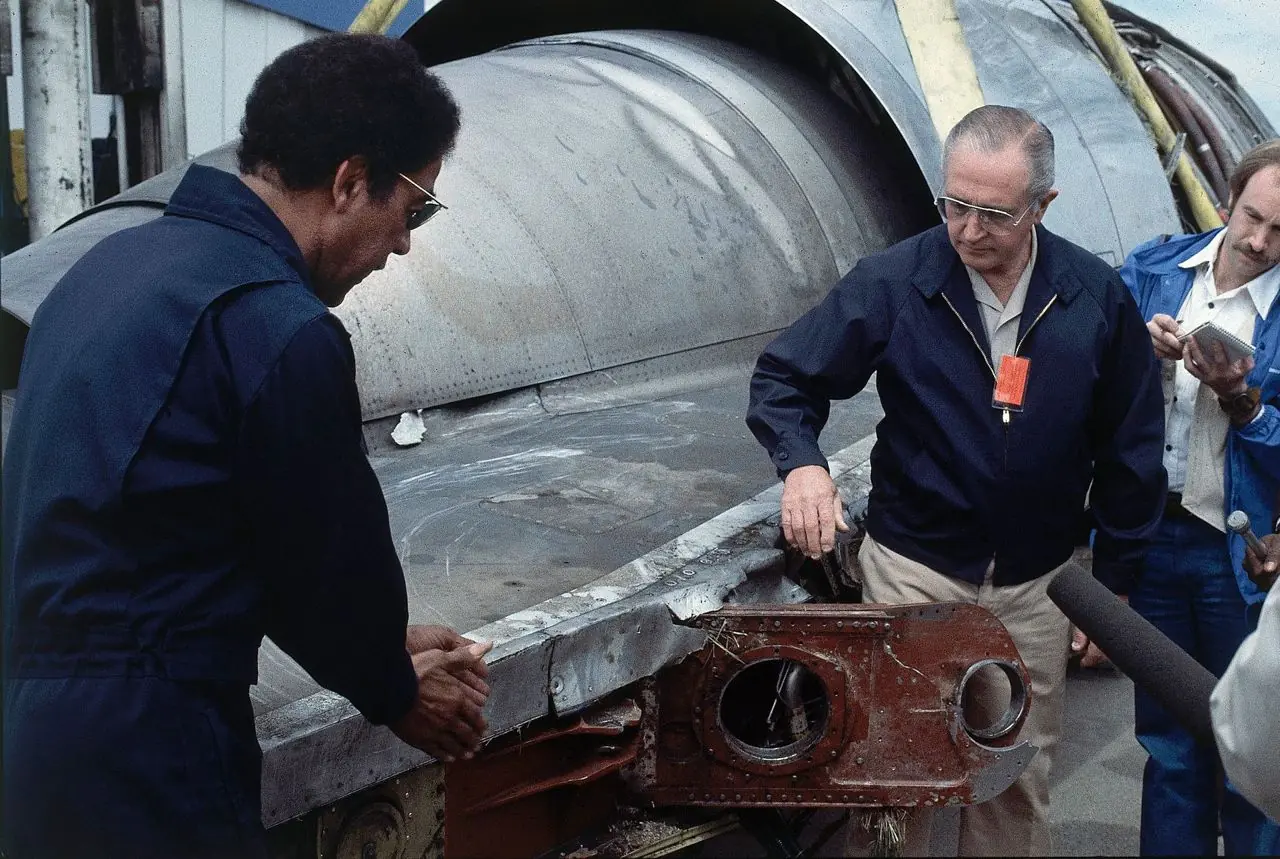
5. The Critical Seconds After Liftoff
The official record reconstructs a short but devastating sequence. Flight 191 lifted off after the left engine and pylon had separated. It initially climbed with its wings close to level. The aircraft reached approximately 300 feet before the left roll became apparent.
The Federal Aviation Administration's historical account describes the aircraft reaching approximately 140 feet about nine seconds after liftoff. By around 20 seconds after liftoff, it had climbed to approximately 325 feet, while its airspeed had fallen. At that point, the aircraft began rolling left.
The aircraft continued rolling until impact, approximately 31 seconds after liftoff. The final recorded attitude included a left roll of about 112 degrees and a nose-down pitch of approximately 21 degrees.
These figures help explain why the crash was so difficult to prevent. The aircraft had only a small amount of altitude and very little time to recover. The left wing was operating in a different aerodynamic configuration from the right wing, and the aircraft was losing control as the roll developed.
The pilots were not dealing with a long, stable emergency in which they could consult checklists, communicate at length, and evaluate several possible solutions. They were dealing with an aircraft that was rolling toward the ground shortly after takeoff.
The FAA's account explains that the crew's actions were consistent with the airline's engine-failure procedures. The aircraft was being flown in accordance with the prescribed approach to an engine-out climb, including the speed guidance then in use. The problem was that the damaged wing configuration had raised the stall speed, making the prescribed speed inappropriate for the aircraft's actual condition.
That detail became important in the investigation. The crew had responded to what appeared to be an engine failure, but the aircraft was experiencing a more complex emergency that the procedures did not adequately address.
The final seconds were therefore shaped by several interacting factors: structural separation, loss of hydraulic pressure, slat retraction, electrical failures, missing warnings, and a procedure that did not account for the unusual aerodynamic condition.
6. The Crash Site Near the Airport
Flight 191 crashed into an open field approximately 4,600 feet northwest of the departure end of Runway 32R at Chicago O’Hare. The location was near a trailer park, and the wreckage scattered into the surrounding area.
The aircraft was destroyed by the impact and subsequent fire. The scale of the destruction made the response extremely difficult. Emergency personnel faced a large debris field, burning wreckage, and the need to secure the area while identifying what had happened.
The disaster killed all 271 people aboard the aircraft. Two people on the ground also died, and two others on the ground were injured. An aircraft hangar, several automobiles, and a mobile home were destroyed.
The total death toll was 273. This is why the accident is often described as one of the deadliest aviation disasters in United States history and the deadliest involving a scheduled passenger flight in the country at the time.
The photographs associated with Flight 191 often show a large fire and a plume of smoke rising above the crash site. Such images convey the scale of the disaster, but they do not reveal the technical chain that caused it. The visible fire was the final consequence of a failure that had begun during maintenance and became catastrophic during takeoff.
It is also important to distinguish the actual accident from misleading descriptions that sometimes circulate online. Flight 191 did not explode while cruising at altitude or disappear during a long-distance flight. It crashed seconds after taking off from Chicago O’Hare, following the separation of its left engine and pylon assembly.
The aircraft was bound for Los Angeles, but it never reached the climb phase of a normal journey. Its final moments unfolded within sight of the airport from which it had departed.
7. The Human Cost: 273 Lives Lost
Behind the technical details were 273 people whose lives ended that afternoon. The 271 passengers and crew aboard Flight 191 were killed, along with two people on the ground.
The victims included people traveling for work, family visits, holidays, and other ordinary reasons. Their journeys had begun like countless other trips through a busy international airport. They had boarded a scheduled flight expecting to arrive in another city later that day.
The loss affected families across the United States and beyond. For relatives waiting at destinations, the first reports of an aircraft crash would have been confusing and frightening. As the scale of the disaster became clear, families faced the devastating task of learning whether loved ones had been aboard and receiving confirmation of their deaths.
Aviation accidents are often described through aircraft types, mechanical failures, and investigative findings. Those details are necessary to understand what happened and prevent future disasters. But they can also make a tragedy feel distant. The passenger list represented individual lives, relationships, plans, and futures that ended without warning.
The two people killed on the ground were also part of the tragedy. The aircraft's path carried the disaster beyond the airport boundary and into an area where people were not part of the flight. Their deaths underline why aviation safety must consider not only passengers and crew but also communities surrounding airports.
The accident also placed enormous demands on emergency responders, investigators, airport personnel, and the families who needed information. The crash site had to be secured, evidence collected, and the victims identified. Investigators had to reconstruct the aircraft's final movements while preserving physical evidence from a heavily damaged scene.
The human consequences did not end when the fire was extinguished. Families had to live with the loss, and the aviation community had to confront the possibility that a routine maintenance process could create a failure of this magnitude.