3 Types of Chicken Meat You Should Never Buy, No Matter How Cheap, According to a Veteran Poultry Seller
After more than 20 years working in the poultry business, a longtime chicken seller has issued a strong warning: certain types of chicken meat may look like a bargain, but they can pose significant health risks if consumed. His advice has recently attracted public attention, especially as food safety concerns continue to rise.
Below are the three types of chicken meat he says consumers should avoid at all costs, along with expert explanations for why they may be dangerous.
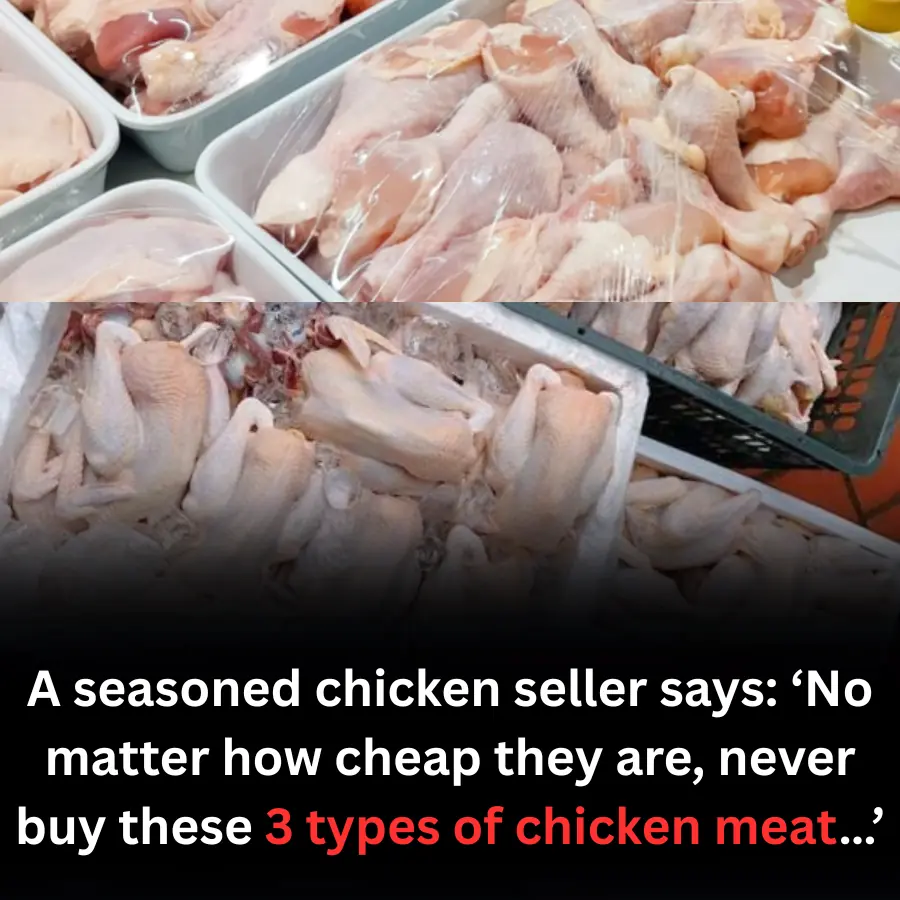
1. Chicken with Unnaturally White, Soft, or Mushy Flesh
According to the seller, chicken that looks excessively pale, soft, or water-soaked is often a sign of chemical injection or water pumping. Unscrupulous vendors may inject water, saline solution, or even gelatin-based mixtures into the meat to increase weight.
Why it’s dangerous:
These methods not only degrade quality but may introduce bacteria deep into the tissue. In severe cases, chemical residues can irritate the digestive system, cause food poisoning, and long-term exposure could damage the liver and kidneys.
How to spot it:
-
The meat looks unnaturally “glossy” or overly white
-
Pressing the flesh leaves a deep indentation that takes long to bounce back
-
Excess water pools in the packaging
2. Chicken with Dark, Bruised, or Greenish Patches
Experienced sellers can recognize this instantly: chicken that has dark spots, greenish patches, or bruising may come from sick birds or poultry that died before slaughter and was processed illegally.
Why it’s dangerous:
Meat from diseased or dead-on-arrival chickens carries a much higher load of harmful bacteria such as Salmonella and Campylobacter. These can cause severe gastrointestinal infections, dehydration, fever, and—in vulnerable individuals—life-threatening complications.
Warning signs:
-
Dark purple, blue, or greenish skin
-
Strong sour or metallic odor
-
Sticky or slimy texture
3. Chicken with Yellow, Wax-Like, Overly Thick Skin
Many shoppers believe yellow skin means “free-range,” but the seller explains that some vendors artificially dye chicken skin to make it look healthier.
Artificial yellowing may be caused by:
-
Food coloring
-
Turmeric water
-
Industrial dyes (dangerous and illegal)
Why it’s dangerous:
When industrial-grade coloring is used, it can contain toxic substances that accumulate in the liver, disrupt the endocrine system, and increase long-term health risks.
How to identify fake yellow chicken:
-
The yellow color rubs off when wiped with a paper towel
-
Color is uneven or too bright
-
The skin feels unusually thick or waxy
Expert Advice: How to Choose Safe, Fresh Chicken
To protect your family’s health, food safety specialists recommend:
Choose chicken that:
-
Has a natural pink tone
-
Smells fresh, not sour
-
The flesh is firm and bounces back when pressed
-
Skin is thin and elastic, not waxy or unusually bright
Avoid chicken from unknown sources.
Always buy from reputable markets or supermarkets with proper cold-chain storage.
Conclusion
While cheap chicken may seem attractive, the long-term health consequences are not worth the savings. The veteran chicken seller emphasizes:
“Safe meat is always more valuable than cheap meat.”
By learning to recognize warning signs and choosing trustworthy sources, consumers can better protect themselves and their families from hidden risks.