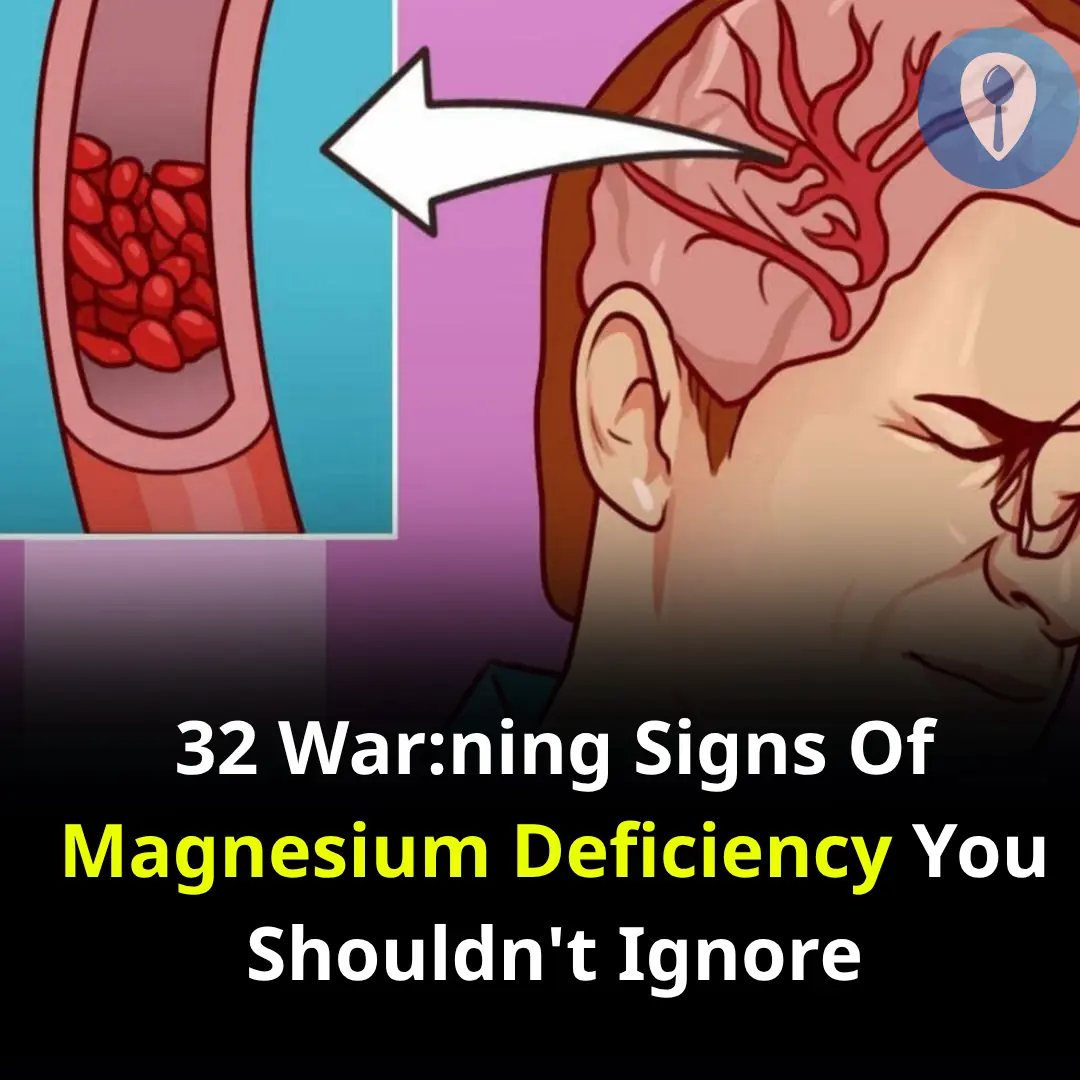
🧠 Why Magnesium Deficiency Is So Common
Magnesium is vital for over 300 biochemical reactions in the body — including energy production, nerve and muscle function, and bone health — yet many people today are deficient.
Main causes include:
-
Highly processed foods (refined grains and sugars remove most magnesium).
-
Diets high in calcium or phosphorus that block absorption.
-
Exposure to aluminum (from cookware, deodorants, or medications).
-
Health issues like Crohn’s disease, kidney disorders, alcoholism, and aging, all of which impair absorption or increase loss.
⚠️ 32 Signs of Magnesium Deficiency
Neurological and mental signs:
-
Irritability, mood swings, anxiety, or depression.
-
Chronic fatigue, poor sleep, or insomnia.
-
Brain fog, poor concentration, and memory problems.
Muscle and skeletal symptoms:
-
Muscle cramps, twitches, tremors, or spasms.
-
Weakness, numbness, or tingling in hands or feet.
-
Bone pain, stiffness, or increased risk of osteoporosis.
Cardiovascular symptoms:
-
Irregular heartbeat (arrhythmia) or palpitations.
-
High blood pressure.
Digestive and metabolic signs:
-
Constipation, nausea, or loss of appetite.
Skin and hair:
-
Dry, flaky skin, thinning hair, and slow wound healing.
General or hormonal signs:
-
Headaches or migraines.
-
Feeling cold easily (poor circulation).
-
Weakened immunity, severe PMS, or unexplained weight changes.
Severe or chronic deficiency can lead to:
-
Seizures, heart failure, or dangerously low calcium/potassium levels.
🥑 23 Magnesium-Rich Foods to Eat
Leafy greens: spinach, kale, swiss chard.
Nuts and seeds: pumpkin seeds, almonds, chia seeds, cashews.
Legumes: black beans, lentils, chickpeas.
Whole grains: brown rice, quinoa, oat bran.
Seafood: mackerel, salmon.
Fruits: avocado, banana, figs.
Others: dark chocolate, tofu, blackstrap molasses.
🛠️ How to Improve Magnesium Levels
-
Focus on whole, unprocessed foods rather than refined ones.
-
Pair magnesium intake with vitamin D and keep calcium in balance.
-
Limit alcohol, caffeine, and processed foods that deplete magnesium.
-
People with digestive issues, high stress, or heavy exercise may need supplementation — ideally under medical guidance.
⚕️ Key Takeaway
Magnesium deficiency is widespread but often overlooked.
Recognizing early symptoms and adjusting diet can restore balance naturally.
However, supplementation or testing should be discussed with a healthcare professional, as too much magnesium can also be harmful.