7 Signs of Female Hormonal Imbalance Every Woman Should Know — Causes, Symptoms, and What Actually Helps
Hormones control far more than just your menstrual cycle.
They affect mood, energy, weight, sleep, skin, focus, fertility, and emotional stability. And when they fall out of balance, your body doesn’t stay quiet about it.
The problem?
Most women are taught to normalize feeling unwell.
“You’re just stressed.”
“It’s PMS.”
“It’s age.”
But when symptoms repeat, intensify, or start controlling daily life, that’s not normal — it’s often hormonal imbalance.
Here are 7 common signs every woman should recognize, plus what’s usually behind them and what actually helps.
1. Persistent Mood Swings, Anxiety, or Irritability
If your emotions feel unpredictable — calm one moment, overwhelmed the next — hormones may be driving the shift.
Imbalances in estrogen, progesterone, and cortisol can cause:
-
Sudden irritability
-
Anxiety without clear triggers
-
Feeling emotionally “on edge”
-
Low mood or emotional numbness
This is especially common when progesterone is low or estrogen fluctuates rapidly.
What helps:
-
Regular sleep
-
Stress reduction (not just “relax more,” but real boundaries)
-
Stable blood sugar through regular meals
-
Medical evaluation if symptoms are intense or persistent
2. Irregular, Painful, or Missing Periods
Your menstrual cycle is one of the clearest hormonal signals your body gives.
Warning signs include:
-
Skipped periods
-
Very heavy or very light bleeding
-
Severe cramps
-
Cycles shorter than 21 days or longer than 35 days
These can be linked to estrogen dominance, low progesterone, thyroid issues, or conditions like PCOS.
A “normal” cycle shouldn’t completely disrupt your life.
What helps:
-
Tracking cycles
-
Checking hormone and thyroid levels
-
Addressing underlying stress, nutrition, or metabolic issues
3. Chronic Fatigue Even After Enough Sleep
If you wake up tired despite sleeping long hours, hormones may be interfering with energy regulation.
Low thyroid hormones, cortisol imbalance, or disrupted estrogen levels can cause:

-
Heavy morning fatigue
-
Afternoon crashes
-
Brain fog
-
Low motivation
This isn’t laziness.
It’s your body running on unstable signals.
What helps:
-
Consistent sleep timing
-
Balanced meals with protein
-
Reducing caffeine reliance
-
Blood tests when fatigue is ongoing
4. Unexplained Weight Gain or Difficulty Losing Weight
Hormonal imbalance can make weight feel impossible to manage — especially around the abdomen, hips, or thighs.
Common hormonal contributors:
-
Insulin resistance
-
High cortisol
-
Estrogen dominance
-
Thyroid dysfunction
This type of weight gain often doesn’t respond to calorie restriction alone.
What helps:
-
Addressing insulin and stress
-
Strength training over excessive cardio
-
Adequate protein and fiber
-
Medical guidance when weight changes are sudden
5. Skin Issues and Hair Changes
Hormones directly affect skin and hair follicles.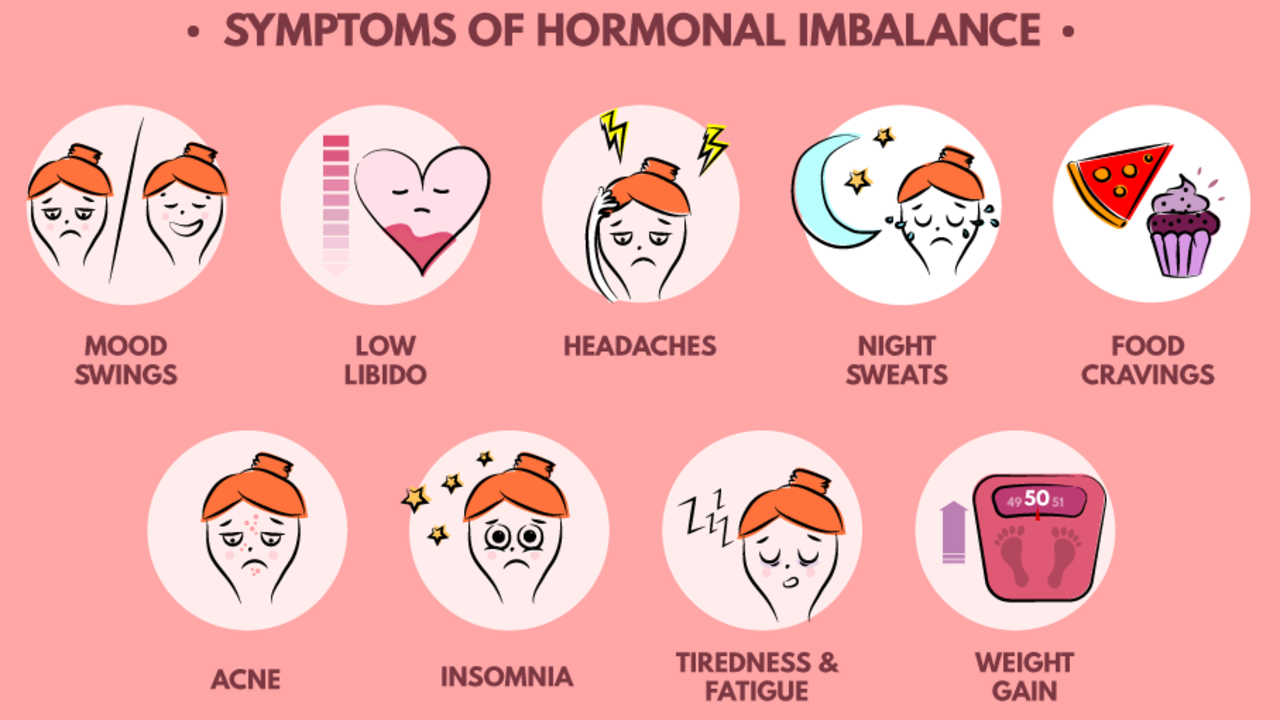
Imbalances may cause:
-
Adult acne
-
Oily or very dry skin
-
Hair thinning or hair loss
-
Excess facial or body hair
Androgen imbalance (such as elevated testosterone) is a common cause, especially in PCOS.
What helps:
-
Hormonal evaluation
-
Gentle skincare (over-treatment often worsens acne)
-
Managing blood sugar and inflammation
6. Sleep Problems and Nighttime Restlessness
If you struggle to fall asleep, stay asleep, or wake up feeling wired, hormones are often involved.
Low progesterone and high cortisol can lead to:
-
Insomnia
-
Night waking
-
Restless sleep
-
Racing thoughts at night
Sleep disruption worsens hormonal imbalance — creating a cycle that feeds itself.
What helps:
-
Consistent sleep routine
-
Reducing late-night screen exposure
-
Managing stress earlier in the day
-
Supporting progesterone naturally or medically
7. Low Libido or Changes in Sexual Health
Hormones influence desire, arousal, and comfort.
Imbalance may cause:
-
Reduced libido
-
Vaginal dryness
-
Discomfort during intimacy
-
Emotional disconnection
This is common but rarely talked about — and often brushed off.
What helps:
-
Open conversation with healthcare providers
-
Addressing estrogen and testosterone balance
-
Managing stress and fatigue
What Causes Hormonal Imbalance in Women?
Common contributors include:
-
Chronic stress
-
Poor sleep
-
Nutrient deficiencies
-
Extreme dieting or over-exercising
-
Hormonal birth control (for some women)
-
Thyroid or metabolic disorders
Often, it’s not one thing, but several stacking together.
The Most Important Thing to Remember
Feeling constantly “off” is not the price of being a woman.
Hormonal imbalance is common — but it’s also manageable when recognized early.
Your symptoms are not random.
They are signals.
Bottom Line
Mood swings, fatigue, cycle changes, weight struggles, skin issues, and sleep problems aren’t things you should just tolerate.
They’re your body asking for attention.
Listening early doesn’t mean panic —
it means prevention, balance, and long-term health.
And that’s not optional.
It’s essential.