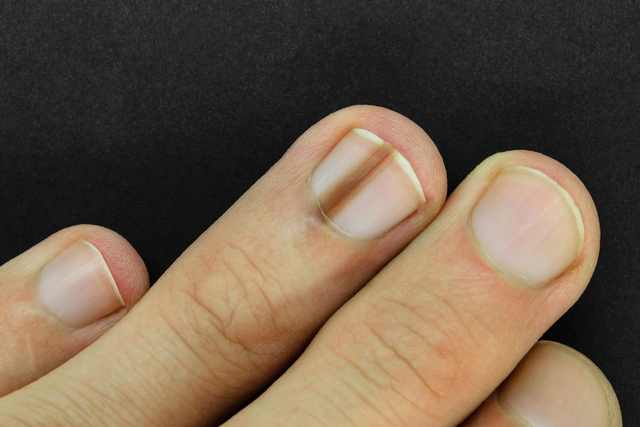
Vertical ridges on fingernails: A dang.erous warning? Don’t ignore these 4 signs
Many people panic when they suddenly notice vertical ridges appearing on their fingernails. If these ridges are accompanied by the four abnormal features below, they may be an internal “SOS signal” from your body that should not be ignored.
According to Dr. Li Yongjin, Head of Clinical Nutrition at Tongren Obstetrics and Gynecology Hospital (Beijing), the vast majority of vertical nail ridges are a normal physiological phenomenon. As we age, vertical ridges on nails are similar to wrinkles on the face and usually do not indicate serious health problems.
However, certain specific patterns of vertical ridges deserve attention, as they may be early warnings of disease.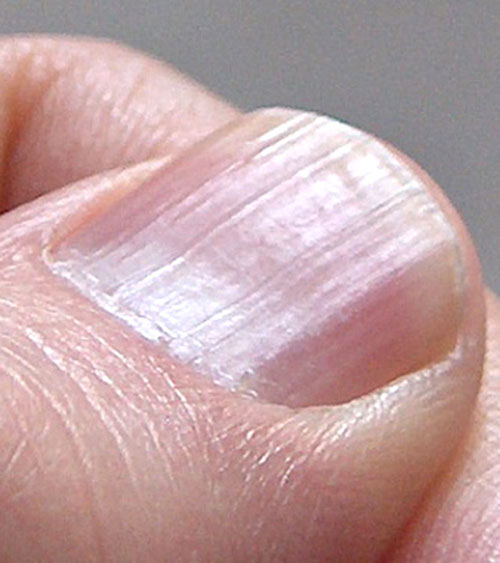
4 “dang.erous” nail ridge signs to watch for
You should see a specialist promptly if vertical ridges appear along with the following signs:
1. A single, thick, raised ridge on one nail
This may result from localized damage to the nail matrix due to trauma or overly deep nail trimming, causing uneven nail growth. Such ridges often disappear once the injury heals. However, if the ridge persists permanently, medical evaluation is needed to rule out benign or malignant tumors under the nail.
2. Black or brown vertical streaks (longitudinal melanonychia)
This is the most concerning sign. The most common cause is a benign mole in the nail matrix, but a dermatologist must evaluate it to rule out melanoma, a highly dangerous form of skin cancer.
Warning signs of melanoma: a newly appeared dark streak, uneven color, width greater than 3 mm, blurred borders, or pigment spreading to the surrounding skin (Hutchinson’s sign). Extra caution is needed if it appears on only one finger (often the thumb, index finger, or big toe).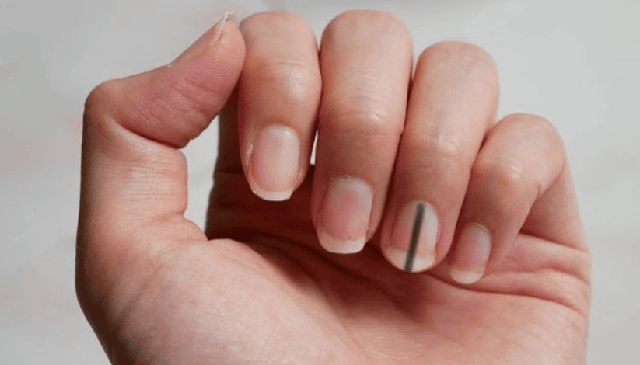
3. Vertical ridges with abnormal colors
-
White streaks: Often related to minor trauma or certain skin conditions such as lichen planus.
-
Red streaks: These are actually tiny hemorrhages under the nail. They may result from minor trauma, but if accompanied by systemic symptoms, they can indicate endocarditis (heart valve infection) or vasculitis.
4. Vertical ridges with nail deformities or systemic symptoms
If ridges occur along with brittle nails, easy breakage, spoon-shaped nails, nail separation, or symptoms such as hair loss, rashes, or persistent fatigue, they may suggest:
-
Skin diseases: Psoriasis, eczema, or lichen planus affecting nail health.
-
Nutritional deficiencies: Severe lack of protein, iron, zinc, or vitamins (B12, C), often accompanied by anemia or extreme fatigue.
-
Systemic diseases: Hypothyroidism or peripheral circulation disorders.
Fingernails are a “window” into your health
-
If vertical ridges appear evenly on all nails, without pain or color changes, they are likely just signs of aging.
-
If ridges appear on only one nail or suddenly change color (especially black, brown, or red), seek medical attention promptly.
Remember, a single nail sign cannot diagnose a disease on its own, but it is an important clue that should prompt closer attention to your overall health.
When there’s no need to worry
-
Natural aging: As we age (especially after 40–50), the nail matrix ages, making the nail surface less smooth. These ridges are usually fine, parallel, evenly distributed on all nails, and match the nail’s natural color.
-
Genetic factors: Some people are born with slightly ridged or uneven nails. If this condition has been stable throughout life with no sudden changes, there is generally no cause for concern.