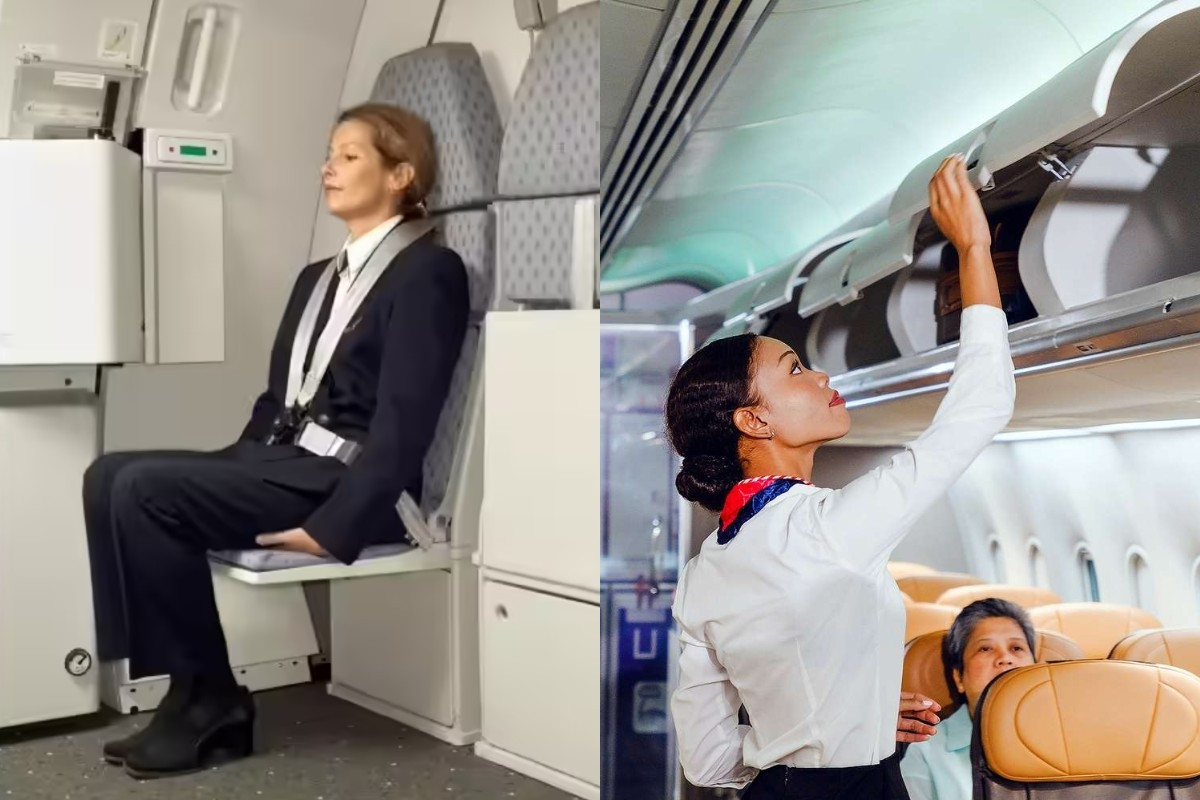
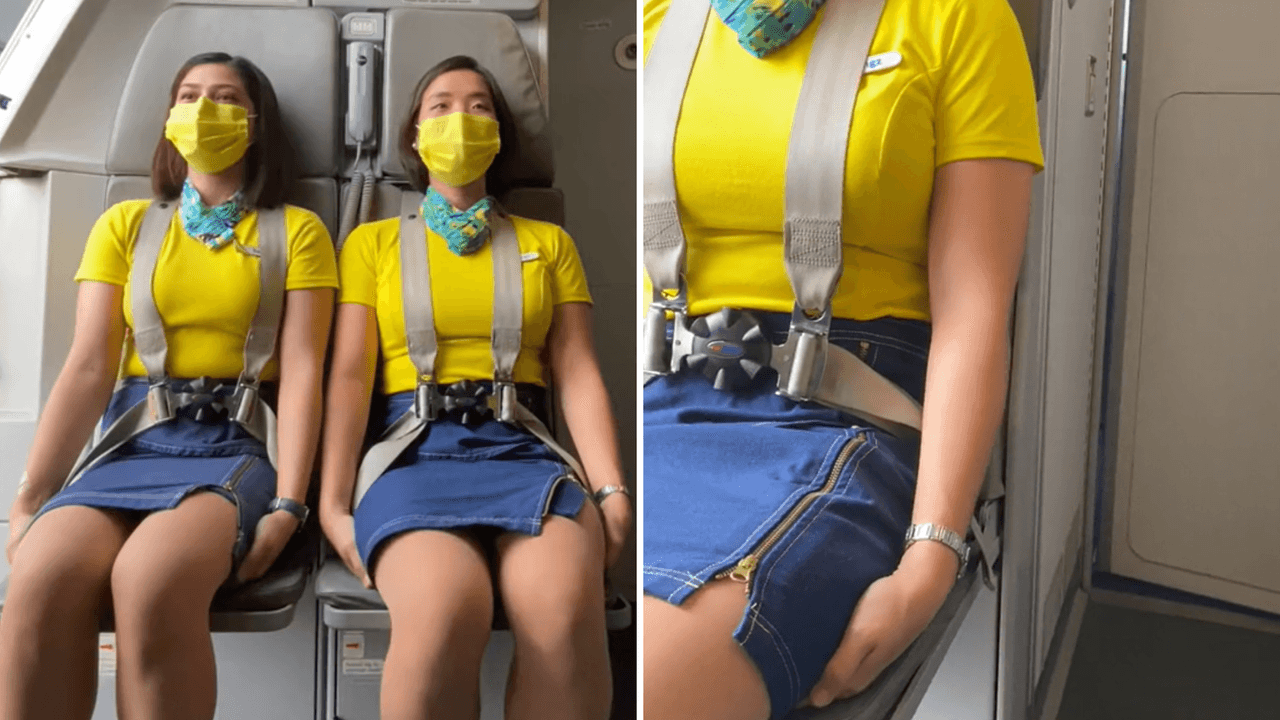
If you’ve ever paid close attention during takeoff or landing, you might have noticed something curious: flight attendants sitting upright in their jump seats with their hands tucked under their thighs. It can look unusual - almost uncomfortable and it often sparks questions.
This position isn’t random, and it’s definitely not about comfort. It’s a carefully trained safety procedure known in aviation as the “brace position” for cabin crew, designed to protect both the crew and passengers during the most critical phases of flight.

✈️ The Critical Moments: Takeoff and Landing
Takeoff and landing are statistically the most sensitive phases of any flight. During these moments:
- The aircraft is closest to the ground
- Speed and directional changes are more intense
- The risk of unexpected events is higher
Because of this, cabin crew must be in a state of full readiness.
🪑 What Is the Cabin Crew Brace Position?
When seated in their jump seats, flight attendants adopt a specific posture:
- Back straight against the seat
- Feet flat on the floor
- Hands placed under their thighs, palms up
- Seatbelt tightly secured
This is not just about sitting still - it’s about minimizing injury and maximizing control.
🧠 Why Do They Put Their Hands Under Their Thighs?
1. To Prevent Uncontrolled Movement
In the event of a sudden impact, turbulence, or abrupt stop, the body can jerk forward violently.
By placing hands under their thighs:
- Arms are secured in place
- Risk of flailing or injury to the arms is reduced
- Hands are less likely to hit surrounding surfaces
2. To Protect Vital Functions
Cabin crew rely heavily on their hands and arms to perform emergency duties—like opening exits, assisting passengers, or operating equipment.
Keeping hands stabilized helps:
- Reduce the chance of fractures or sprains
- Ensure they remain fully functional after impact
3. To Maintain Proper Body Alignment
This posture keeps the body in a controlled, aligned position.
Why this matters:
- Reduces strain on the spine
- Helps absorb impact more evenly
- Minimizes risk of secondary injuries
4. To Stay Mentally Focused
The brace position is also part of a mental preparation process.
Flight attendants are trained to:
- Mentally review emergency procedures
- Stay alert and ready to act instantly
- Maintain calm and control
This position reinforces discipline and readiness.
🚨 It’s About Being Ready to Help You
One important thing to understand:
Cabin crew are not just protecting themselves—they are preparing to help passengers.
In an emergency, every second counts. Flight attendants must be able to:
- Stand up immediately
- Open emergency exits
- Guide passengers safely
If they are injured, their ability to assist is compromised.
🧠 Why Passengers Don’t Do the Same
Passengers are given a different brace position, usually involving:
- Leaning forward
- Protecting the head
- Securing arms differently
This is because:
- Cabin crew face different risks due to their seating position
- Their role requires immediate action after impact
✈️ A Small Detail with a Big Purpose
What looks like a small, almost unnoticed habit is actually the result of:
- Extensive safety training
- Aviation regulations
- Real-world incident analysis
Every movement, including where hands are placed, is based on years of safety research and experience.
💡 Final Thoughts
The next time you see a flight attendant sitting with their hands under their thighs during takeoff or landing, you’ll know it’s not random - it’s intentional, precise, and essential.
It’s a reminder that behind the calm and friendly service, cabin crew are highly trained safety professionals, always prepared for the unexpected.
Sometimes, the smallest details - like where you place your hands can make the biggest difference when it matters most.