-
Elbow flexion.
-
Forearm rotation.
-
Shoulder control.
-
Grip and general arm function.
-
Endurance for everyday tasks.
The exact sequence depends on the injury and whether surgery was performed.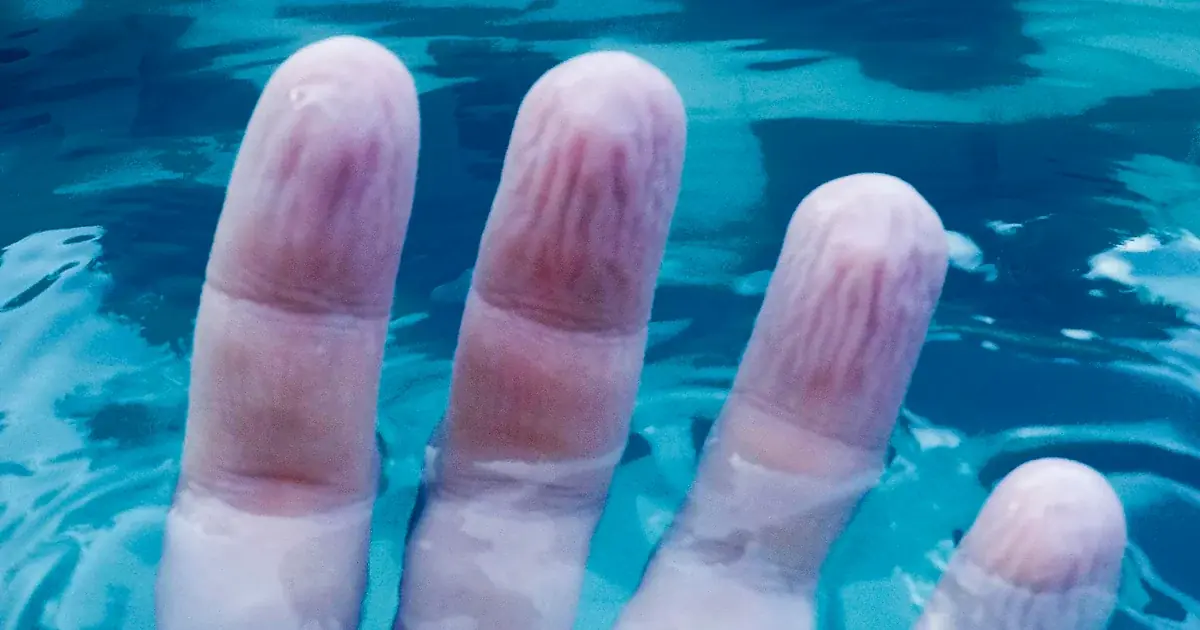
Returning to work and sport
A person who works at a desk may return to some activities sooner than someone whose job involves lifting, pulling, or repetitive overhead movements.
Athletes may need additional rehabilitation before returning to training or competition.
Returning too quickly can increase the risk of aggravating the injury or damaging a repair.
A gradual progression, guided by strength, movement, symptoms, and professional advice, is safer than relying on a fixed timetable found online.
Why recovery can feel uneven
Some days may feel better than others.
Pain can fluctuate with activity, sleep, stiffness, and the amount of loading placed on the arm.
A person may regain comfortable movement before recovering full strength.
This is one reason rehabilitation should not be judged only by whether the arm feels better at rest.
The ability to perform functional tasks safely is also important.
Can the Popeye bulge disappear?
Not always.
If the tendon has completely ruptured and the muscle has retracted, the visible change may remain.
Some treatments may improve pain and function without restoring the original muscle contour.
Surgery may improve the anatomy in selected cases, but it does not guarantee that the arm will look exactly as it did before the injury.
The primary goal is to restore useful function and reduce symptoms.
Chapter 8: The Other Photograph — Why Do Fingers Become Deeply Wrinkled?
The lower image in the supplied collage shows fingers with a strikingly wrinkled appearance.
At first, some viewers may assume the fingers belong to the same man or that they reveal another symptom of the arm injury.
The accompanying description, however, identifies the two images as unrelated.
The finger photograph appears to show a phenomenon commonly known as water-induced finger wrinkling, or pruning.
Most people have experienced it after taking a long bath, swimming, washing dishes, or spending time in water.
The fingertips become ridged and folded, sometimes looking pale or unusually soft.
Although the effect may seem simple, the process involves the nervous system and changes in blood flow beneath the skin.
It is not simply because the skin absorbs water
A common explanation is that the outer layer of skin absorbs water and expands, creating wrinkles.
Water exposure does affect the outer skin, but this explanation alone does not account for the full phenomenon.
Research has shown that water-induced wrinkling is associated with changes in blood flow and the activity of the sympathetic nervous system.
Small blood vessels in the fingertips constrict, reducing the volume of tissue beneath the skin. The overlying skin then forms visible ridges and grooves.
This helps explain why the phenomenon is not just ordinary swelling.
The role of the sympathetic nervous system
The sympathetic nervous system is part of the autonomic nervous system, which helps regulate functions that occur without conscious effort.
It contributes to responses involving heart rate, sweating, blood vessel diameter, and other processes.
When fingers are immersed in water for a period of time, nerve-related signals contribute to the narrowing of small blood vessels in the fingertips.
As blood flow and tissue volume change, the skin develops its characteristic wrinkled appearance.
Research published in the medical journal Muscle & Nerve found that water-immersion wrinkling was accompanied by a reduction in blood flow in digital blood vessels.
This supports the role of vasoconstriction in the process.
Why do the fingertips wrinkle more than other areas?
The palms and fingertips have a distinctive structure.
They contain thick, hairless skin with many sweat glands and specialized sensory receptors. These areas are also involved in gripping and handling objects.
When the fingers wrinkle after immersion, the grooves are especially visible on the fingertips and palms.
The skin on other parts of the body may also change after prolonged water exposure, but the effect is often less obvious.
How long does it take?
The timing varies.
Some people notice wrinkling after several minutes in water, while others take longer.
Water temperature, individual physiology, and other factors can influence the response.
There is no single exact time that applies to everyone.
The fingers usually return toward their normal appearance after they are removed from the water and allowed to dry.
Is it a sign of dehydration?
Ordinary water-induced wrinkling is not, by itself, a sign of dehydration.
It is a physiological response associated with immersion and changes in blood flow.
Dehydration can cause other symptoms, including thirst, reduced urination, dark urine, dizziness, and fatigue, depending on severity.
A person should not use wrinkled fingertips after bathing as a diagnostic test for hydration.
Is it a sign of aging?
The appearance of wrinkled fingertips after water exposure is not simply an effect of aging.
People of different ages can experience it.
Skin texture does change with age, but the temporary ridges that appear after immersion have a different mechanism.
If the skin remains unusually wrinkled, discolored, painful, or swollen after drying, that is a different situation and may deserve medical assessment.
Chapter 9: Could Wrinkled Fingers Actually Help Us Grip Wet Objects?
One of the most interesting questions about water-induced finger wrinkling is why the body produces this response at all.
Scientists have investigated whether the grooves might help people handle objects in wet environments.
The idea is that wrinkles create channels that help water move away from the contact area between the fingers and an object, potentially improving grip.
It is an appealing explanation, and research has provided some support for it. However, scientists have not reached a final conclusion about every aspect of the phenomenon.
The wet-grip hypothesis
When a person holds an object underwater or in a wet environment, a thin layer of water can interfere with contact between the skin and the object.
The grooves on wrinkled fingertips may help channel water away from parts of the contact surface.
This could allow the fingers to hold wet objects more efficiently.
A 2021 study published in PLOS ONE investigated how people handled wet objects with wrinkled and unwrinkled fingers. The researchers found that wrinkled fingers reduced the grip force needed to hold a wet object, bringing it closer to the force required when handling a dry object.
The results support the possibility that water-induced wrinkles can improve grip efficiency in certain conditions.
Is this definitely an evolutionary adaptation?
Not conclusively.
The wet-grip explanation is a hypothesis about why the response may have developed. It is plausible, but scientists continue to investigate how the wrinkles affect different types of movement and touch.
Other research has not found the same benefits in every task.
For example, a study published in 2014 found that water-induced wrinkles did not improve performance in a particular manual dexterity task and did not change the touch sensitivity measured by the researchers.
These findings do not necessarily contradict the 2021 study. The experiments measured different aspects of hand performance.
One examined grip force when holding wet objects, while the other tested dexterity and sensory performance under specific conditions.
Together, they show that the function of water-induced wrinkling is more complicated than a simple claim that wrinkled fingers always provide better grip.
Why the nervous system matters
There is another reason scientists find this phenomenon interesting.
Because wrinkling depends partly on sympathetic nerve activity, it has been studied as a possible indicator of autonomic nerve function.
In certain clinical settings, doctors have used water-induced finger wrinkling as part of assessments involving nerve function.
This does not mean that people should test themselves at home and draw conclusions about their health.
The response can vary for several reasons, and a medical assessment requires appropriate clinical context.
Why the fingers return to normal
When the hands are removed from water, the conditions that produced the wrinkling gradually change.
Blood flow and tissue volume return toward their usual state, and the visible grooves become less pronounced.
For most healthy people, this is a temporary and harmless response.
If the fingers remain discolored, numb, painful, or unusually swollen after drying, the cause may be something other than ordinary water-induced wrinkling.
Chapter 10: Why the Two Images Should Not Be Confused
The arm photograph and the wrinkled-finger photograph may have been placed together to attract attention, but they do not show the same medical process.
One appears to illustrate a possible structural injury involving a tendon and muscle.
The other appears to show a temporary skin response associated with water immersion.
Understanding the difference helps prevent unnecessary alarm.